Begin with the idea that scale is left-behind minerals
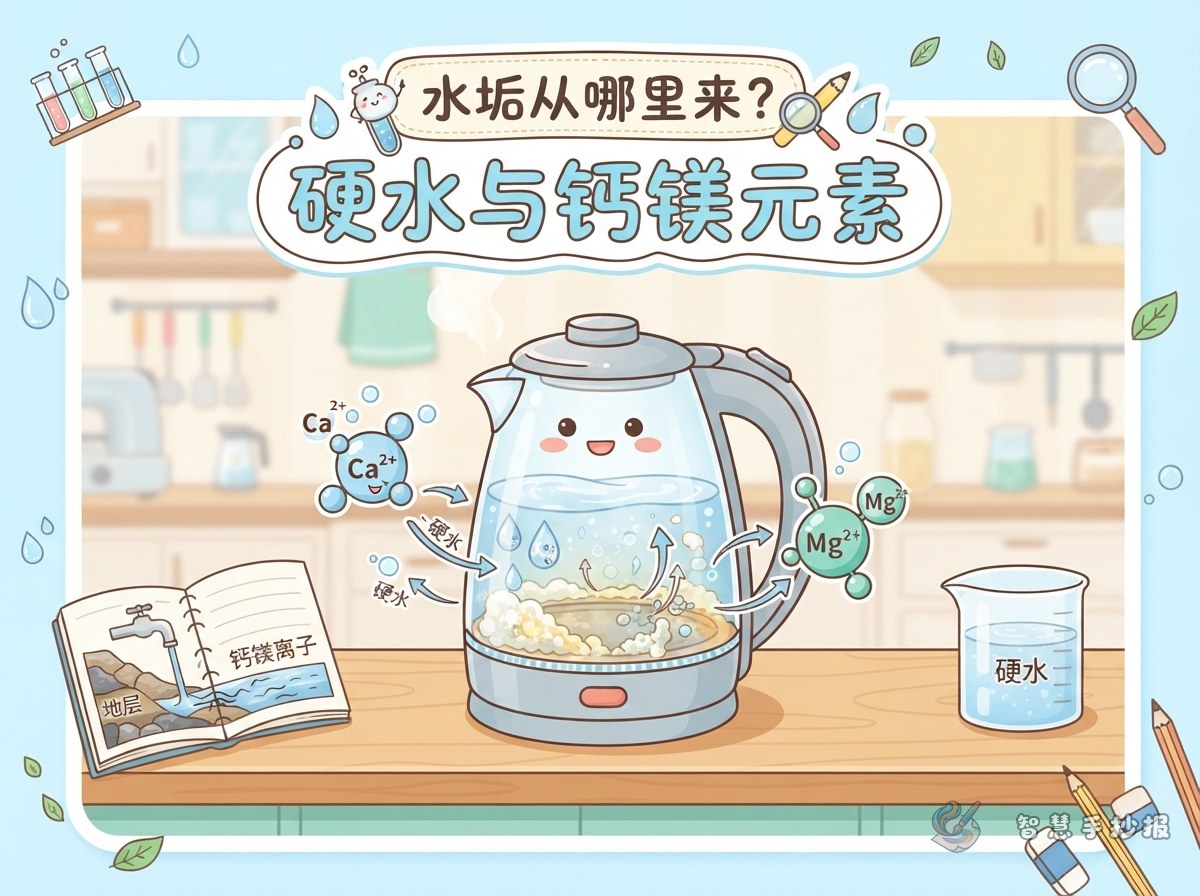
Tap water may look clear, but it can contain small amounts of calcium and magnesium. When the water is heated, these minerals can form a deposit on the bottom and sides of a kettle. A good opening line for the poster is: Scale is not dust; it is a mineral deposit left after water is heated.
Keep the first section simple. Draw a kettle, add small dots moving toward the bottom, and label them “calcium and magnesium minerals.” This gives younger readers a clear picture before they meet harder terms.
Four sections that make the poster easy to read
- Where scale comes from: explain in two or three sentences how heating leads to a mineral deposit.
- Calcium and magnesium fact card: introduce where these minerals appear in nature and how they relate to hard water.
- Hard water and soft water: use a comparison drawing and write “hard water has more calcium and magnesium; soft water has less.”
- Vinegar observation: divide materials, steps, changes, and findings into small cards for an experiment box.
Use friendly section names such as “The Secret at the Bottom of the Kettle,” “A Mineral Journey,” or “Vinegar Meets Scale.” Four sections are usually enough to keep the layout open and the information complete.
Ready-to-adapt text for your poster
Opening lines
“Every time we boil water, a white layer may appear at the bottom of the kettle. Where does it come from, and what can it tell us about the water we use? Let’s explore hard water, calcium, and magnesium together.”
Fact cards
- Scale often appears in kettles, hot-water pots, and boilers after water is heated.
- Calcium and magnesium are minerals people need, but water with more of them is called hard water.
- Hard water is not automatically unsafe; boiled tap water is usually fine to drink.
- White vinegar is acidic, and it may produce bubbles and slowly reduce scale.
A practical reminder
“Seeing scale is not a reason to panic. Clean the kettle regularly, keep the room ventilated, and ask an adult to help when using vinegar or other cleaning materials.” Place this note in a small box at the bottom of the poster.
A simple vinegar observation for the experiment box
- Prepare a little white vinegar, a kettle or clear cup with scale, a spoon, a timer, and a record sheet.
- Look at the color and position of the scale, then draw the “before” picture.
- Add a small amount of vinegar and watch for bubbles or changes in the deposit.
- Record the “before, during, and after” stages in three small panels and add one sentence about what you noticed.
Place the experiment box in a lower corner and connect the three panels with arrows. Add a safety note: Do not taste the experiment materials, and ask an adult to supervise. This gives the poster both background knowledge and a real observation process.
Layout and color choices that keep the topic clear
Use blue, white, and light gray as the main colors to suggest water and cleanliness. Give the experiment area a pale yellow or light green border so readers can find it quickly. Draw a kettle and water drops near the title, place the mineral fact card and hard-water comparison on the two sides, and leave the bottom for the practical reminder.
- Title area: large lettering with a kettle, water drops, and tiny white mineral dots.
- Left section: card-style notes on where scale comes from and what calcium and magnesium do.
- Right section: a two-cup drawing comparing hard water and soft water.
- Bottom area: vinegar experiment steps and a short safety reminder.
If you want neater borders, title lettering, and experiment cards, continue in the Smart Handwritten Poster WeChat mini program and choose a layout that fits this life-chemistry topic.