Begin With the Kitchen Question: Who Blows the Bubbles?
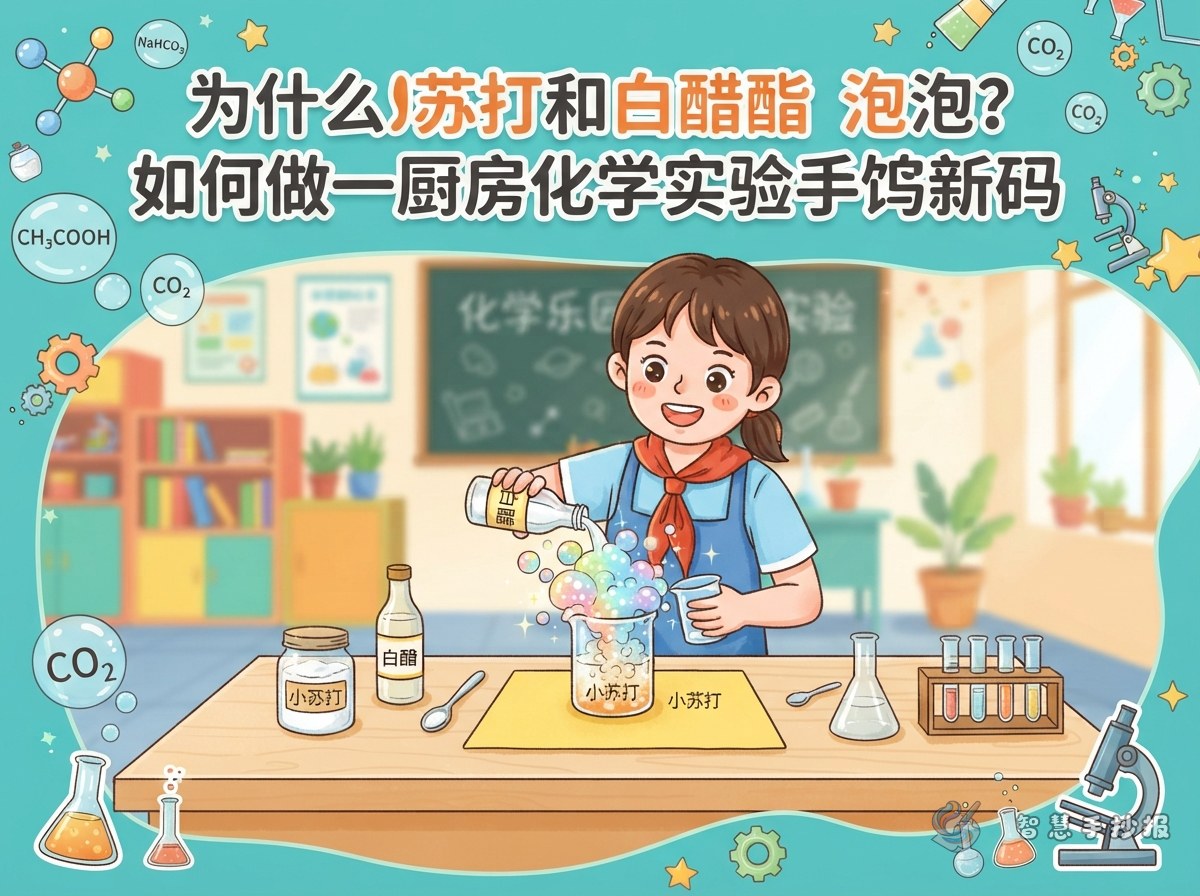
Baking soda sits in the cupboard for cakes, and vinegar sits next to the salad dressing. Pour them into the same cup and the mixture hisses and foams at once. The bubbles are not trapped air; they are a gas created by the reaction. Baking soda is sodium bicarbonate, vinegar contains acetic acid, and together they form sodium acetate, water and carbon dioxide. The carbon dioxide rises out of the liquid and becomes the foam we see.
- Baking soda: sodium bicarbonate, a white powder found in most kitchens.
- Vinegar: a weak acid solution with a sharp, sour smell.
- Carbon dioxide: colourless, heavier than air, and able to put out a small flame.
Since a new substance is formed, this is a classic chemical change and one of the easiest everyday chemistry demonstrations to run at home.
Build the Poster Around a Few Clear Boxes
Experiment posters often say only “I did an experiment, it was fun.” A better plan is to follow one question from start to finish.
- The opening question: why do baking soda and vinegar bubble?
- Materials: baking soda, vinegar, a clear cup, a tray, a spoon, a record sheet.
- Steps: three short sentences explaining what to do first, next and last.
- Observation chart: how many bubbles, was there a sound, did the cup feel cool?
- Science corner: a small card for sodium bicarbonate, acetic acid and carbon dioxide.
- Everyday connections: carbon dioxide in fizzy drinks, bread dough and fire extinguishers.
Sentences You Can Copy Straight Onto the Page
Short sentences work best on a handwritten newspaper. Pick a few of these, or rewrite them in your own words.
- “When an acid meets a base, it may not be a fight, it may be a bubble show.”
- “The bubbles are filled with carbon dioxide, the same gas we breathe out.”
- “Baking soda and vinegar make new substances, so this is a chemical change.”
- “Carbon dioxide is heavier than air, which is why it can smother a flame.”
Finish the text with a short conclusion, such as: a kitchen is not only for cooking, it can also be a small chemistry lab. Adding one open question at the end, like “would it still bubble if we used water instead of vinegar?”, makes the page more inviting.
Layout Ideas That Make the Page Fizz
This topic is a gift for drawing because bubbles, drops and round shapes are easy to sketch. Arrange the page so the eye travels upwards, the same way the gas does.
- Title area: ring the main title with circles of different sizes and add one question mark.
- Bottom left: simple sketches of the cup, spoon and vinegar bottle.
- Middle right: steps and the observation table, kept tidy with straight lines.
- Bottom edge: a rising trail of bubbles, each one holding a fact about carbon dioxide.
- Colours: pale blue, soft yellow and a little light green for a clean look.
Leave some white space. Not every bubble needs words inside it, and a few empty circles make the page feel as if it is still fizzing.
Safety First, Then a Tidy Finish
- Run the experiment with an adult nearby and keep vinegar away from eyes and cuts.
- Work on a tray so overflow does not reach the table.
- To collect the gas, stretch a balloon over the bottle neck and watch it inflate.
- Wipe the table and wash your hands when you are done, then put everything away.
Doing the experiment before writing the poster makes the details more real, and the observation chart will be filled with things you actually saw.