A Wooden Cart That Plants as It Moves
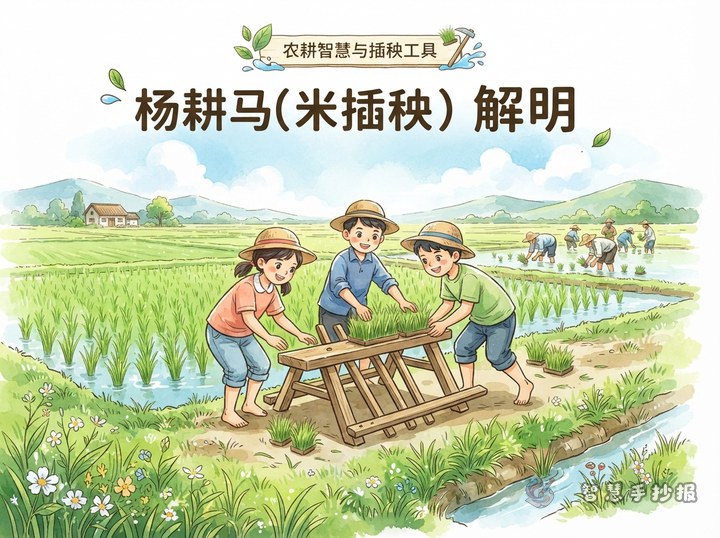
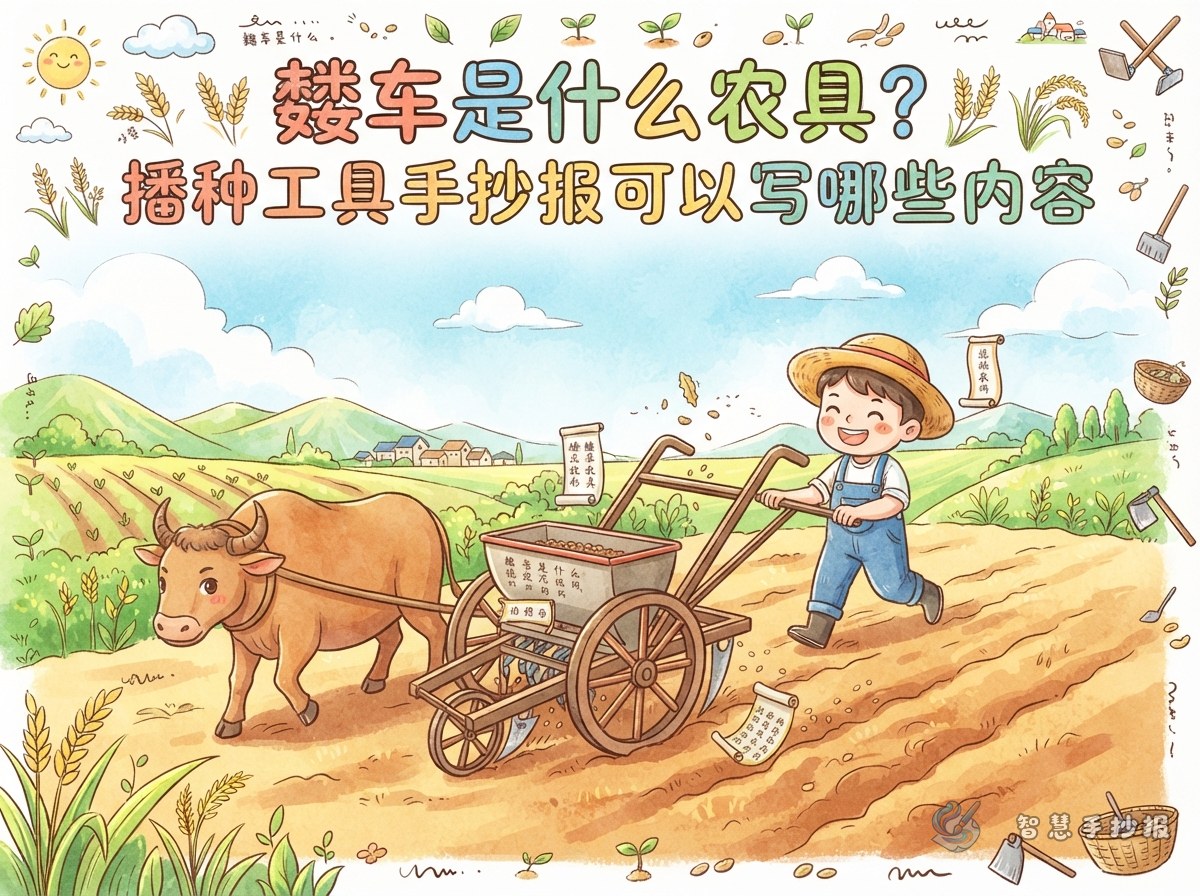
Hearing the name for the first time, most children picture a cart for carrying things. A louche carries nothing. Its job is to put seeds into the soil.
Explain it this way: opening a furrow with a hoe, dropping seeds in, and covering them with soil takes a lot of time. The louche combined the first two steps. Its feet split the earth, seeds ran down from the hopper through narrow tubes, and the sower walked forward while the field was planted behind him.
- The hopper on top holds the seed.
- A three-footed louche opened three furrows at once, sowing three rows in a single pass.
- It belongs to the sowing stage, not to ploughing, so make that clear on the poster.
Three Parts to Get Right Before You Draw
The main picture does not need to look like a technical drawing. Make the structure readable and the viewer will understand it instantly.
The hopper
Place it on top of the frame as a small box or inverted trapezoid, with a few dots inside for seeds. Its size sets the scale for the whole machine, so draw it first.
The feet
Two or three slim legs reaching down to the ground line. Keep the spacing even; crowded feet make the drawing look messy.
Tubes and handle
Short vertical lines between hopper and feet show where the seed falls. Add a slanted wooden handle at the back and the picture suddenly looks as if someone is pushing it.
Order of work: light triangle frame, then hopper, then feet, then handle and ground line. Once the main shape is settled, add a strip of field and a few small seedlings behind it.
Four Text Blocks to Fill the Page
- One-line summary: the louche was a farm tool that opened furrows and dropped seed in a single pass.
- Sowing steps: pour seed into the hopper, pull forward, feet open the soil, seed falls in, soil is covered again.
- Word cards: hopper, foot, seed tube, handle, each with one short explanation.
- A comparison: both the louche and a modern seeder place seed evenly in the ground; one uses a wooden frame and feet, the other metal openers and wheels. The idea runs in a straight line.
Let a Furrow Line Run Across the Page
Because the louche moves sideways, a horizontal layout suits it well. Draw two or three gentle curved lines as furrows running from one edge of the paper to the other. They divide the page naturally into bands without any extra boxes.
Give the middle band the most space for the title and the drawing. Use the narrow top band for the one-line summary, and the lower bands for word cards and sowing steps.
- Place the title top-left or slightly above center, large and steady, in horizontal writing.
- Left-align text blocks and leave a little space between lines.
- Stick to earth yellow, light brown and grass green with a dark outline for contrast.
Small Touches and Common Slips
A short farming proverb in a corner, or tiny icons such as a seed bag, footprints or rows of seedlings, adds life without taking much room.
Watch for a few typical mistakes: do not give the louche wheels, since it was pulled rather than pushed along; keep the feet touching the ground line instead of floating; and never squeeze text inside decorative borders until it becomes unreadable.
If you want to try another layout or adjust the number of sections, open the Smart Handwritten Poster mini program in WeChat and finish the farming poster with ready-made layouts at hand.