What Dou, Sheng and Hu Were Actually For
After harvest, grain had to be divided, stored and paid as rent. Instead of weighing every load, farmers measured it with containers called sheng, dou and hu. Sheng is the smallest, dou is larger, and hu is larger still. An old saying explains that ten sheng make one dou, although the exact figures varied between dynasties and regions. On a school sheet, a short line such as ten sheng, one dou is plenty.
Shape and material
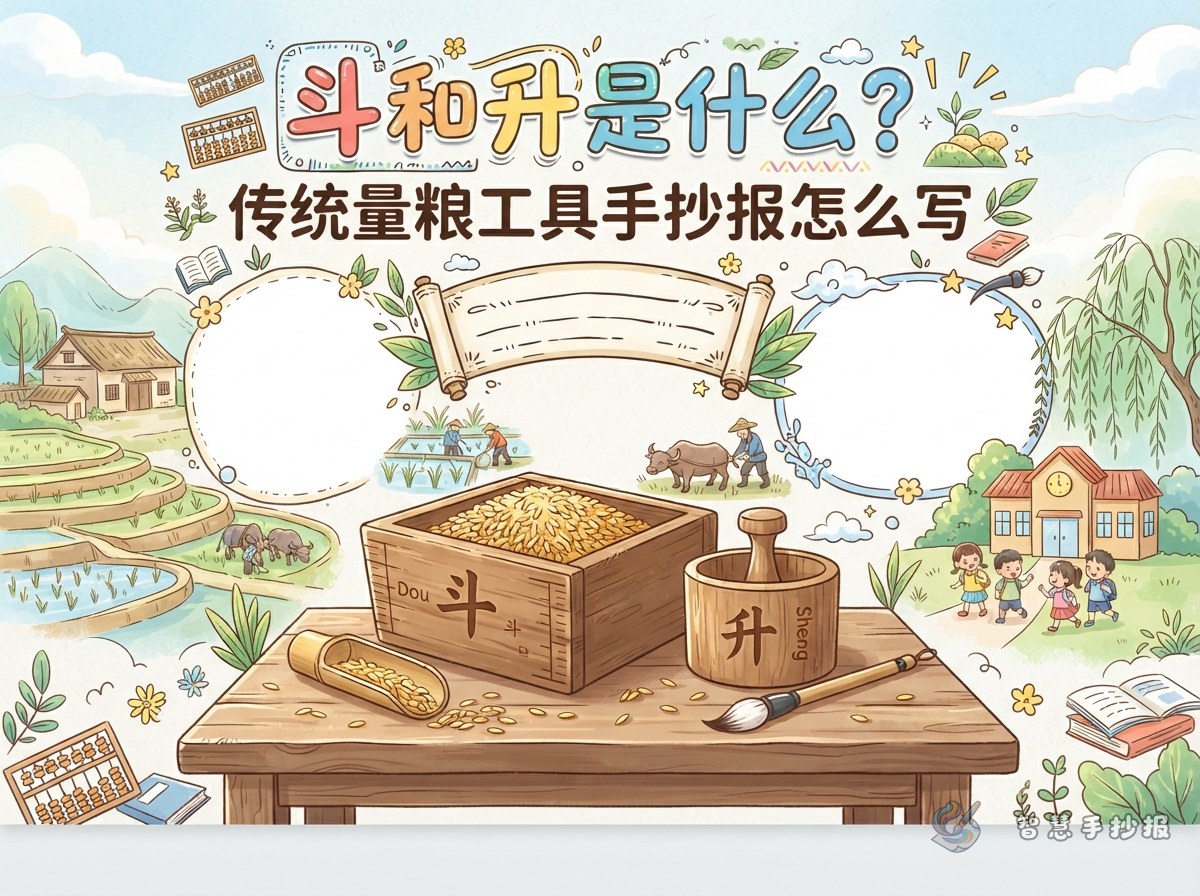
Most sheng and dou were made of wood, with a wide rim, a slightly narrower base and four lifting handles. Grain was poured in until it overflowed, then leveled with a wooden stick. This leveling action had its own name and produced what people called a flat measure.
Why this counts as farming wisdom
- A shared standard: when a whole village used the same set of measures, dividing, lending and trading grain caused far fewer arguments.
- Saving time: scooping container after container into the storehouse was much faster than weighing each portion.
- Easy to carry: the handles let one person lift and tip a full dou on the threshing ground or in the granary.
Columns That Work Well on This Sheet
Measuring tools are an unusual subject, so the column titles should be very clear.
- Tool file: names, shapes, materials and uses of sheng, dou and hu.
- Measure it: a size drawing showing that ten sheng make one dou.
- Word station: idioms and proverbs connected with measuring grain.
- Wisdom in old sayings: one or two lines on why fair measures mattered.
- My findings: what you noticed at home, in a museum or in your textbook.
Short Lines and Idioms You Can Copy
- The sea cannot be measured with a dou: a reminder never to underestimate people.
- Small households with small measures: an old phrase for ordinary families living on very little grain.
- Gold pouring in by the dou: a lively way of describing a large income.
- Measure income before spending: the same careful thinking behind measuring grain.
A small trap to mention
In the idiom about the turning of the stars, the word dou refers to the Big Dipper, not to a grain measure. Write this difference in a small tip box and your sheet will look very careful.
Laying Out the Page
Try a middle drawing with text on both sides and a summary strip at the bottom.
- Place a row of sheng, dou and hu across the center and show the capacity relation with arrows.
- Put the tool file on the left and the word station on the right, keeping the number of lines similar.
- Add a small corner scene: a grain pile, a wooden dou and a stick leveling the top.
- Choose wheat yellow, wood brown and light green, and shape the border like wooden sticks or rice ears.
Check the Sheet Before You Hand It In
- Can the title be understood at a glance, and is it larger than the body text?
- Are the idioms spelled correctly and explained in one sentence each?
- Is there one main background color instead of four or five competing ones?
- Are the margins wide enough, with no text touching the paper edge?
Once your draft is ready, open the Smart Handwritten Newspaper mini program in WeChat, choose a layout you like and swap in your preferred title lettering and border before printing the final version.