Frame the Poster as a Letter Across Time
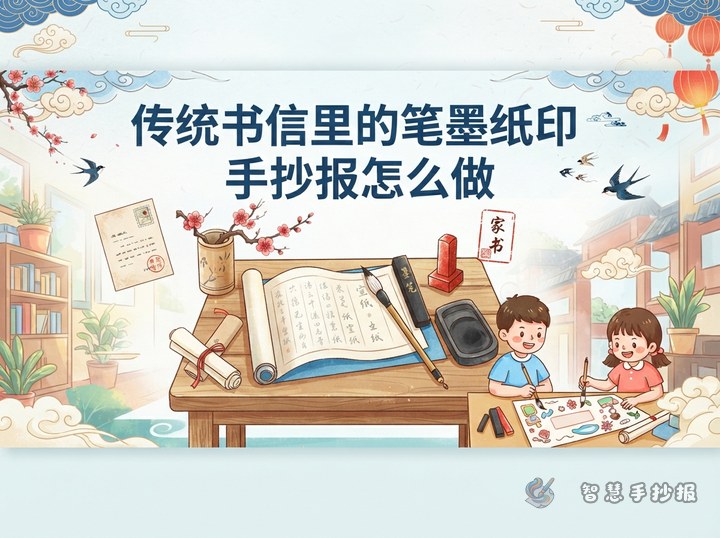
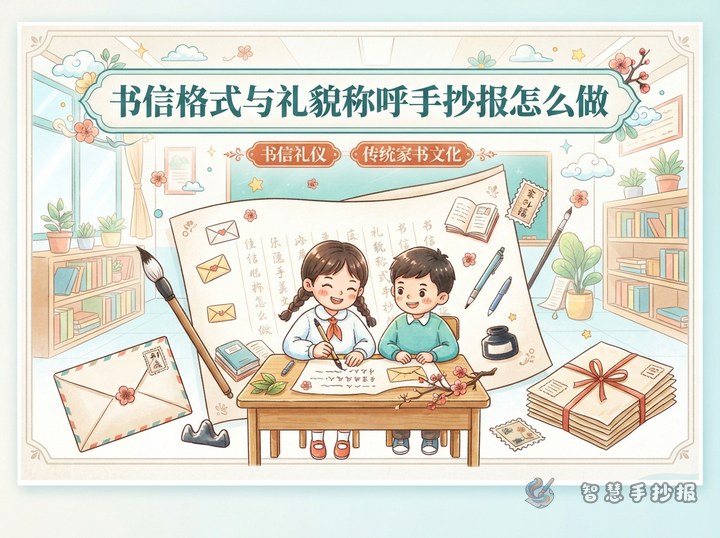
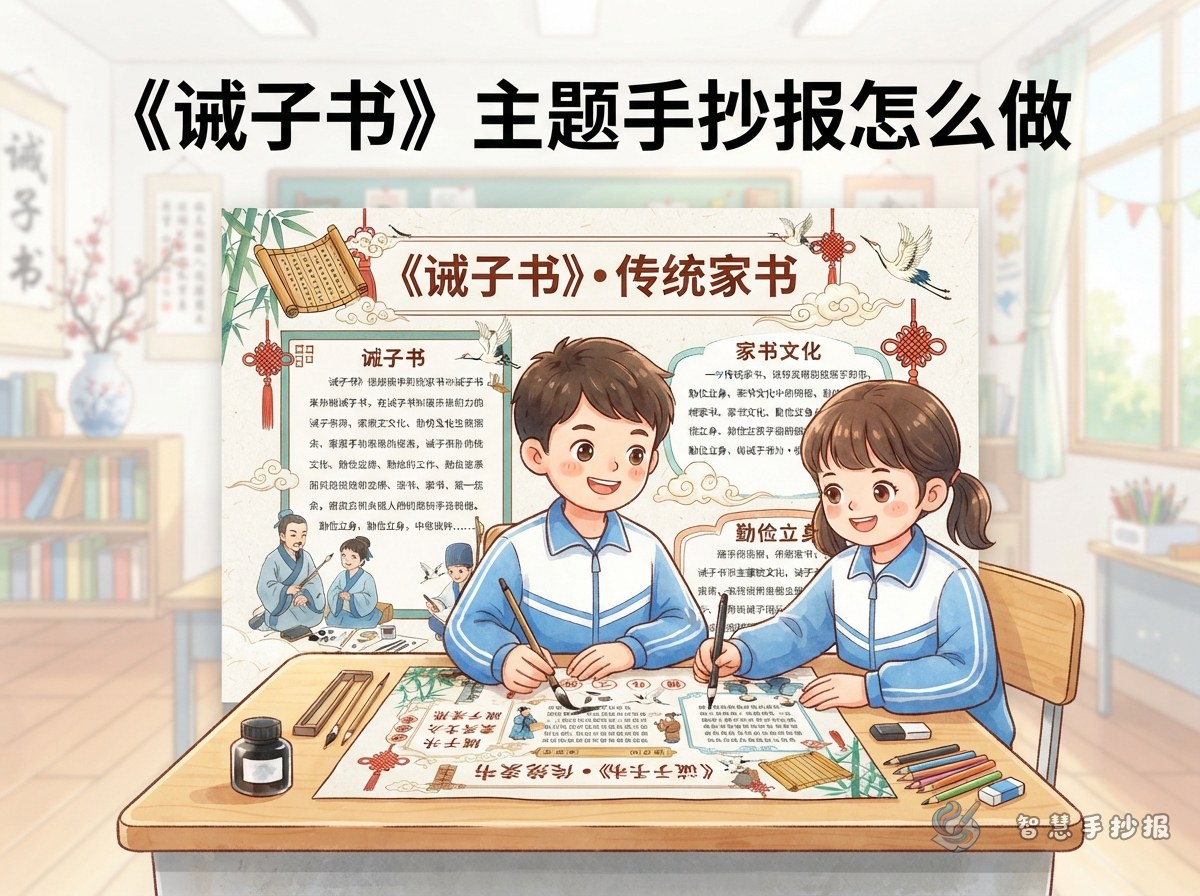
A poster about Admonitions to My Son can be more than a collection of quotations. Present it as an old family letter that still speaks to young readers today. Place the main title at the top and use a subtitle such as “Lessons in Character, Purpose, and Learning.” The main sections can introduce the letter, explain key lines, connect them with daily life, and end with a personal action plan.
A short introduction may explain that Zhuge Liang wrote this letter to his son. Although brief, it expresses a parent's hopes that a child will develop good character, set meaningful goals, value time, and study with determination.
Turn Three Quotations into Useful Reading Cards
Calmness and Character
Use the line “静以修身,俭以养德,” then explain in English that calm reflection helps shape character and that a simple, disciplined life supports virtue. Add familiar examples such as listening carefully in class, avoiding comparison, and taking care of school supplies.
Purpose and Focus
Include “非淡泊无以明志,非宁静无以致远.” Its central idea is that freedom from distraction helps a person understand a goal and pursue it over time. A nearby box titled “My Small Goal” can invite the student to name one habit to develop this term.
Learning and Determination
Add “非学无以广才,非志无以成学” and explain that ability grows through learning, while determination keeps learning on course. Keep each explanation to one or two sentences so the poster remains easy to read.
Build the Content Like an Unfolding Family Letter
- Letter profile: Briefly identify the writer, the recipient, and the main purpose.
- Quotation cards: Pair two or three original lines with simple explanations.
- Ancient advice in daily life: Match self-discipline, simplicity, and purpose with actions at home or school.
- A letter to my future self: Write a short note about a study goal and how to achieve it.
- Seven-day challenge: List manageable tasks such as reading attentively, organizing a desk, or following a regular bedtime.
Use Letter Paper and Scroll Motifs to Guide the Layout
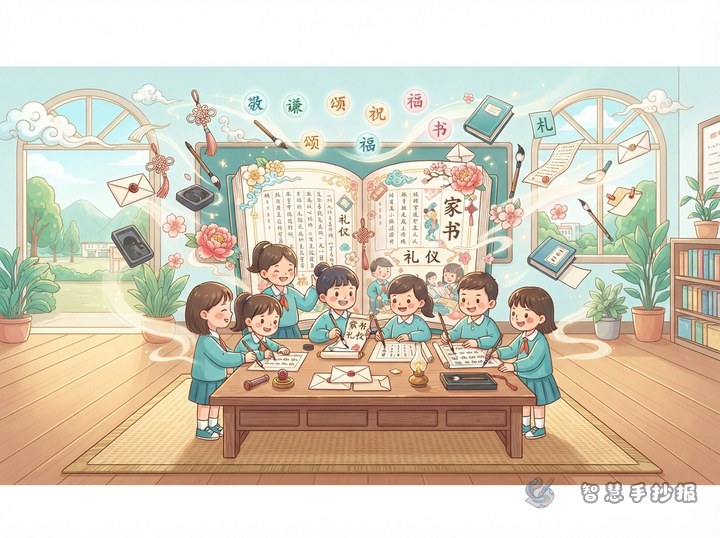
A vertical letter-paper composition works well. Put the title at the top, display the three quotations in a large central scroll, place the background and life lessons on the sides, and reserve the bottom for the personal letter. Give explanations and practical ideas more room than decorations.
Choose warm ivory, light brown, dark green, and a small amount of vermilion for a traditional but bright appearance. Small drawings of bamboo slips, brushes, envelopes, books, or plum branches can decorate the corners. Students can first arrange the sections in the 智慧手抄报 WeChat Mini Program, then copy the finished plan onto paper and add color.
Check Accuracy Before Finishing
- Verify every classical line instead of relying only on memory.
- Separate the original Chinese text from the modern explanation through size or color.
- Use a respectful and sincere tone in the student-written letter.
- Keep each section focused on one main idea.
- Review spacing, spelling, title visibility, and blank areas before coloring.