Start with a Map of Kitchen Materials
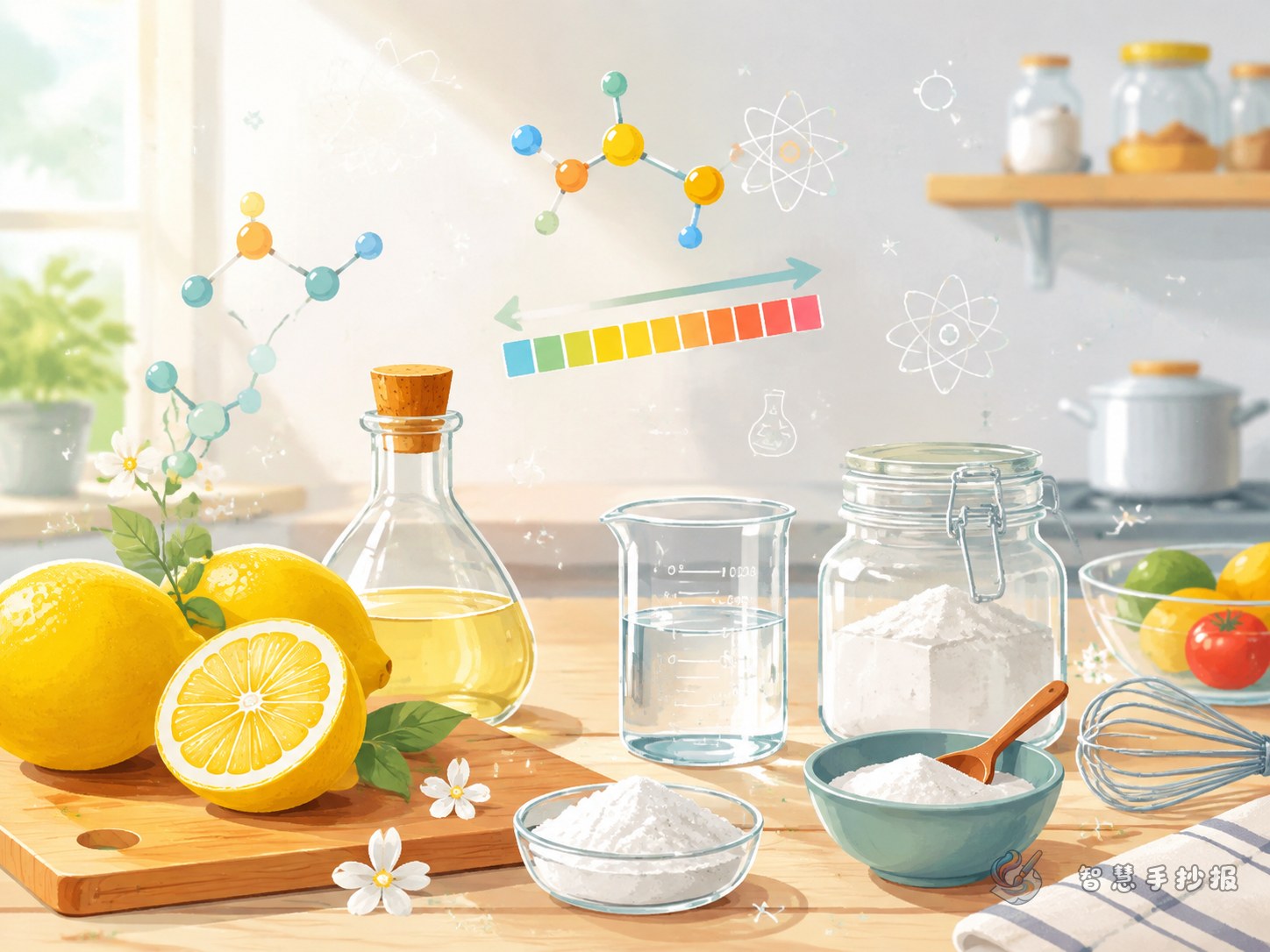
Build the poster around the idea of a kitchen chemistry exploration station. Draw lemon slices, a vinegar bottle, a baking soda jar, soap bubbles, and a glass of water near the title so the everyday connection is clear at first glance.
In the center, create a “team of household materials.” Lemon juice and vinegar can represent acidic materials, baking soda water and soapy water can represent alkaline materials, and clean water can serve as a simple example close to neutral. Explain that acidity and alkalinity are properties of materials and should never be judged by tasting.
Sort Familiar Materials into Three Teams
- Acidic team: Lemon juice and vinegar are commonly acidic. Give them a friendly label such as “the sour-material detectives.”
- Alkaline team: Baking soda water and soapy water are familiar weakly alkaline materials. Add bubbles and cleaning scenes to make the idea easy to picture.
- Neutral observer: Clean water can be shown as a simple near-neutral example. Draw it as a clear water drop to help readers compare the three groups.
There is no need to fill the poster with difficult formulas. For each material, answer three simple questions: What is it? Where do we see it? What is it used for?
Make Color Change the Visual Highlight
Add a “Colors Can Speak” section. Red cabbage juice may turn reddish or pink in an acidic material, remain purple in a nearly neutral material, and become bluish or blue-green in an alkaline material. Since concentration and ingredients can affect the result, use careful wording such as “may appear.”
If you conduct a simple observation, an adult should prepare the materials. Never taste the liquids, keep them away from the eyes, and never mix cleaning products. When an activity is not possible, draw three colored cups as a diagram and focus on the explanation instead.
Four Sections for a Complete Poster
- Acid and Base Mini Dictionary: Explain acidic, alkaline, and neutral in one or two short sentences, with simple color marks.
- Uses in the Kitchen: Mention vinegar as a seasoning and baking soda in baking or cleaning, while reminding readers to follow adult guidance.
- Color Observation Cards: Draw three small beakers or clear cups and record the possible color changes.
- Safety Notes: Display three clear reminders: do not taste, do not mix cleaning products, and have an adult present.
Design the Page Like a Fresh Exploration Map
Try a layout with one central title and three colored zones. Place the title and kitchen drawings at the top, separate acidic, alkaline, and neutral examples in the middle, and put the color observation and safety notes at the bottom. Use bubbles, water drops, lemon leaves, and measuring spoons as a light border.
Sketch the sections in pencil first, then use a consistent color scheme and add arrows or small icons at the end. After preparing the text and rough layout, you can continue arranging the poster in the Wisdom Handwritten Poster WeChat mini program for a cleaner and easier-to-read result.