Set the theme clearly: ants and changing weather
This handwritten newspaper works best when it centers on a familiar question: Why do ants become more active before rain? Unlike a general insect poster, this topic highlights how ants respond to environmental change and what that tells us about ecology.
Instead of writing only that ants are hardworking, students can explain that ants may collect food, move eggs, improve nest safety, or avoid future flooding. This makes the project more scientific and better suited for an ecology-related classroom display.
Ready-to-use content sections
1. What we can observe
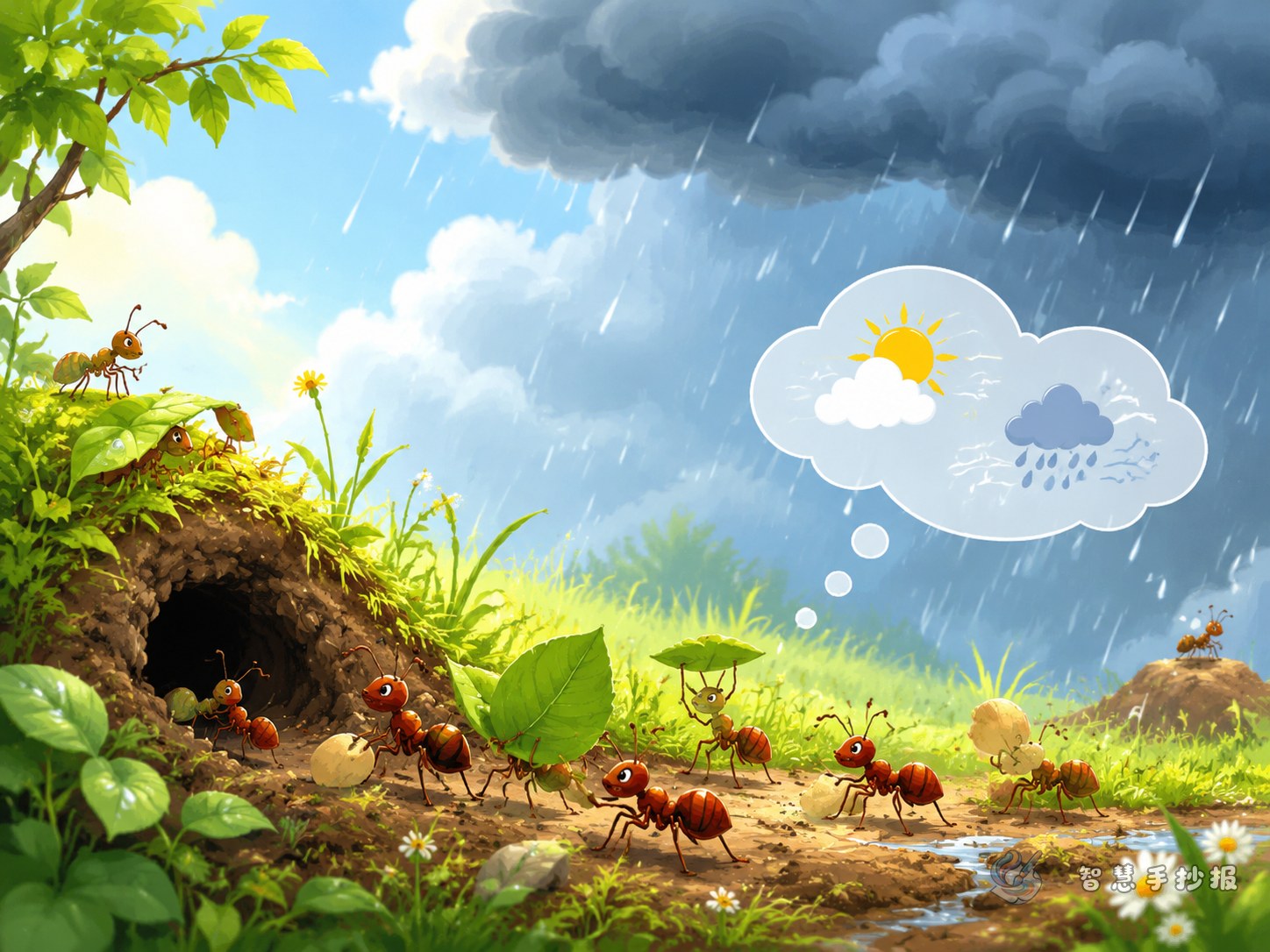
Before rain, ants are sometimes seen moving in long lines, carrying food, or going in and out of their nests more often. It can look as if they already know the weather is about to change.
2. A simple explanation
Before weather changes, humidity, temperature, and air pressure may shift. Ants can sense these changes through their bodies and react early by preparing food or making their nests safer.
3. Teamwork in an ant colony
Ants live in groups, not alone. Worker ants gather food and care for young ants, while the queen lays eggs. This division of labor helps the whole colony survive.
4. Ecology lesson
The behavior of ants shows that insects are closely connected to their surroundings. Watching small insects can help us understand weather, soil conditions, and the balance of nature.
Try a two-part layout: observation on one side, explanation on the other
A practical page design is to place “My Observation” on the left and “Why It Happens” on the right. This gives the work both a personal touch and a science angle.
- Top left: main title and subtitle
- Bottom left: short observation notes about what was seen and when
- Top right: reasons for ant behavior before rain
- Middle right: ant body parts or colony roles
- Bottom right: small insect protection tips
If there is more space, students can draw an ant trail through the center of the page and place text boxes along the path.
Short sentences children can copy
- Ants may be tiny, but they can sense changes in the environment quickly.
- Before rain, ants often become more active to prepare for safety.
- Ants are social insects that live and work together.
- Observing insect behavior helps us learn about ecology.
- Protecting small insects also means protecting the natural world around us.
To make the work feel more personal, students can add one sentence about their own discovery, such as “I learned that small things in nature can reveal big patterns.”
What to draw to match the topic
Do not draw only ants. Add signs of changing weather so the theme is easy to understand. Good visual elements include clouds, raindrops, soil, grass, nest tunnels, and food crumbs.
- Use curved lines to show the ants’ moving route
- Label areas with phrases like “carrying food” or “repairing the nest”
- Add dark clouds or light rain in a corner for atmosphere
- Use brown, green, and light blue for a clean natural look
Leave enough blank space for writing so the final page stays neat and readable.
How to end the handwritten newspaper well
A good ending can return to the idea of observing nature. Students can write that insects are not far away from daily life. They can be found near flower beds, on campus paths, or under trees, and careful observation helps reveal many secrets of nature.
After finishing the text, students can improve the title lettering, borders, and color balance. If they want to continue adjusting the layout and decorations, they can also use the Smart Handwritten Newspaper WeChat mini program to complete the page more easily.