Build the theme around both dragonflies and the pond
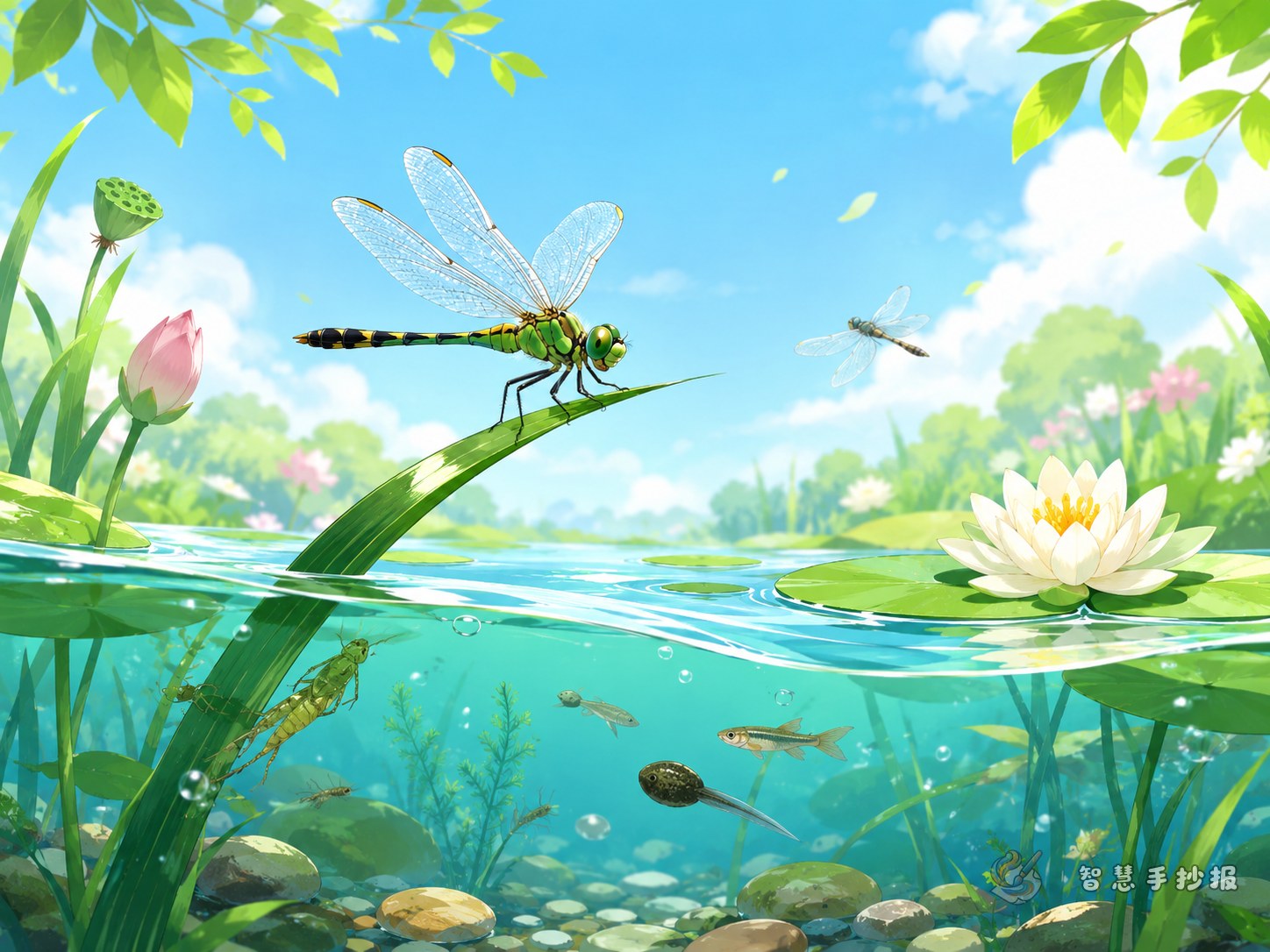
This kind of poster works best when it connects the dragonfly to its habitat. Instead of only describing what a dragonfly looks like, present it as an important member of the pond ecosystem. A central drawing can show a dragonfly above reeds or lotus leaves, with fish, frogs, water plants, and small insects nearby.
A question-style title also works well, such as “Why do dragonflies stay near ponds?” or “Dragonflies in the pond ecosystem.” This makes the poster feel practical and easy for students to develop.
Useful sections to include
Section 1: Meet the dragonfly
Write a few short lines about its large eyes, long body, two pairs of wings, and strong flying ability. Keep the text simple and easy to match with a small drawing.
Section 2: Life cycle
Explain that dragonflies begin life in water as nymphs and later become flying adults. A simple step sequence such as egg, nymph, emergence, and adult works well on a poster.
Section 3: Food relationships in the pond
Show that dragonflies eat mosquitoes and other small insects, while nymphs hunt tiny creatures underwater. This helps students understand balance in nature.
Section 4: My observation notes
Students can record where and when they saw dragonflies, what the weather was like, and how the dragonflies moved. This makes the poster feel personal and realistic.
Short writing materials students can use
- Dragonflies are common insects near ponds and are excellent fliers.
- Young dragonflies live in water before becoming adults in the air.
- Dragonflies help control small insects such as mosquitoes.
- Clean water makes it easier for dragonflies to live and reproduce.
- Protecting ponds means protecting many small forms of life.
If there is limited space, choose three lines and add one short observation sentence from the student.
How to arrange the poster clearly
A simple layout is to place the title at the top, a large dragonfly in the center, and short content boxes around it. One side can show the life cycle, the other side can show the pond food web, and the bottom can include observation notes and protection ideas.
Blue, green, and light yellow are good color choices because they match the pond environment. Small decorations such as ripples, reeds, and lotus leaves can make the page more lively without making it crowded.
End with a meaningful message
Instead of ending with only “I like dragonflies,” students can write a stronger closing idea: dragonflies are not only beautiful insects, but also important members of the pond ecosystem. When we protect clean water and do not litter, we help dragonflies and many other living things.
If you want to keep improving titles, borders, and page sections, you can continue designing in the Zhihui Shouchaobao WeChat mini program for a cleaner and more complete poster.