Build the page around one clear idea
A strong bee handwritten paper should focus on more than the insect itself. The most meaningful theme is bees collect nectar, pollinate flowers, and support nature. This gives the page a real science angle and makes it fit an ecology topic much better than a simple animal profile.
You can also add a short subtitle near the main heading, such as “Why flowers need bees” or “A tiny insect with a big job in nature.”
Four content parts that are easy to write
1. How bees collect nectar
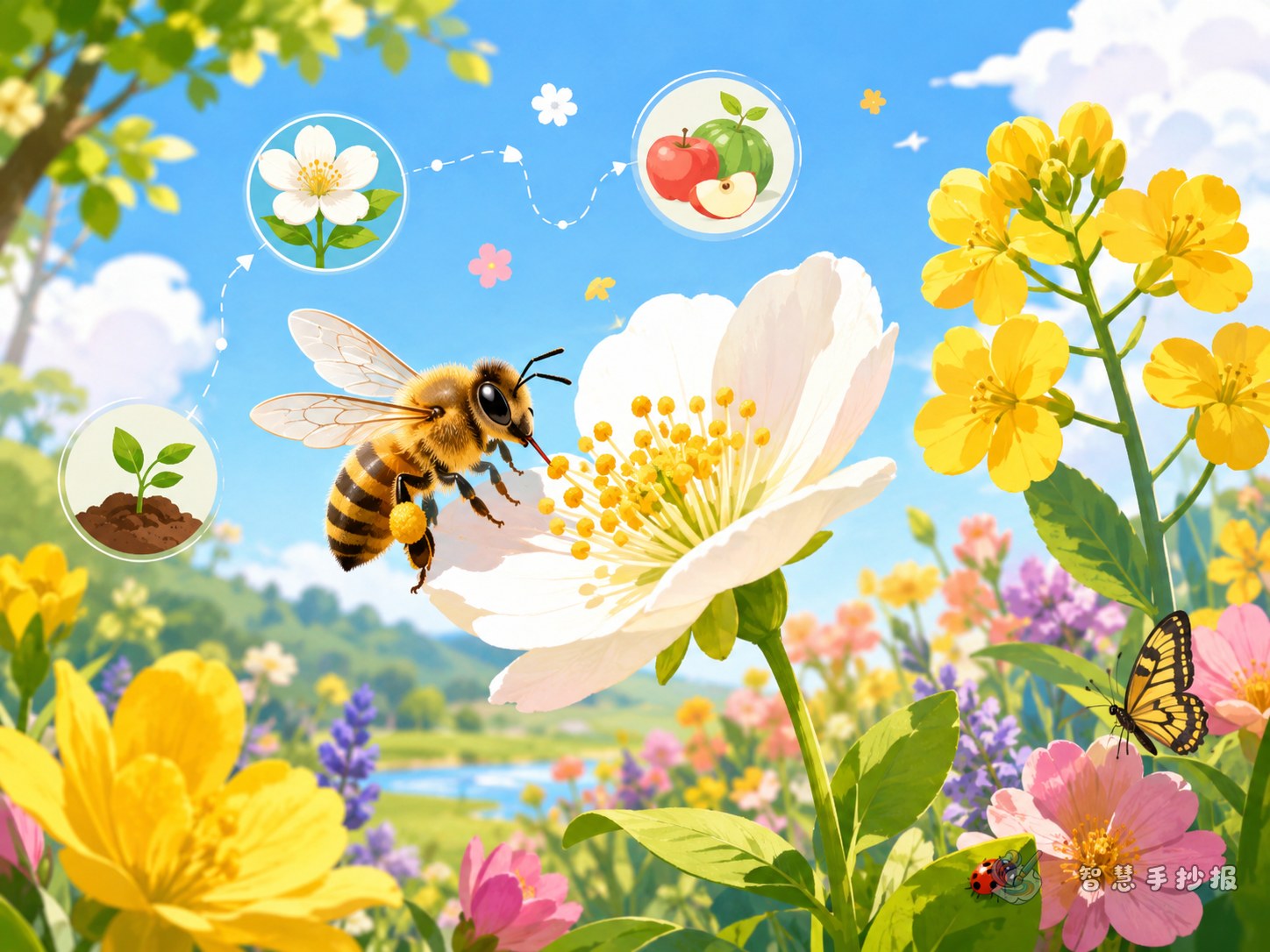
Write the process in order: a bee finds a flower, lands on it, drinks nectar, gets pollen on its body, and then visits another flower. This is simple for children to understand and easy to pair with small drawings.
2. Why pollination matters
As bees move from one flower to another, they carry pollen with them. This helps many plants complete pollination and produce fruits and seeds. This section should clearly show that bees help plants continue their life cycle.
3. How bees connect to daily life
Make this part practical by mentioning gardens, farms, fruits, vegetables, and flowering plants. Children can better understand the topic when they see that bees are connected to food and the environment around them.
4. What we can do to protect bees
- Do not damage flowers and plants
- Observe insects gently without hurting them
- Avoid catching wild insects for fun
- Share simple pollinator protection ideas with classmates
This gives the project a positive ending and turns knowledge into action.
Short text materials ready to use
- Bee fact: A bee can pick up pollen while visiting flowers for nectar.
- Ecology fact: Bees are important pollinators in many natural and farming environments.
- Life connection: Some fruits and vegetables depend on pollination during growth.
- Protection message: Protecting bees means protecting flowers, farms, and biodiversity.
These short lines are useful for side boxes, labels, and decorative note areas.
A layout idea that feels lively and clear
This topic works especially well with a center-spread design. Draw a large bee in the middle and connect four surrounding sections with dotted flight lines: nectar collecting, pollination, life connection, and protection. It creates a strong visual focus.
If you prefer a tidy structure, use a top-and-bottom layout. Put flowers and bees in the upper half, then divide the lower half into three neat text areas. Honeycomb shapes, petals, leaves, and pollen dots can be used as decorations without making the page look crowded.
Color and drawing tips
Yellow, orange, and green are the best main colors. Yellow highlights bees and honeycomb shapes, while green supports the ecology theme. A little blue can make the background feel fresh. Good illustrations include:
- A bee landing on a flower
- Honeycomb hexagon patterns
- Arrows or dotted lines showing pollen movement
- A mini sequence from flower to fruit
These elements make the scientific idea easier to understand while keeping the page bright and student-friendly.
Check these points before finishing
- Did the page explain that bees do more than make honey?
- Did it clearly show the ecological importance of pollination?
- Did it include both useful text and matching drawings?
If you already have the topic but want a cleaner final layout, you can continue refining the design in the Smart Handwritten Paper WeChat mini program.