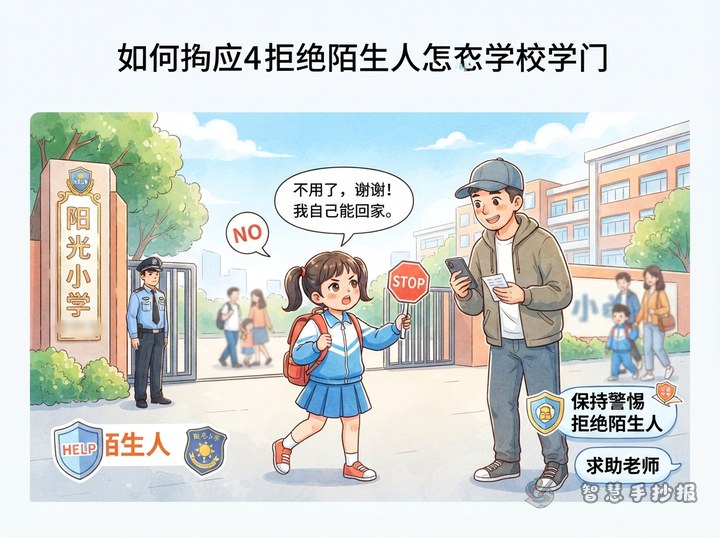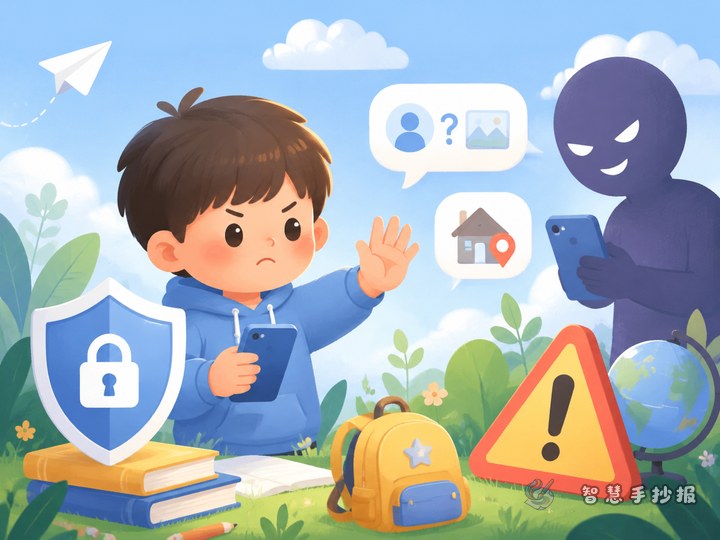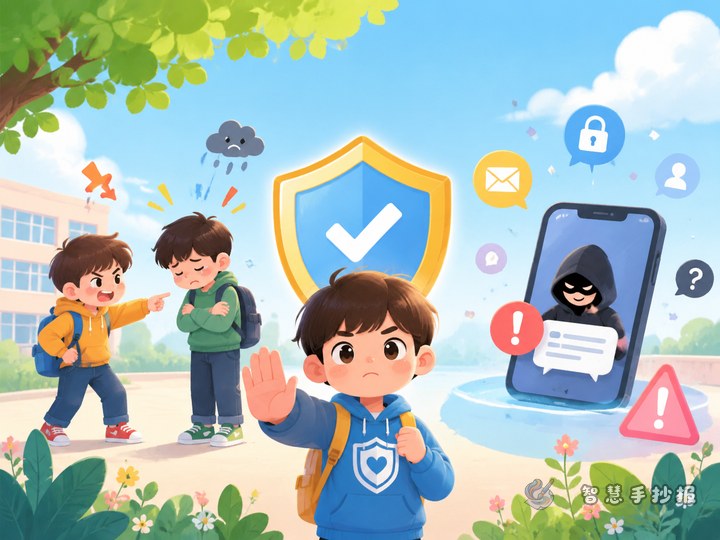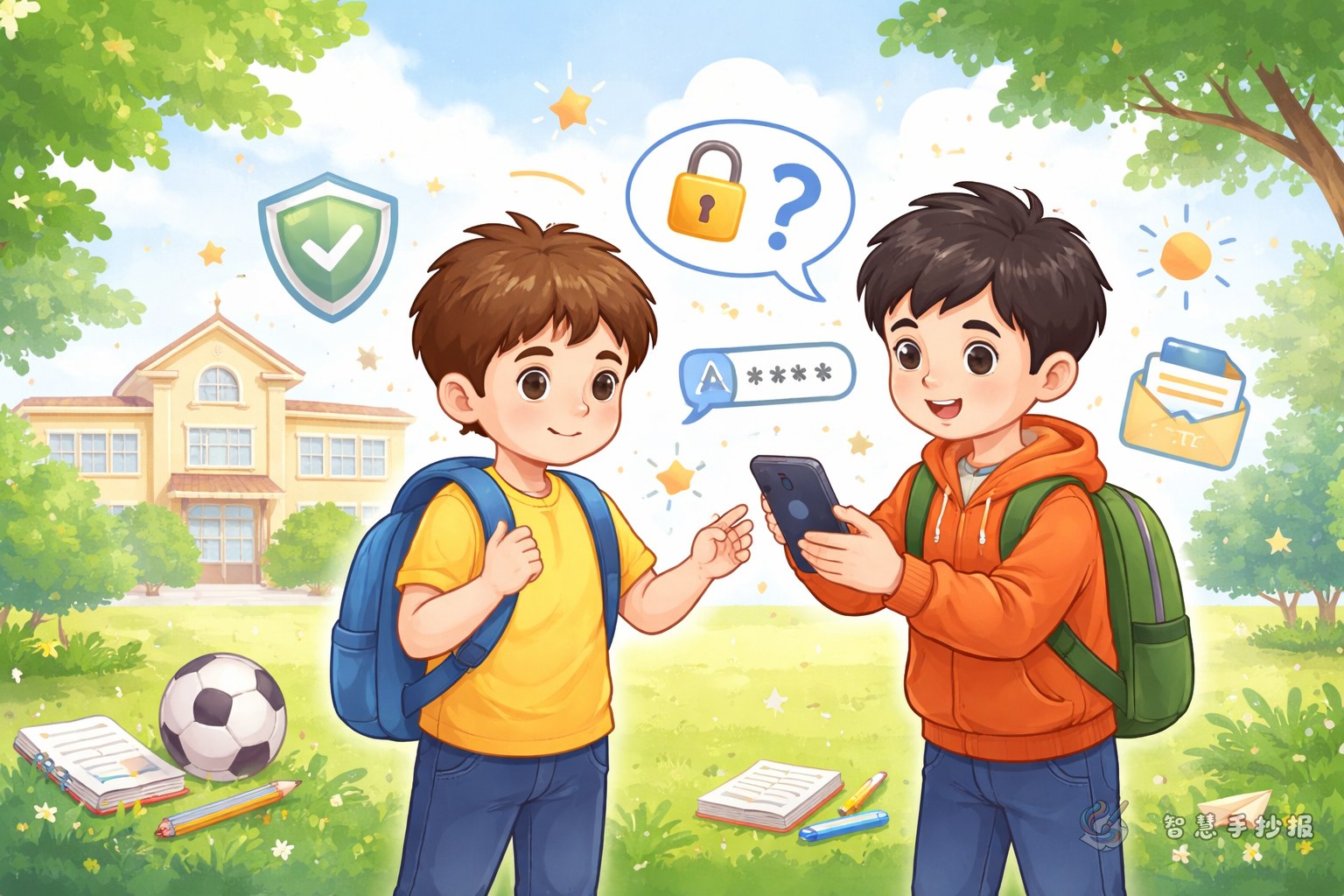
Choose a clear real-life angle first
A practical theme for this poster is “What should I do if a classmate asks to use my phone or asks for a verification code?” This combines anti-scam awareness, anti-bullying ideas, and self-protection in one familiar school situation. It is easier for children to understand than broad slogans.
You can place a short main heading at the top, then add a subtitle such as “Recognize risks, say no, protect yourself, ask for help.” Keep the tone positive and useful. Focus on what to do, not on making the topic scary.
Ready-to-use text materials for the poster
Simple anti-scam reminders
- Do not tap unknown links or scan unknown QR codes casually.
- Be careful if anyone asks for your password, verification code, or payment details.
- Phrases like “right now,” “just one step,” or “don’t tell parents or teachers” are warning signs.
- If money, game accounts, or phone verification are involved, pause first and check carefully.
Anti-bullying message ideas
- Name-calling, threats, isolation, and forcing others to do things are forms of bullying.
- Being bullied is never the victim’s fault.
- If you see bullying, do not laugh or watch silently. Tell a teacher in time.
Short self-protection lines
- Do not trust easily, do not send money, do not share private information, verify first.
- If someone threatens you, keep evidence and ask a teacher or parent for help.
- Stay calm, move away from danger, and protect yourself first.
Turn the phone and code situation into a main section
You can create a central section called “If someone asks me to use my phone”. Write it as a step-by-step guide:
- Ask why: if the purpose is unclear, do not log in or receive codes for others.
- Learn to refuse: say “I need to ask my parents first” or “I can’t do that for you.”
- Protect information: never lend out your phone number, password, or account details.
- Ask for help quickly: if someone keeps pressuring you, threatening you, or grabbing your phone, tell a teacher, school staff member, or parent at once.
This section makes the poster practical and connects scams, bullying, and personal boundaries in a natural way.
A poster layout that looks clear and strong
A good layout is main title in the center, two side sections, and a bottom action box. Put the title in the middle, “Warning signs” on one side, “Bullying behaviors” on the other, and “What I should do” at the bottom. This makes the reading flow easy to follow.
- Use blue, green, or orange for a clean and safe feeling.
- Decorate with simple shields, speech bubbles, warning signs, or books.
- Highlight key words such as refuse, verify, ask for help, keep evidence.
- Keep each section short: one small paragraph plus three to five bullet points is enough.
End with a useful and active message
Instead of ending with only “We should stay alert,” write something more practical: Do not trust suspicious messages, do not stay silent when bullying happens, and start protecting yourself by learning to say no. A good poster should not only look neat, but also teach actions children can really use.
If you want to improve the title style, section arrangement, or color matching, you can continue designing your work in the Zhihui Shouchaobao WeChat mini program and make your handwritten newspaper clearer and easier to present.