Start with a real-life theme from the community
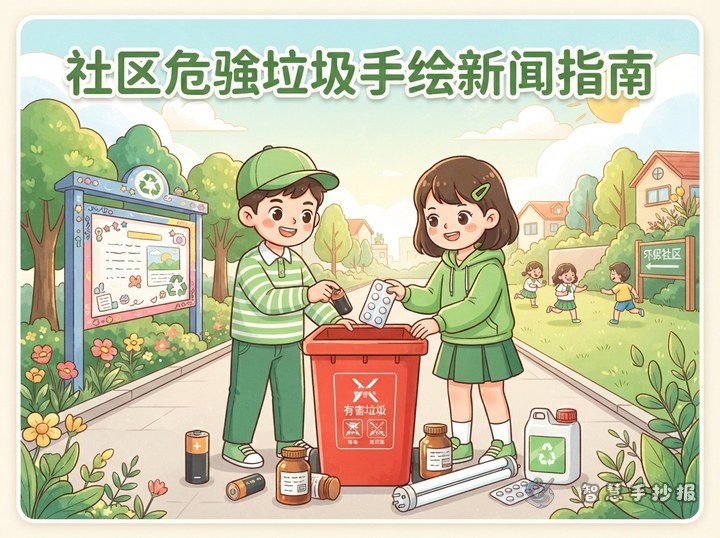
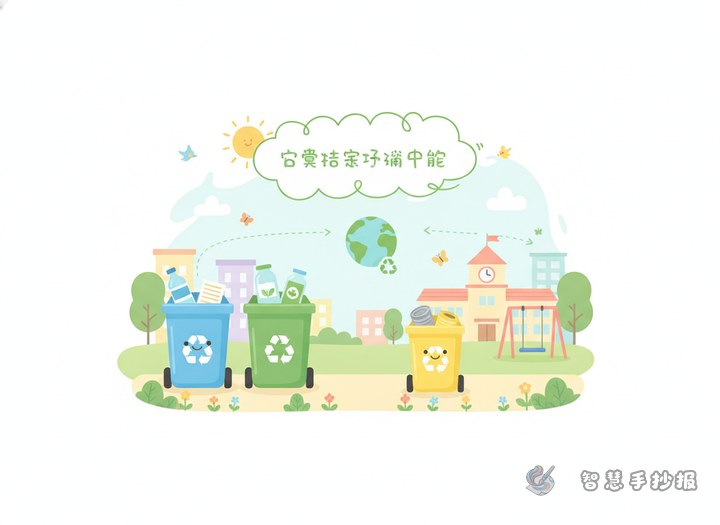
For this kind of poster, do not focus only on trash categories. A better idea is to turn the page into a small community scene, such as “A Day of Waste Sorting in My Neighborhood” or “A Green Community Begins with Sorting.” You can draw apartment buildings, a sorting station, trees, neighbors, and student volunteers to make the poster feel warm and practical.
Useful sections that make the poster feel complete
Section 1: Community sorting promises
Add short reminders like sort correctly, throw at the right time, reduce waste, and keep the neighborhood clean. This works well under the main title.
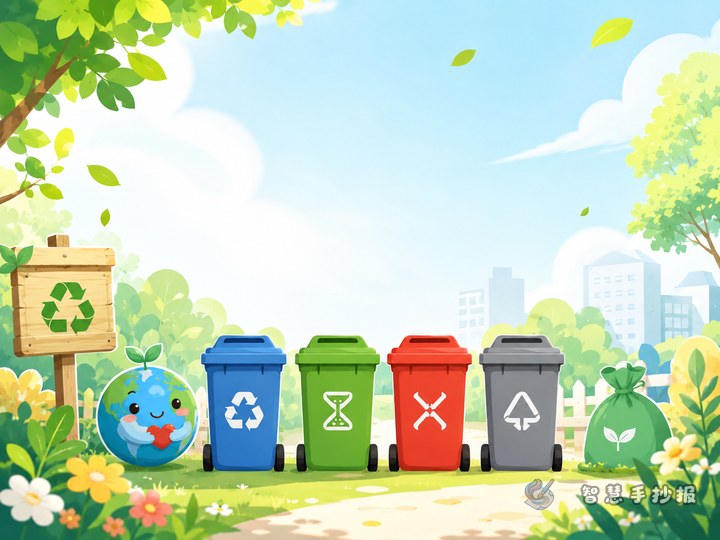
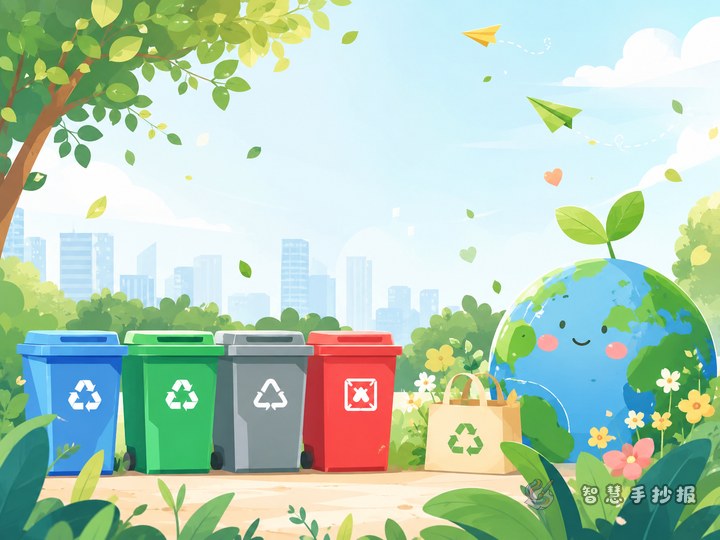
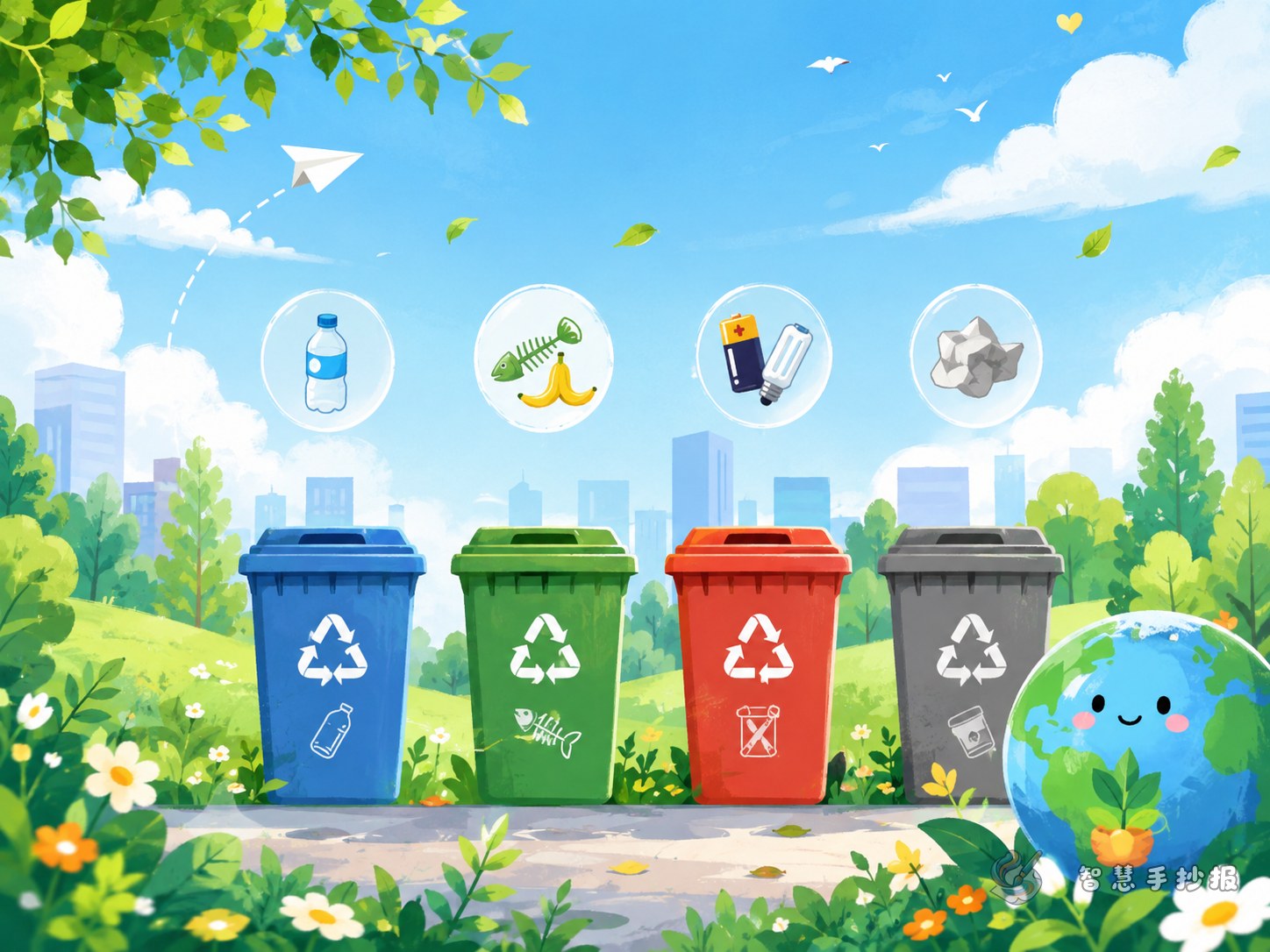
Section 2: Quick guide to the four waste categories
- Recyclables: paper, plastic bottles, metal, old books
- Kitchen waste: leftovers, fruit peels, vegetable leaves, tea waste
- Hazardous waste: used batteries, expired medicine, light tubes
- Other waste: dirty tissues, disposable lunch boxes, dust
Use only a few common examples in each group so the layout stays neat.
Section 3: What students can do for the community
Write simple first-person actions such as “I sort before I throw,” “I remind others politely,” “I reuse useful items,” and “I join family clean-up activities.” This makes the poster more personal and natural for children.
Ready-to-use text materials
Slogan: Sort waste well, make the community beautiful.
Slogan: A greener home needs everyone to take part.
Slogan: Start with one trash bin, care for the whole neighborhood.
Short paragraph: Waste sorting is part of everyday life in our neighborhood. When we sort trash correctly, recyclable items can be reused, pollution can be reduced, and the community becomes cleaner and more comfortable. Even primary school students can help by sorting waste at home, throwing it away properly, and saving resources with their families.
Layout ideas: make it look like a small community map
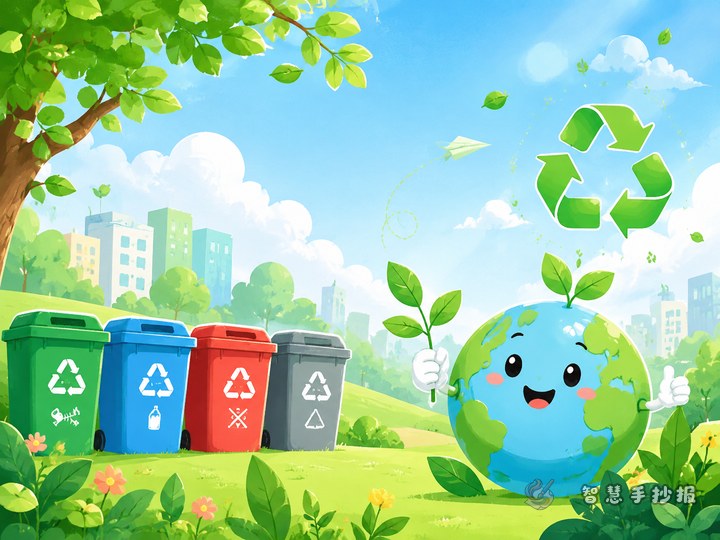
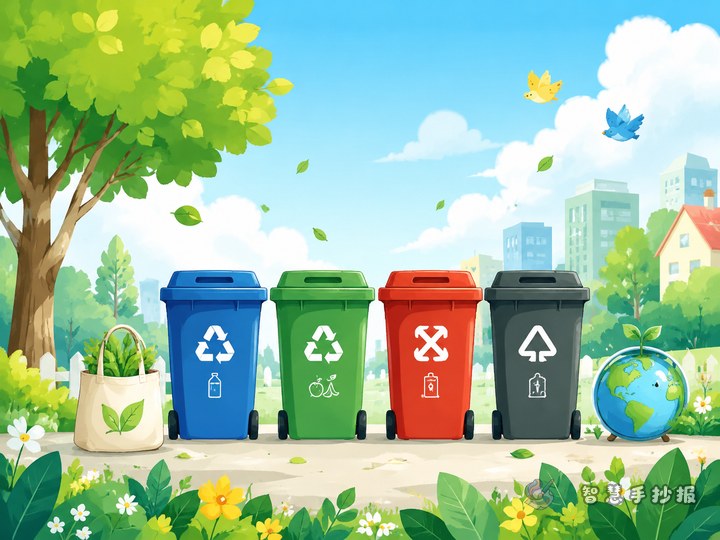
Try an uneven layout instead of splitting the page into equal parts. One side can show the main neighborhood drawing, while the other side can hold smaller blocks for sorting facts, slogans, and action tips. Green and blue work well as main colors. You can decorate with leaves, recycling arrows, houses, bins, and simple item icons like bottles, banana peels, newspapers, and batteries.
How to make it both attractive and school-friendly
- Use a large title and include the idea of a green community.
- Keep each text block short, about three to five lines.
- Balance pictures and words so the page does not feel crowded.
- Use fresh colors like green, blue, and yellow.
- Finish with a personal call to action to make the work more lively.
If you want to keep improving the layout, wording, and color matching, you can continue designing in the Zhihui Shouchaobao WeChat mini program.