Start by Choosing One Star Seabird
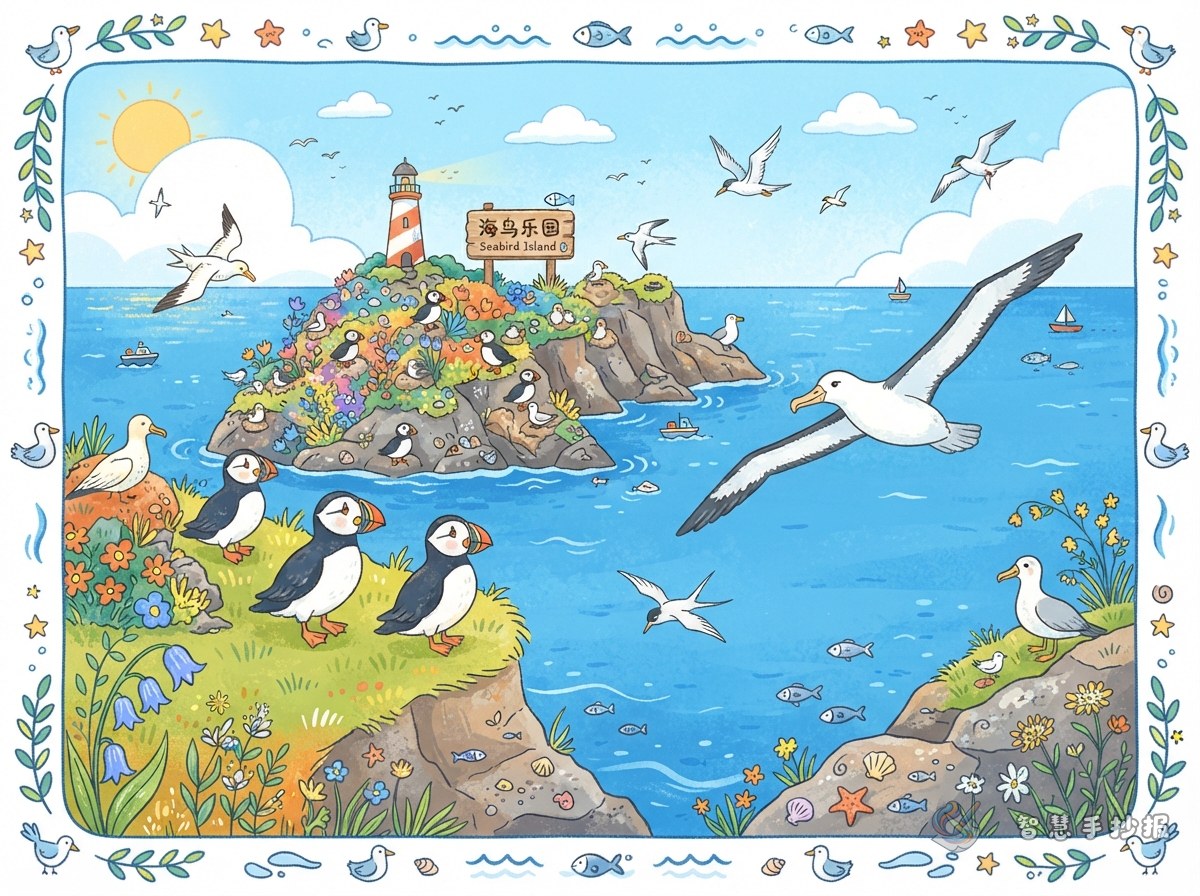
Seabirds come in many shapes, and a poster that tries to draw all of them usually looks crowded. Pick one bird as the star and two or three as supporting characters.
- Good star choices: a puffin with its patterned beak, an albatross with its long wings, or a gull that is easy to draw.
- Supporting birds: terns, gannets and cormorants work well as simple flying silhouettes in the corners.
- Size tip: let the star bird take up at least one sixth of the page so it can carry the title area.
What Makes a Bird Island Special
A bird island is an island or coastal cliff where seabirds gather to nest. Three simple points are enough for a school poster: location, landform and food.
- Location: bird islands often sit near currents where small fish are plentiful.
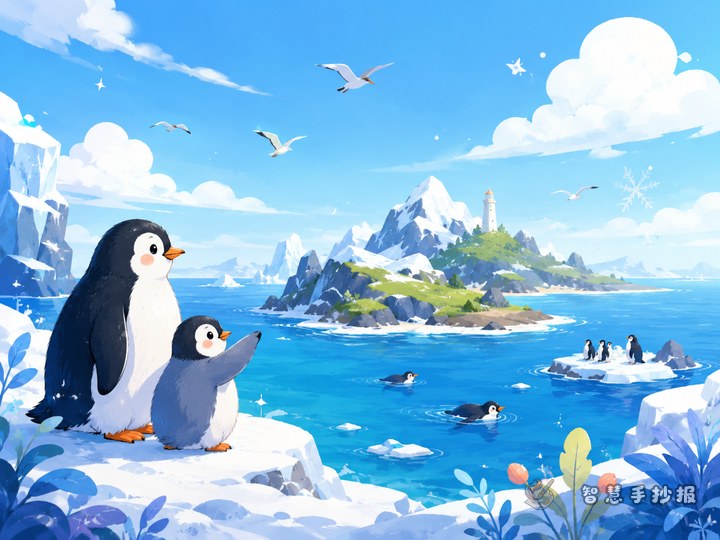
- Landform: steep cliffs, rocks and gravel slopes give birds ledges to nest on and block the wind.
- Why they gather: food nearby, fewer ground predators, and plenty of nesting spots.
Turn these into a small card called “Three Questions About a Bird Island”.
Short Fact Lines You Can Copy
- Puffin: a large colourful beak and a black and white body, nesting in burrows on sea cliffs.
- Albatross: very long, narrow wings that allow it to glide above the ocean for hours.
- Gull: easy to recognise, often seen near harbours and boats, with a loud call.
- Tern: a light body and a forked tail, diving into the water to catch small fish.
- Cormorant: a strong diver that stands on rocks with its wings spread out to dry.
Page Layout: Island at the Bottom, Birds in the Sky
- Leave the top third for the title, “Seabirds and Bird Islands”, with a large puffin or a gliding albatross beside it.
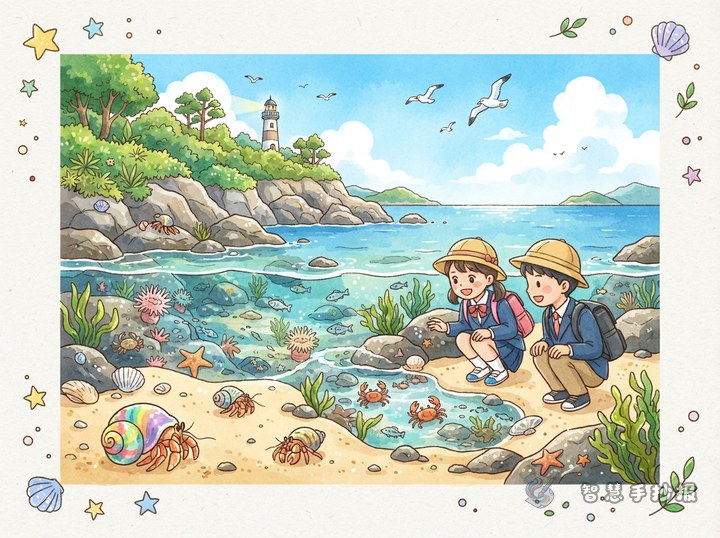
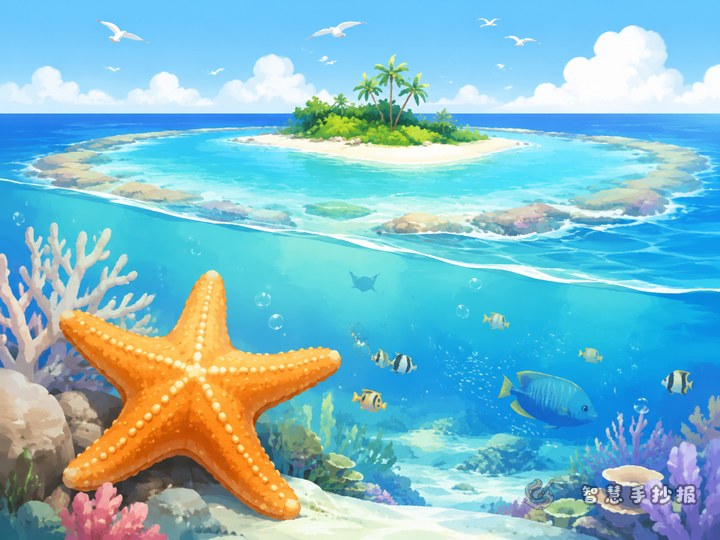
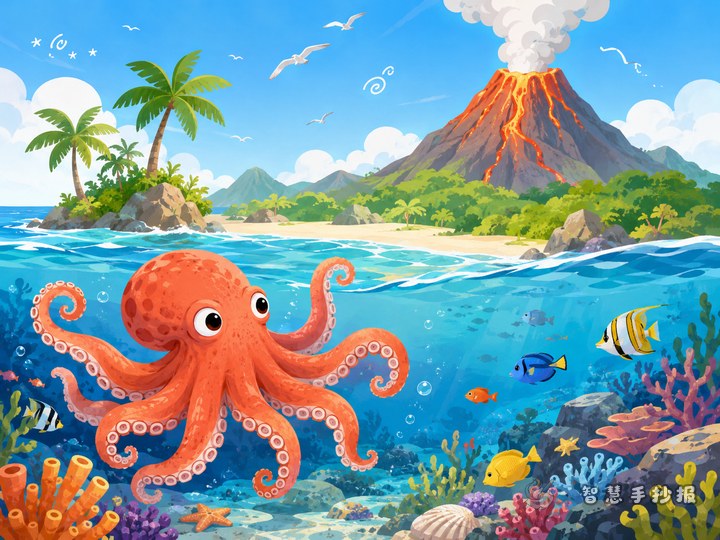
- Draw an island silhouette along the bottom, using simple fold lines and small curves for cliffs, rocks and waves.
- Divide the middle into three or four text boxes and leave two fingers of space between them.
- Place small flying birds along a diagonal from the lower right to the upper left to add movement.
Colors, Borders and Small Decorations
- Base colours: light blue, grey blue and off-white so black text stays readable.
- Accents: a little orange red for a puffin beak, and orange yellow for gull beaks and feet.
- Borders: wave lines, shell lines or simple rock zigzags work better than busy vines.
- Small decorations: fish triangles, water drops, a compass or a small anchor, all at the same size.
Quick Check Before You Hand It In
- Does the title make the theme clear at first glance?
- Is each text box written as short lines instead of long paragraphs?
- Is there a little empty space left, so the main points stand out?
If you want ready-made columns and borders, open the Zhihui Shouchaobao mini program on WeChat, choose a marine animal or island theme, replace the text with your own notes, and draw over the layout.