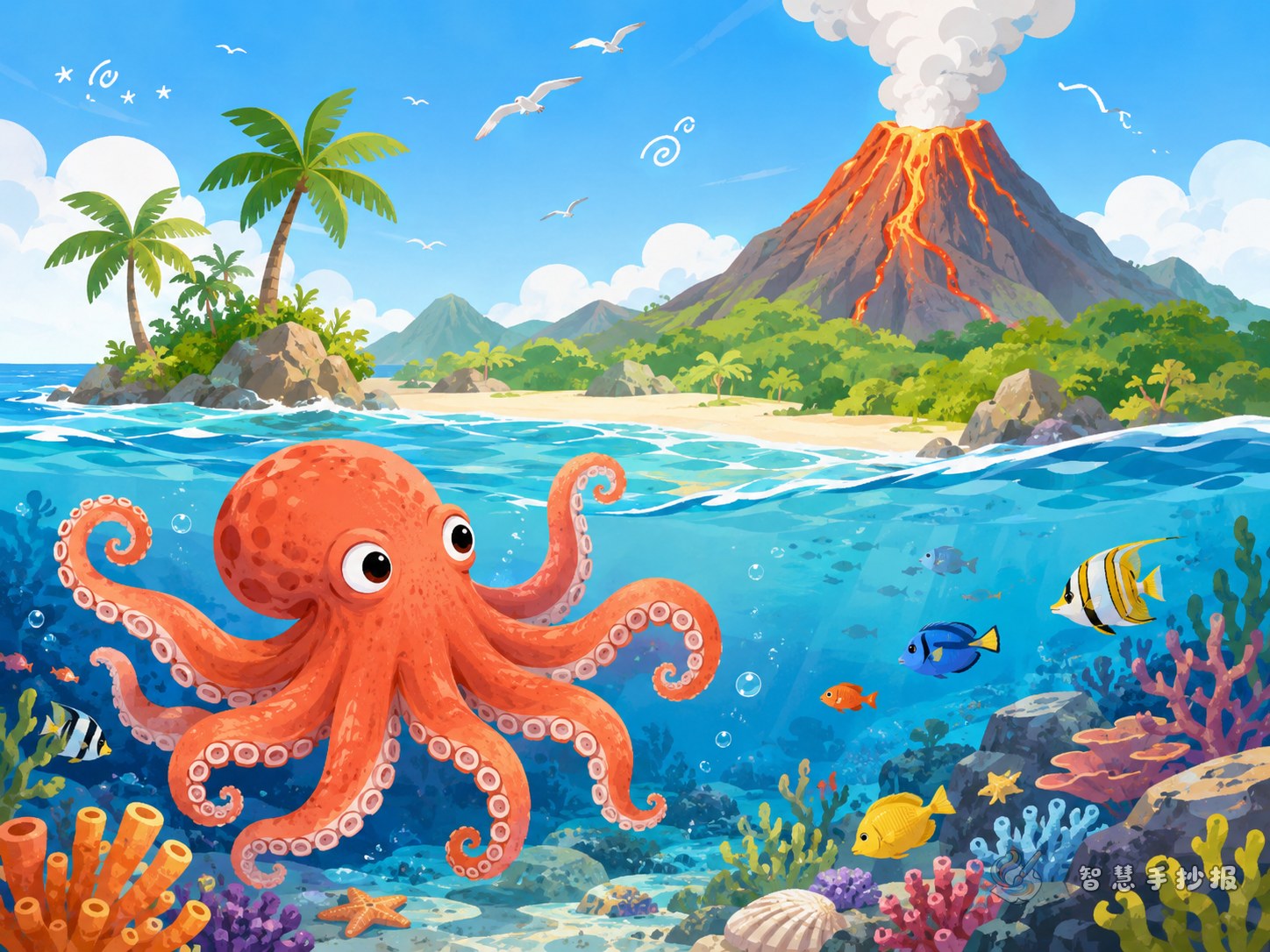
Turn the page into an adventure from sea surface to seabed
This topic becomes much more engaging when it is presented as an exploration story. A volcanic island appears above the sea, while the octopus lives below among rocks, seaweed, and underwater shelters. That connection gives the handwritten newspaper both imagination and structure.
Instead of listing facts one by one, students can guide readers from the island above to the underwater world below. This makes the page feel lively and helps the content flow naturally.
Section ideas that fit the theme well
- Theme introduction: Explain in a few lines why octopuses and volcanic islands belong together on one page.
- Meet the octopus: Write about its body, arms, movement, and special abilities.
- How volcanic islands form: Describe underwater eruptions, cooling lava, and island building.
- Life around the island: Introduce seaweed, small fish, shellfish, and rocky habitats.
- Protect the ocean: Add simple actions for caring for marine life and island environments.
If there is extra space, a small question box can make the page more interactive, such as “Why can an octopus change color?” or “Are all volcanic islands hot?”
Short writing materials students can use
Opening lines
The octopus is one of the most fascinating animals in the ocean, and volcanic islands are special landforms rising from the sea. Putting them together in one handwritten newspaper helps us learn both marine life and island geography.
Octopus facts
An octopus has a soft body and eight arms. It moves flexibly in the sea and often hides among rocks or in underwater holes. Some octopuses can change color to protect themselves and blend into their surroundings.
Volcanic island facts
Some islands are formed by volcanic activity under the sea. When lava erupts and cools over time, it can build up and rise above the water surface. These islands often have rocky shores and dramatic landforms.
Protection message
Marine animals and island ecosystems both need care. We should not throw trash into the sea or damage coastal habitats. A clean ocean helps octopuses and many other sea creatures live safely.
A layout plan that is easy to organize
A strong design idea is an island-above, ocean-below layout. Draw the volcanic island, sky, and sea surface at the top, then place the octopus, rocks, and underwater scene in the lower half. A wave-shaped divider can connect the two parts beautifully.
- Put the main title near the center for balance.
- Use one side for octopus facts and the other for island geography.
- Leave a bottom section for an environmental message or final summary.
This structure looks neat and keeps the two main ideas linked without confusion.
Color and decoration tips
Blue should be the main color because it sets the ocean mood. Add gray, brown, and orange-red to show volcanic rock and lava. A bright octopus in purple, orange, or pink can stand out clearly.
- Use layered blues for water to make the page feel fresh.
- Shade the island with gray and brown for a rocky effect.
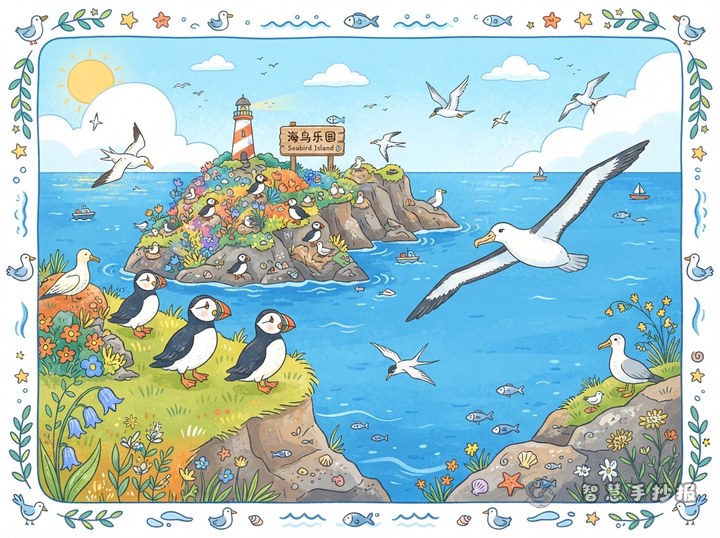
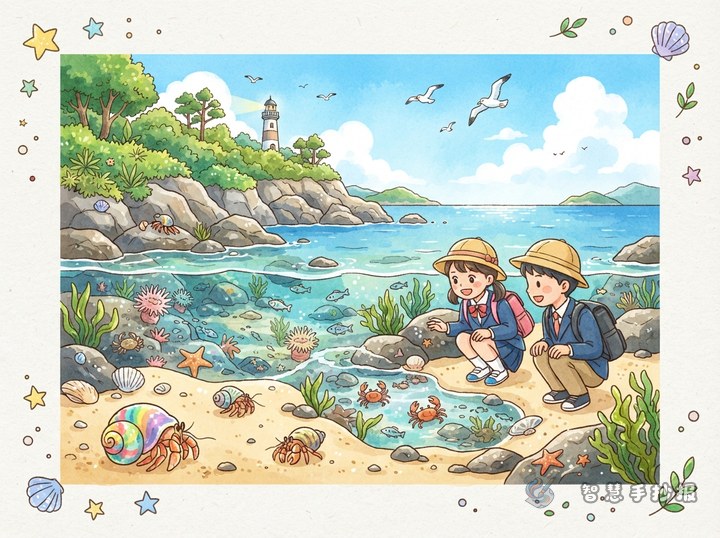
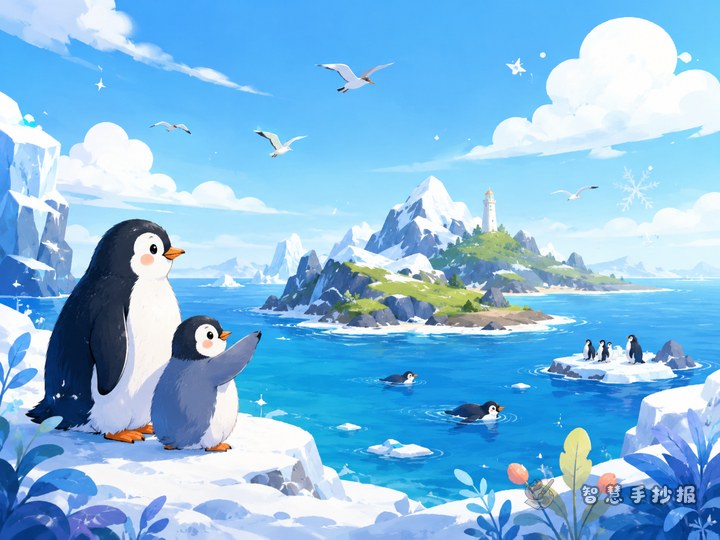
- Add shells, bubbles, waves, seabirds, and island outlines as small decorations.
Decorations should support the topic, not crowd the writing space. Clear sections and readable text always matter most.
Final checklist before finishing
- Does the title clearly mention both the octopus and the volcanic island?
- Does the page include both marine animal facts and geography knowledge?
- Are the sections short, neat, and easy to read?
- Do the drawings match the topic instead of just filling empty space?
- Is there a simple message about protecting the ocean?
After the draft is done, students can improve the colors, borders, and wording. If you want to continue polishing the design, adjusting the layout, or adding more handwritten newspaper content, you can move into the WeChat mini program for the next step.