Choose One Main Slogan Before You Draw Anything
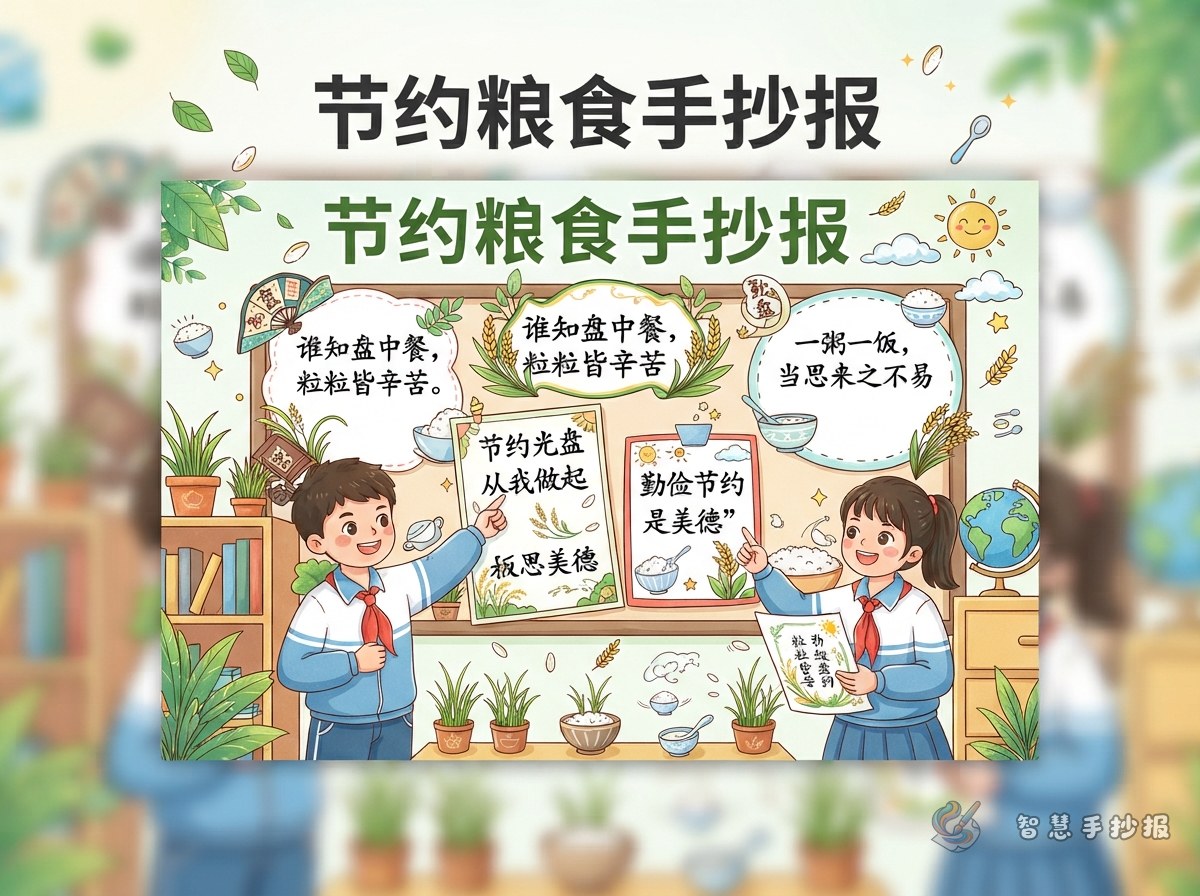
Many students draw the borders first and then discover there is nowhere to write. A calmer order is to choose your main slogan first, then build the sections around it. Keep the slogan under fourteen characters, for example 'Save food, starting with me' or 'My bowl, my clean plate.' Place it centered right under the title in the biggest letters, and let everything else support it.
Poems and Sayings You Can Use with Confidence
Short Poems About Farming
- Li Shen's 'Sympathy for the Peasants': who knows that every grain of rice in the bowl comes from hard work.
- The same poet's lines about one grain planted in spring and ten thousand seeds harvested in autumn.
- A line or two from classic pastoral poems that describe busy harvest days.
Poems are short and full of pictures, so they fit perfectly into a tall narrow panel along the side of the page.
Family Mottos and Short Sayings
- The well-known household instruction that every bowl of rice should remind you how hard it was to obtain.
- The line about quietness improving character and frugality improving virtue.
- Short phrases such as 'take only what you need, use only what is enough.'
Add a small line underneath naming the source, and the page immediately looks more careful and complete.
Your Own Rhyming Lines
Lines you write yourself need no source. Keep them short and rhythmic, like 'no rice left in the bowl, no soup left on the plate,' and place them inside small speech bubbles.
Three Ways to Place a Poem on the Page
- Bookmark strip: draw a long narrow strip with rice ears at both ends and write the poem vertically.
- Bowl speech bubble: draw a bowl first, then let the poem be what the bowl is saying.
- Bamboo-slip bar: join three or four slips into one horizontal bar and write the poem across it as a bottom edge.
Ready Section Plans You Can Copy
- Safe plan: title banner, poem bookmark, my food-saving promise, a small picture of how rice grows.
- Family plan: title banner, a short paragraph about one family meal, a clean-plate record table, a motto bar.
- School plan: title banner, cafeteria dining tips, poem bamboo bar, a class clean-plate slogan.
Pick just one plan and keep four or five sections in total. Filling every corner usually makes the page look crowded.
Turn Slogans into Your Own Words
'We should save food' is easy to write and easy to forget. Try instead: 'I used to leave half a bowl of rice. Now I serve a little less, and I finish it every time.' One sentence with a change over time and a real action works better than ten slogans. A simple 'before and now' comparison only needs two lines.
Borders, Colors and a Final Check
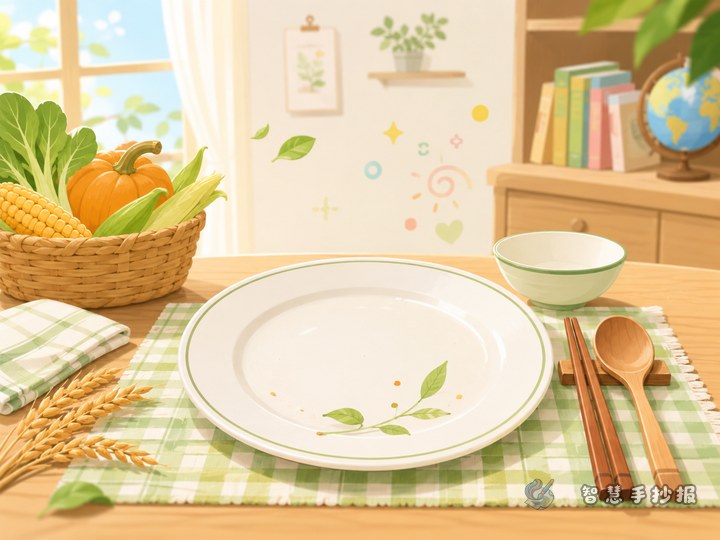
- Useful elements: rice ears, grains of rice, bowls and chopsticks, plates, pumpkins, corn, small aprons.
- Color idea: a cream background, rice-green as the main color, and orange or light brown as accents.
- Three things to check: no wrong characters in the slogan, every poem has its source, and no text is hidden under a border.
If you would rather skip drawing grids and planning the layout, open the WeChat mini program and search for the food-saving and clean-plate templates, drop your poem and promise lines in, then print or copy the arrangement before you start writing on real paper.