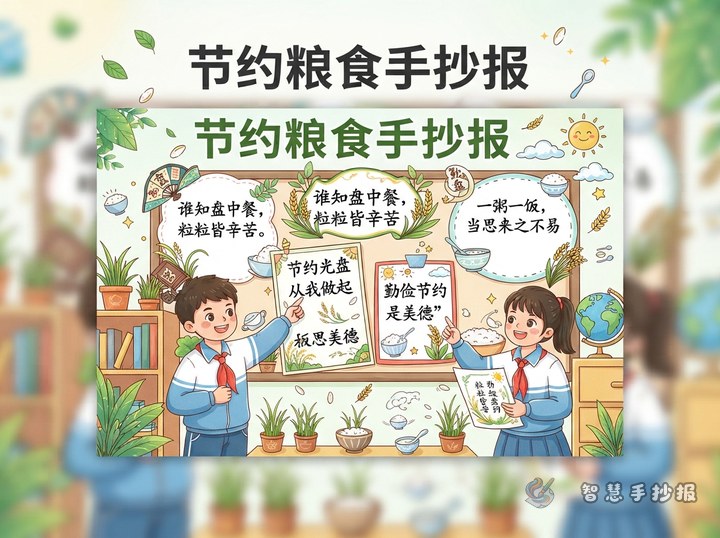
Try a “Campus Food-Saving Check-In Plan” Theme
If you want the handwritten newspaper to feel more original, turn it into a campus food-saving check-in plan. This angle is different from a general clean-plate poster because it focuses on real student actions instead of only repeating big ideas. You can use titles like “My One-Week Food-Saving Record” or “Did I Finish My Meal Today?”
This approach works especially well for younger students because the content is concrete, easy to organize, and clearly connected to school life. It also makes the finished page look more personal and active.
Write About Actions Students Can Really Do
A good food-saving handwritten newspaper should not be filled with empty phrases. It is better to include practical actions that students can follow every day.
- Think before taking food: Take only the amount you can finish.
- Do not be picky with food: Try to avoid leaving vegetables or rice behind.
- Remind friends kindly: Help build a better dining habit together.
- Remember food is hard-earned: Use short lines to express respect for farmers and labor.
- Build a daily habit: Practice saving food both at school and at home.
Specific, school-based content usually works better than long copied passages, especially in a student poster.
Make the Sections Feel Like Task Cards
Instead of using the usual information blocks, you can design the poster like a set of task cards. That makes it more interesting to read.
- Today’s Saving Goal: For example, “Take food in proper portions.”
- Waste Observation Corner: Write about common waste at school, such as taking too much rice.
- My Best Tip: Share one simple method to reduce waste.
- Clean Plate Check-In Box: Draw a seven-day chart for fun interaction.
- My Promise: Write one sentence beginning with “I will…”
This kind of structure makes the page feel student-made instead of looking like a copied reference sheet.
Use Short and Strong Writing Materials
If you need ready-to-use lines, choose short ones that are easy to copy neatly into the layout.
- Cherish every grain of rice.
- Saving food starts with every meal.
- Take what you need and finish what you take.
- Waste less, value more.
- Respect food by respecting labor.
- A clean plate is a good habit.
You can also add a short personal reflection, such as learning that even a small amount of leftover food should not be ignored. That makes the poster sound more sincere and age-appropriate.
Use a Plate-Shaped Layout for the Page
For layout design, you can create a large plate in the center and divide it into several areas for goals, check-ins, slogans, and reflections. Around it, add small drawings like rice grains, bowls, spoons, or wheat. This keeps the whole page connected to the food-saving theme.
Green, yellow, and off-white are good main colors. Keep the page clean instead of too crowded, and use bold mini-headings to highlight key parts.
End with a Simple Call to Action
The final part of the handwritten newspaper can be a short call to action instead of a plain conclusion. For example: Let us start today by taking only what we need, wasting less, and valuing every grain of food. In this way, frugality becomes part of campus culture.
If you want to keep improving your title, sections, and layout details, you can continue creating your work in the Zhihui Shouchaobao WeChat mini program.