Choose bamboo as the main subject for a focused poster
Bamboo works especially well in a campus plant observation poster because it is easy to recognize. Its straight stem, clear nodes, and narrow leaves make it simple to draw and describe. Instead of covering many plants, focusing on one species gives the page a stronger science-observation feel.
You can build the title around ideas such as “My Campus Bamboo Observation,” “What I Found in the School Bamboo Grove,” or “Why Does Bamboo Grow in Sections?” These feel more natural and specific.
What to write in the main sections
1. Appearance notes
- Bamboo stems are usually straight and divided into sections.
- The leaves are long, narrow, and pointed.
- When bamboo grows in groups, it creates a layered and tidy look.
2. What I found on campus
- Bamboo may grow near the playground, flower beds, or school buildings.
- It can look fresher in the morning or after rain.
- Some areas may have tall mature bamboo, while others may show new shoots.
3. Growth features
- Bamboo prefers warm and moist environments.
- The nodes help support the plant structure.
- Bamboo is known for growing relatively fast.
4. Practical uses
- Bamboo can be used to make baskets, chairs, and chopsticks.
- It is also a common landscape plant in school gardens.
- In culture, bamboo often represents strength and upright character.
Simple observation writing you can include
To make the poster feel personal and real, add a short observation note. It does not need to be long, but it should include time, place, and findings.
- Observation time: Tuesday morning. Place: small bamboo grove behind the teaching building. Finding: the stems were straight, the leaves were slim, and some leaves were darker green.
- Observation time: after rain. Place: beside the playground. Finding: the leaves looked brighter, the ground was damp, and the area felt fresh.
- Observation time: before school ended. Place: next to the flower bed. Finding: a new bamboo shoot was lighter in color and looked softer than the mature stems.
These details make the poster look like a true observation task instead of a copied facts page.
Let the layout feel like a science observation sheet
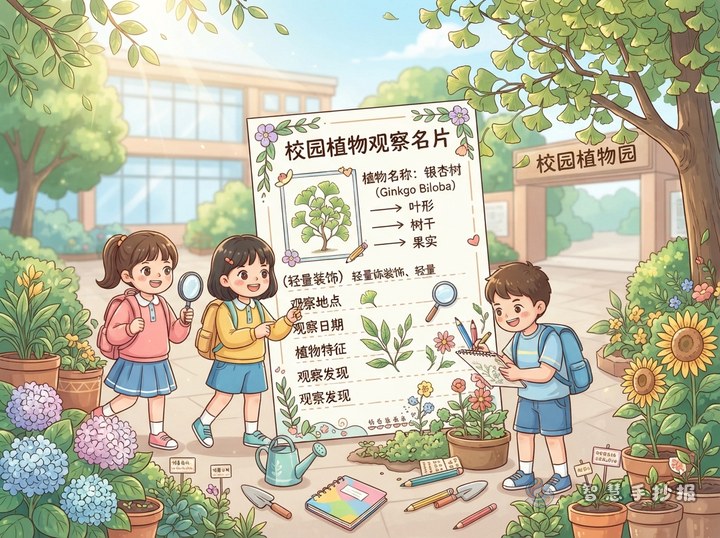
A bamboo theme fits a vertical layout very well. Draw one or several tall bamboo stems in the middle to create a strong visual center, then place the text sections around them.
- Top: main title
- Left: bamboo appearance
- Right: campus observation notes
- Bottom: uses and personal reflection
- Corners: small drawings of leaves, shoots, or dew drops
Green, light yellow, and pale blue are good color choices. Keep the palette simple so the page looks fresh and organized.
A good ending for the poster
The ending can connect science learning with caring for nature. For example: By observing bamboo, I learned that plants on campus are not only beautiful but also full of scientific knowledge. I want to keep noticing changes in nature and protect the green spaces around me.
After choosing your sections and writing your text, you can also continue improving the page in the Smart Handwritten Poster WeChat mini program for a cleaner final result.