Choose a small focus so the page feels clearer
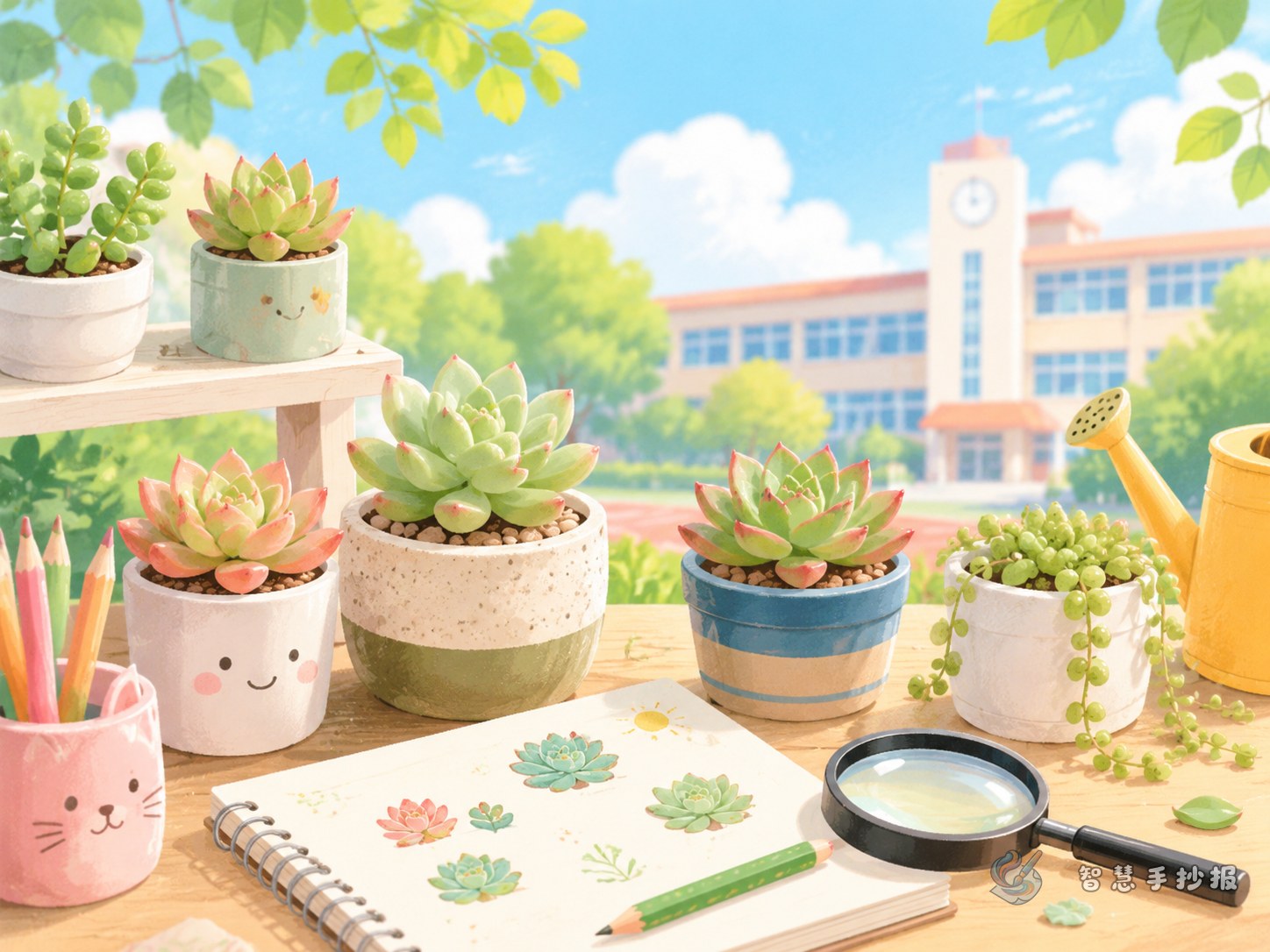
The topic of campus plant observation is very broad. If you try to include every plant, the page may feel messy. Choosing succulents as the main subject gives the handwritten newspaper a clear direction. Succulents may appear on classroom windowsills, in school offices, or in garden corners, so they are easy to notice and describe.
You can create a title such as “The Water-Storing Stars on Campus,” “My Succulent Observation,” or “Why Are Succulents So Plump?” to make the topic easy to understand at first glance.
Four simple things to observe
- Shape: Are the leaves round, pointed, or arranged like petals?
- Color: Are they green, pinkish, gray-green, or red at the edges?
- Texture: Do the leaves feel thick, smooth, and full of water?
- Environment: Is the plant in sunlight or shade, and is the soil dry or wet?
These details can become short observation notes. For example: “The leaves are thick like little water bottles, so the plant can handle dry weather better.” This sounds simple but still feels scientific.
Section ideas you can use directly
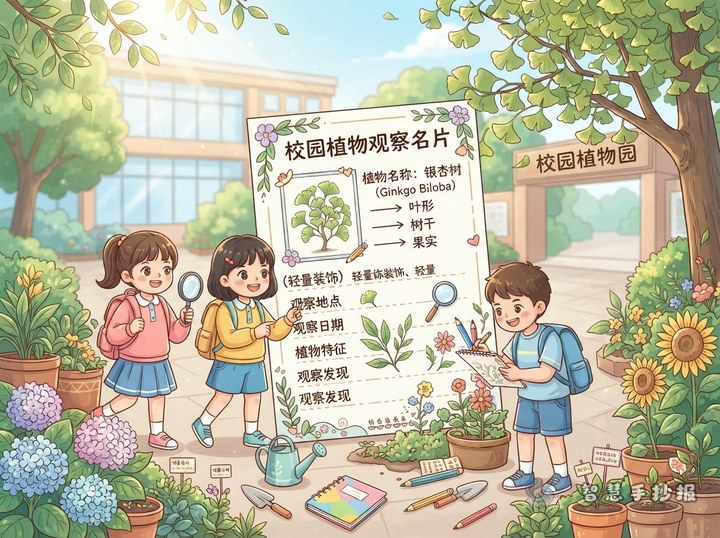
My Observation Card
Write the date, place, weather, and plant name to make the page feel like a real observation record.
Succulent Secrets
Explain that succulents have thick leaves because they store water, which helps them survive dry conditions.
What I Found on Campus
Describe real details you noticed, such as brighter color on the sunny side or changes when the soil is too wet.
Care Tips
- Do not water every day
- Give enough sunlight
- Use soil with good drainage
- Avoid moving the pot too often
Fun Question Corner
Add small questions like “Why are succulents called succulents?” or “Why are the leaves so thick?” to make the page more lively.
Let the layout feel like a tiny garden
This topic looks best with a fresh and open design. Draw one large potted succulent in the center and place several small content boxes around it, like plants arranged in a little garden. You can decorate the borders with leaves, dots, or soft vine shapes.
- Put the main title at the top.
- Place observation notes on the left.
- Put science facts on the right.
- Use the bottom area for care tips or mini quizzes.
Soft green, pale yellow, peach, and light brown work well for this theme and keep the page bright and natural.
Short sentences students can use
- Succulent leaves are thick because they store water.
- Succulents like sunlight and fresh air.
- They do not need watering too often.
- Careful plant observation helps us discover quiet and interesting life on campus.
- Even a small plant can teach us a lot about nature.
If you want to keep improving the layout, adjust the title style, or quickly build a more complete handwritten newspaper, you can continue creating in the Zhihui Shouchaobao WeChat mini program.