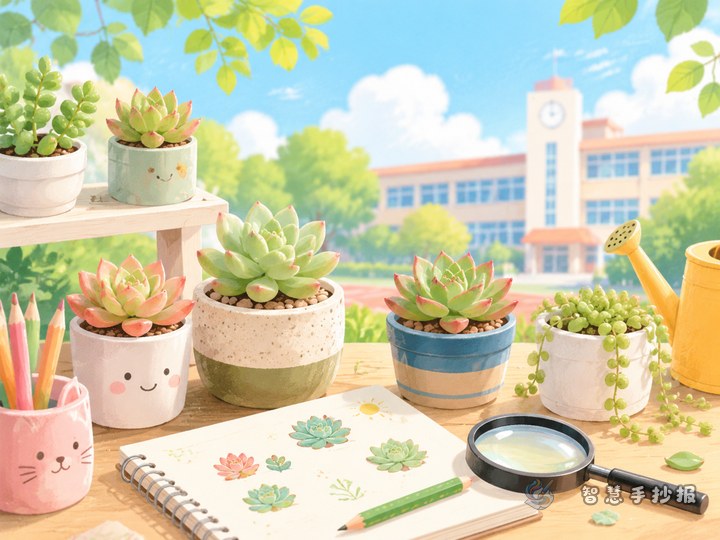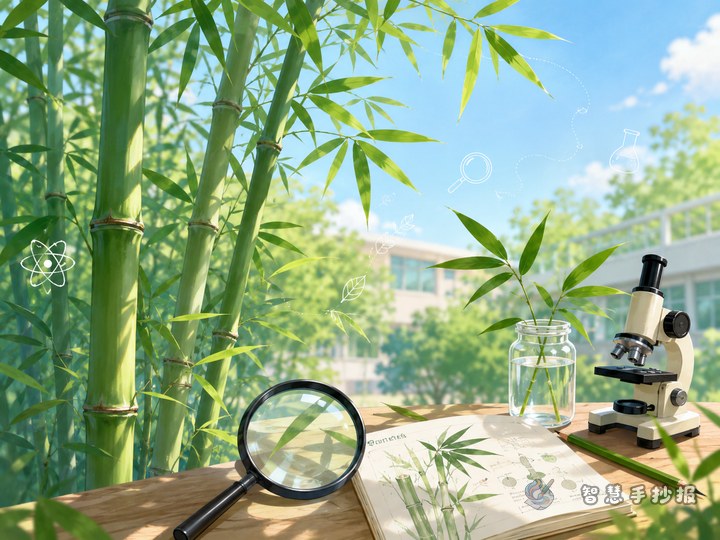
Start with a clear focus: observing leaves on campus
This kind of handbill becomes much easier when the topic is narrowed to leaf observation. Instead of introducing plants in a broad way, focusing on leaves helps students notice details and record real findings. The title can sound natural and curious, such as “What makes campus leaves different?” or “My leaf discoveries at school.”
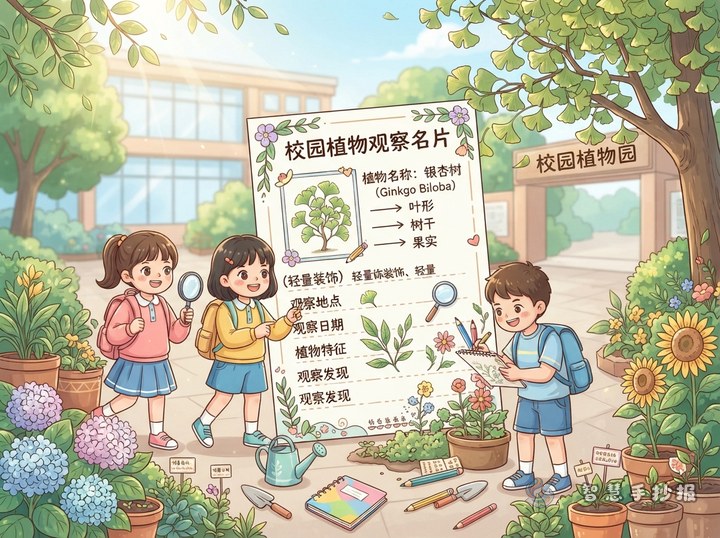
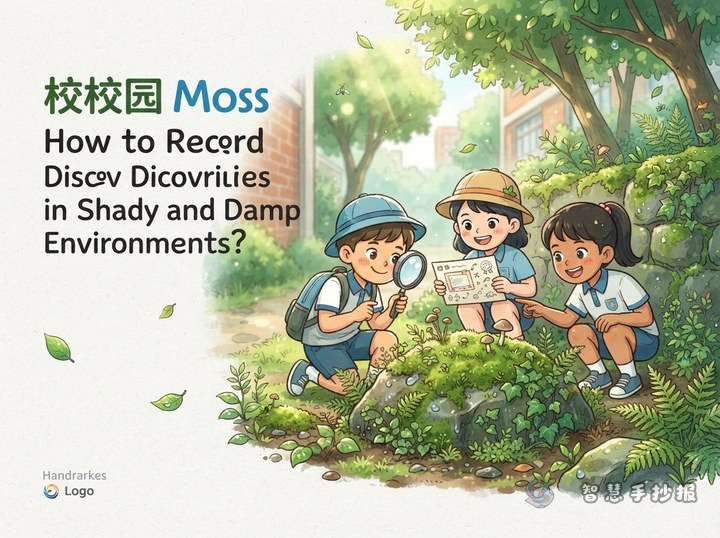
In the opening section, describe where the observation happened: near the playground, beside the teaching building, around flower beds, or along school paths. Then explain that you began comparing leaf color, size, edges, and veins.
Useful sections for the page
Section 1: Which leaves did I observe?
- List 2 to 4 common leaves found on campus
- Add simple notes like location and time
- If you do not know the exact plant name, use descriptions such as “leaf from the playground tree”
Section 2: What do the leaves look like?
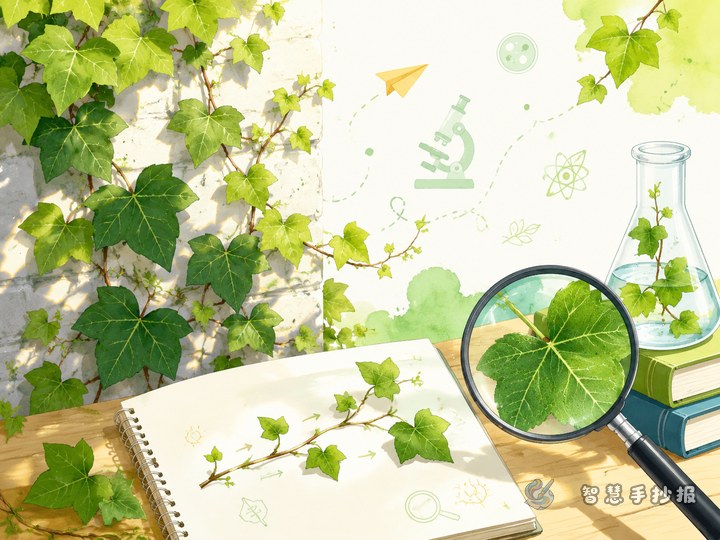
- Shape: oval, needle-like, heart-shaped, palm-shaped
- Edge: smooth, toothed, wavy
- Veins: clear, fine, spreading outward
Section 3: Small findings about color changes
You can write that young leaves are lighter green, older leaves are darker, and some leaves turn yellow or brown before falling. This section shows careful observation.
Section 4: My conclusion
For example: different plants have very different leaves; leaves from the same plant can still vary in size; sunlight, season, and water can affect leaf condition.
Ready-to-use writing material
Leaves on campus are like a quiet natural science book. After careful observation, I found that some leaves are long and narrow, while others are wide and round. Some edges are smooth, while others look like small saw teeth. Even though they all grow in the same school, their shapes are very different.
Leaves are not only green decorations. They help plants make food through photosynthesis. Because of this, leaf color, thickness, and freshness can often show whether a plant is healthy.
During repeated observation, I also found that leaves on the same tree are not exactly the same. New leaves are softer and lighter in color, while older ones are darker and thicker. This shows that plants are always growing and changing.
A layout that feels like a real observation display
You do not have to divide the page into equal blocks. A good choice is a center title with observation cards around it. Put the title in the middle, “leaf comparison” on the left, “color changes” on the right, and “observation notes” and “protection tips” at the bottom. This makes the page more lively.
- Use green, light yellow, and brown to match the leaf theme
- Highlight key words such as “shape,” “veins,” and “color change”
- Keep each section short, around 3 to 5 lines
- Add small leaf borders, arrows, or magnifying-glass style details
End with science and action
The last part of the handbill can go beyond what you saw and include what students can do. For example: do not pick leaves, do not step on flower beds, protect campus greenery, and observe plants gently without harming them. This gives the work both science value and a message about caring for the school environment.
If you want to turn these ideas into a cleaner finished page, you can continue designing in the Zhihui Shouchao Bao WeChat mini program and organize the sections into a more complete handbill.