Choose a Clear Observation Target: The Ginkgo Tree on Campus
If you want a science-themed poster that feels seasonal and easy to fill with details, a campus ginkgo tree is a great choice. Ginkgo trees are common in many schools, easy to recognize, and famous for their fan-shaped leaves. Their color changes through the year also make them perfect for student observation.
At the beginning of the poster, students can explain why they picked ginkgo: the leaves look like little fans, the tree changes clearly with the seasons, and it is easy to observe on campus. A short line near the title can make the theme stronger, such as Starting from one fan-shaped leaf, we discover the changing seasons in our school.
What to Include So the Poster Feels Real and Specific
For a poster about campus ginkgo observation, it is better to organize the content into small sections instead of writing one long plant introduction. That makes the work look more like a true observation poster.
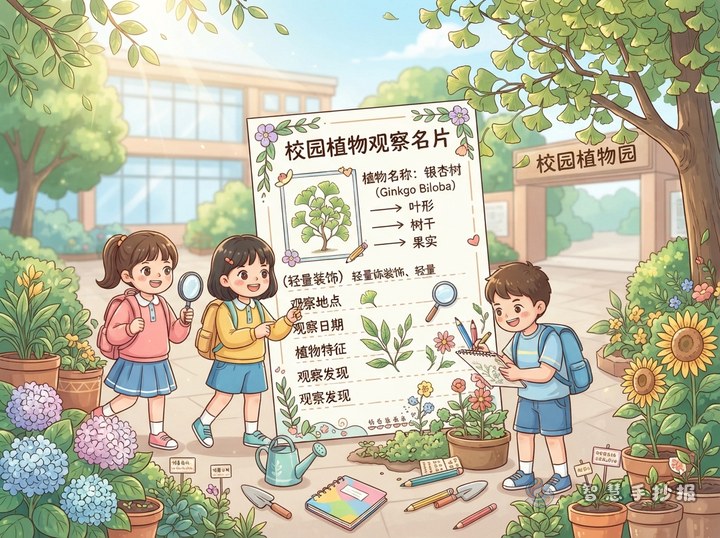
- Plant profile: the name, leaf shape, trunk features, and fruit information of the ginkgo tree.
- Seasonal changes: new buds in spring, green leaves in summer, golden leaves in autumn, and leaf fall in winter.
- My observation notes: record the date, weather, place, and what changes were noticed.
- Leaf facts: ginkgo leaves are usually fan-shaped, with veins spreading outward and sometimes a small split at the top.
- Protecting campus plants: remind readers not to break branches, step on roots, or pick leaves at will.
If there is still space, students can add a small section like “Why I Like Ginkgo” or “A Corner of My School in Autumn” to make the poster warmer and more personal.
Ready-to-Use Sentences for the Poster
These short sentences are suitable for elementary students and can be placed directly into the poster.
- The ginkgo tree is one of the most eye-catching trees on our campus, and its leaves look like little fans.
- I found that the color of ginkgo leaves changes slowly with the seasons.
- In summer, the ginkgo tree grows thick green leaves and brings cool shade to students.
- In autumn, the leaves turn yellow and make the campus look bright and golden.
- Observing plants helps us learn about nature and practice careful noticing.
If you want the writing to sound more like an observation record, try a sentence like this: Today I observed the ginkgo tree in front of the teaching building. Its leaves had soft edges, and some had changed from light green to yellow-green. A few complete leaves had already fallen to the ground.
A Simple Layout Idea: Tree, Leaves, and a Time Line
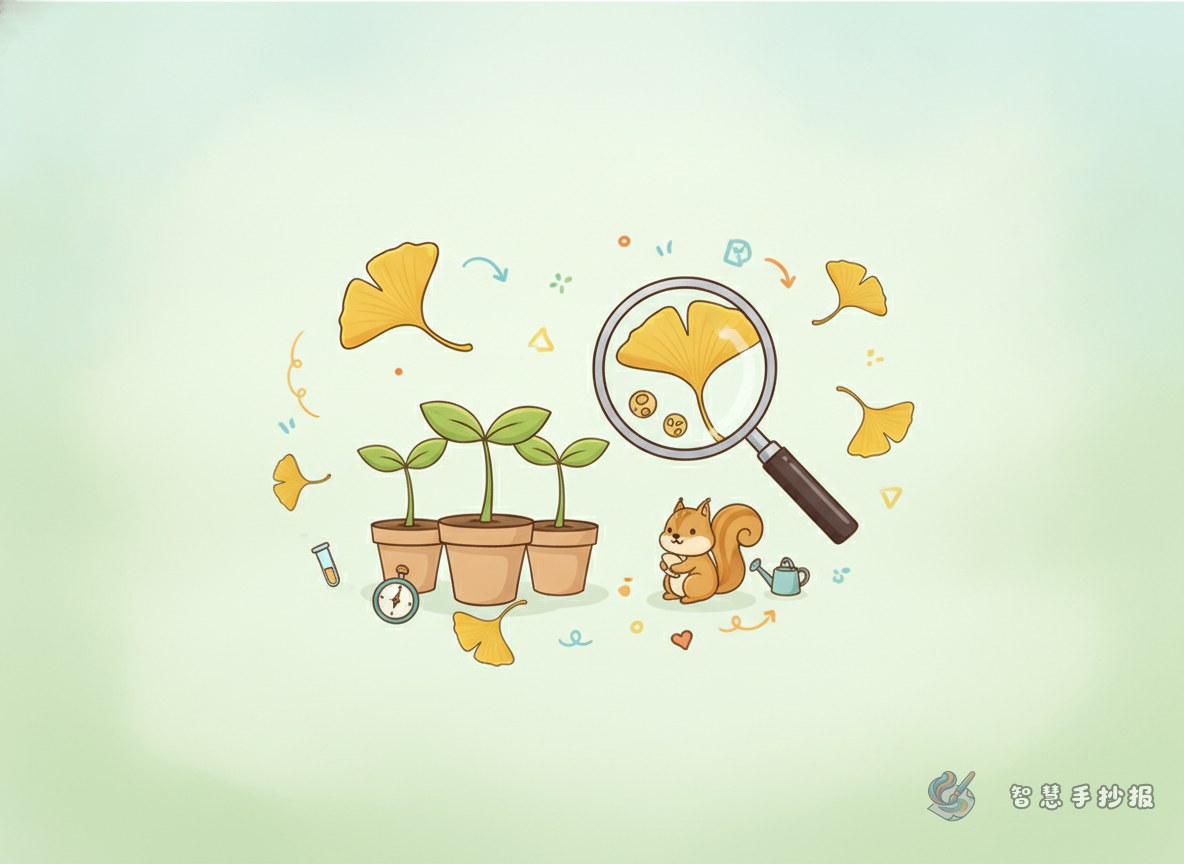
This topic works well with a layout that highlights observation. Put the title at the top center and draw several ginkgo leaves around it as decoration. In the middle, place a simple drawing of a ginkgo tree. Around it, arrange the content sections to form a balanced page.
- Top: main title and a short introduction.
- Left side: plant profile and leaf features.
- Right side: seasonal changes and observation notes.
- Bottom: plant protection tips and a closing sentence.
For colors, yellow, green, and light brown fit the theme best. They match the natural look of ginkgo and help create a clean, warm school atmosphere. Text boxes can be shaped like leaves, rounded cards, or small wooden signs.
How to Make It Feel More Like Science Observation
The key is to include your own observation details. Do not fill the whole poster with copied facts. Add the date, place, weather, and changes you really noticed. For example, you can write that the leaves looked brighter on a sunny day, the trunk seemed darker after rain, or more leaves fell in late autumn.
You can also create a small section called Questions I Discovered, such as “Why do ginkgo leaves turn yellow in autumn?” or “Why do some leaves have a split at the top?” These questions make the poster feel more scientific and thoughtful.
If you want to keep improving the layout, you can continue arranging sections, colors, and title styles in the Smart Handwritten Newspaper WeChat mini program to make your campus observation poster clearer and more attractive.