Begin with the Moss’s Tiny Campus Address
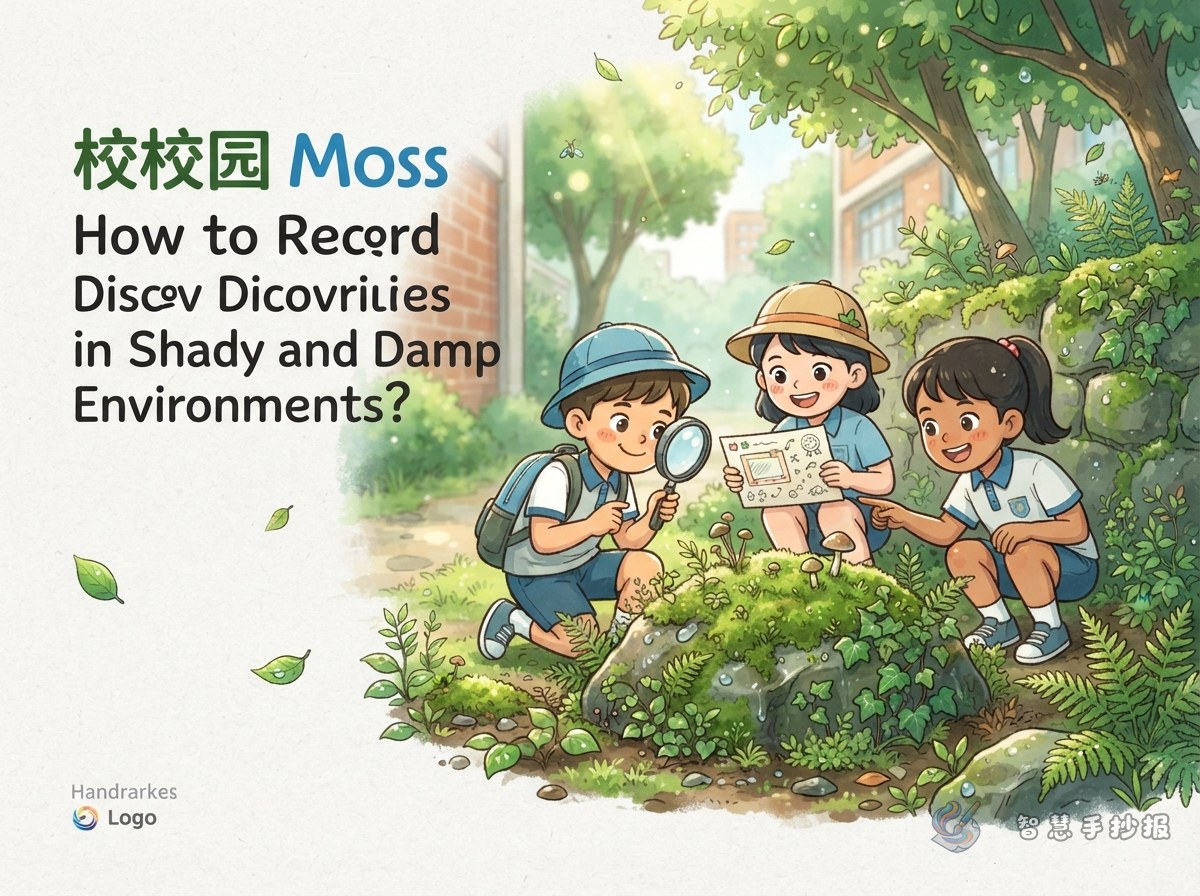
Moss often grows beside tree roots, along flower beds, at the foot of shaded walls, or between damp stones. Before making the poster, choose two places with different light and moisture conditions. Observe without digging anything up, and note the moss’s color, density, visible texture, and surroundings.
- Location: a flower-bed edge, shaded tree base, wall corner, or paving crack.
- Conditions: sunny or shaded, dry or damp.
- Appearance: bright green, yellow-green, or brownish green; carpet-like or tufted.
- Weather: compare sunny days, rainy periods, and dry spells.
Turn a Quick Look into a Fair Comparison
Build the poster around one question: How does moss look in different environments? Visit both places at about the same time for three to five days and use specific words instead of simply writing, “I looked at moss today.”
- Mark both locations and sketch nearby trees, walls, stones, and soil.
- Compare color and how open or curled the moss appears.
- After rain, check whether it looks fuller or brighter green.
- During dry weather, record any darkening or curling without adding water.
- Write a careful idea, such as “The shaded site stayed damp longer.”
Short Science Notes for the Poster
Does moss have true roots?
Moss does not have the well-developed true roots found in trees. It usually has rhizoids that help anchor its small body. Because moss is sensitive to nearby moisture, it is often found in damp, shaded places.
How does moss reproduce?
Moss does not produce familiar flowers or ordinary seeds. A close look may reveal small capsules on slender stalks. These structures are connected with spore production and dispersal. If no capsules are visible, record that honestly.
Why should moss stay where it grows?
Moss grows slowly, and peeling away a whole patch can damage its tiny habitat. Observe, draw, and write without trampling or collecting it. Never taste or handle unfamiliar organisms.
Design the Page Like a Patch of Green Ground
Try a central observation area surrounded by four information cards. Draw an enlarged patch of moss in the middle, place sunny-site and shaded-site cards on opposite sides, and add a dated observation strip along the bottom. Small water drops, magnifying glasses, and stone shapes can decorate the page.
Use light green, deep green, and earthy yellow, while keeping text areas pale for readability. Titles such as “A Tiny Forest by the Wall” or “Where Does Moss Like to Live?” fit the subject. Highlight three key ideas: color change, moisture difference, and responsible observation.
Finish by Answering with Evidence
A useful conclusion should refer to the record rather than only saying, “I like moss.” For example: “Both patches became brighter after rain, but the shaded moss stayed open longer. I think light and moisture affect its appearance.” If the evidence is incomplete, turn the uncertainty into a question for the next observation.
After planning the sections and notes, students and families can continue in the 智慧手抄报 WeChat Mini Program to choose a layout, refine the title, and adjust the colors for display or printing.