Pick One Clear Focus for Your Page
A letter-etiquette page works best when it explains how to write politely from greeting to sign-off. Instead of filling the page with difficult words, show readers where each phrase belongs in a friendly letter.
- Younger students: focus on greeting, a short wish, and sign-off.
- Older students: add envelope courtesy, formal and friendly phrases, and examples for different readers.
Headline and Main Image Ideas
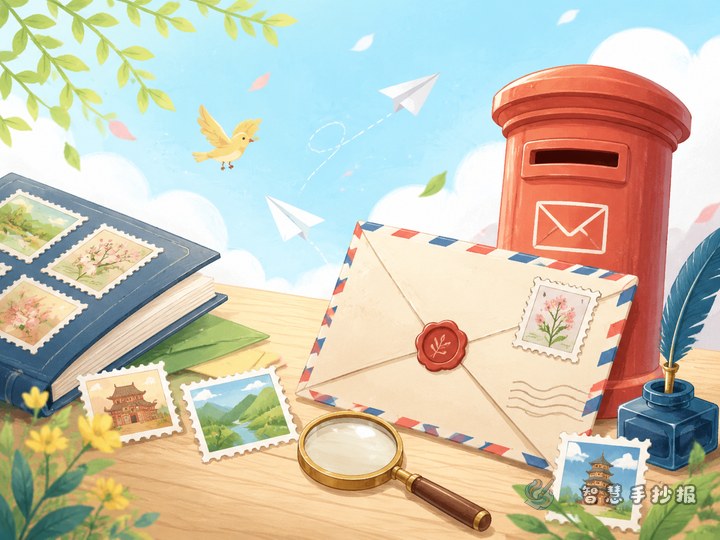
Give the title area about one third of the top space. You can frame it with an envelope shape, stamp perforations, or a sheet of letter paper.
Headline choices
- Polite Words in a Letter
- Greetings, Wishes, and Sign-Offs
- Write with Good Manners
- From “Dear” to “Yours”
Under the title, add a short line such as “Make every sentence warm and respectful.”
Copy-Ready Phrases for Greetings, Wishes, and Sign-Offs
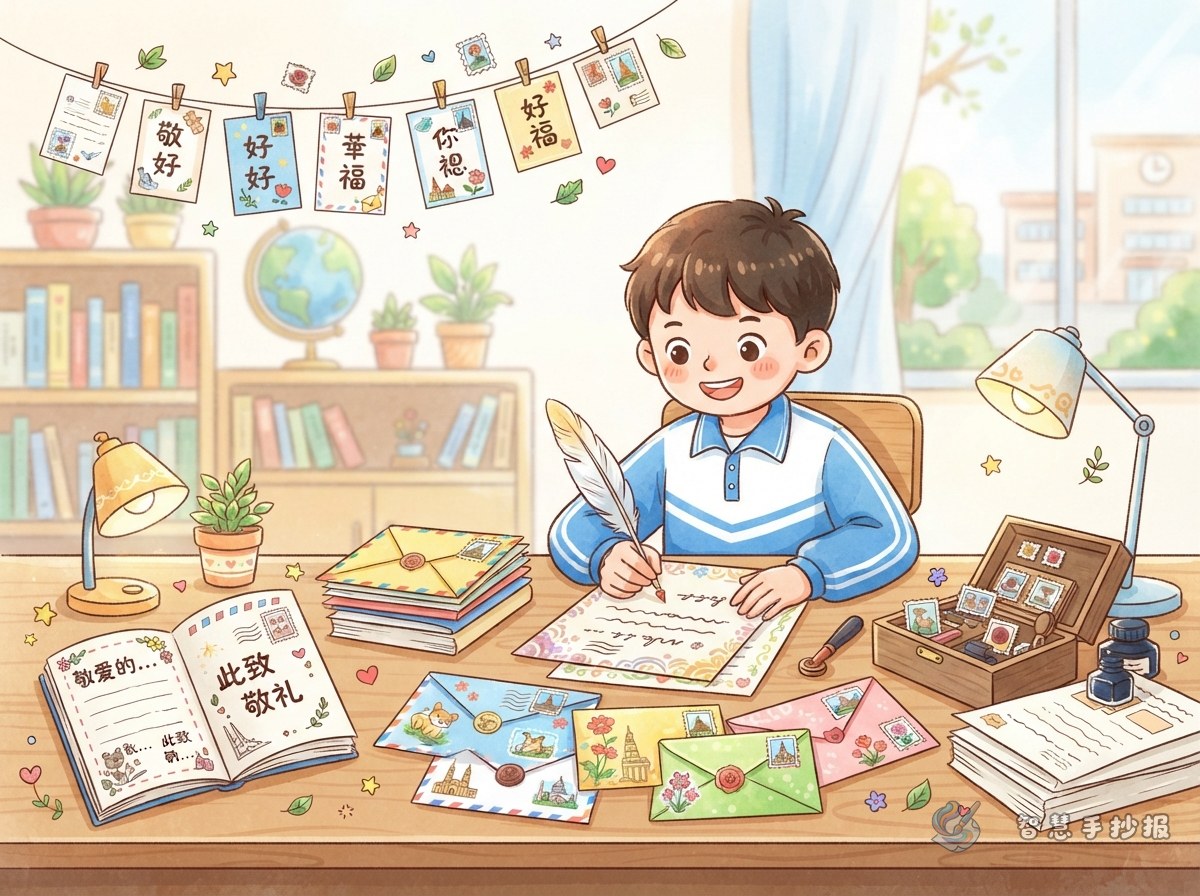
Divide the text into small boxes so readers can see which part of a letter each phrase belongs to.
Salutations
- Dear Mom, Dear Grandpa
- Dear Mr. Li, Respected Teacher
- Dear Xiaoming, It is good to hear from you
Tip: A salutation usually starts at the left margin and ends with a comma.
Greetings and polite body lines
- How are you? I hope you are well.
- Thank you for your encouragement.
- I would like to share some good news with you.
- It was lovely to receive your letter.
Closing wishes
- With best wishes,
- Wishing you good health and happiness.
- Hope you make great progress every day.
- Looking forward to your reply.
Sign-offs and dates
- Your daughter, Xiaoyue
- Your student, Xiaolin
- Your friend, Xiaoyu
- March 6, 2025
Tip: Put the sign-off at the lower right. Write the name first, then the date below it in slightly smaller letters.
Lay Out the Page in Friendly Blocks
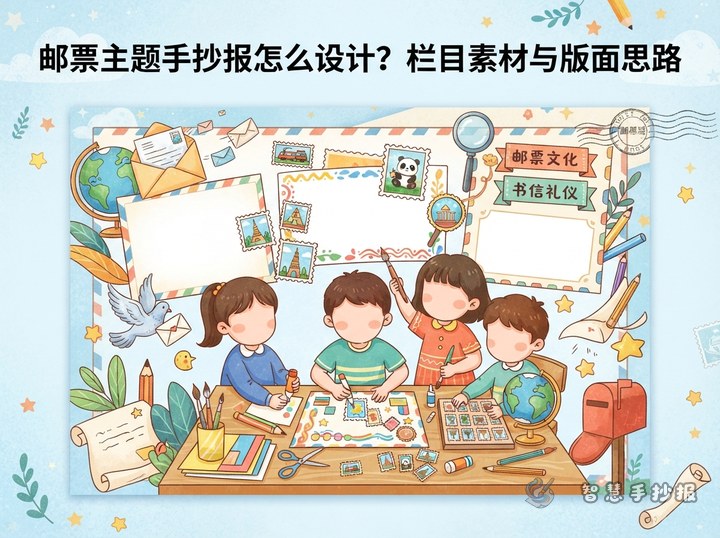
Do not squeeze everything into one long paragraph. Use separate blocks, such as:
- A left column for salutations and sign-offs.
- A large right box for closing wishes.
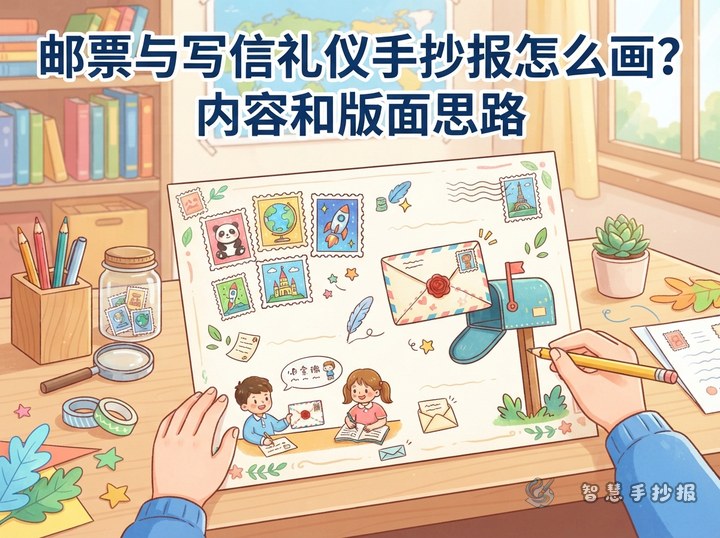
- A central envelope drawing labeled with recipient, sender, and postal code.
- A bottom “polite word bank” with short phrases.
Separate the blocks with straight lines, dotted lines, wavy lines, or small stamp shapes.
Colors and Small Drawings That Fit the Theme
Use soft cream, pale yellow, light blue, and post-box green for the background, then write the title in red or dark blue. Simple drawings work well: a stamp with perforated edges, a small envelope, a pen, a stack of letter paper, or a mailbox.
- Write single words such as “courtesy,” “letter,” or “mail” inside a stamp drawing.
- Add arrows around the envelope to show where the recipient, sender, and postal code go.
- Use light horizontal lines as a letter-paper background for text boxes.
- Leave white space between boxes so the page looks tidy.
Quick Check Before You Write in Pen
- Does each salutation start at the left and end with punctuation?
- Are closing wishes separated from the sign-off?
- Is the sign-off at the lower right with a complete date?
- Are the recipient, sender, and postal code clear on the envelope drawing?
- Can readers tell the title, section names, and body text apart at a glance?
If you want a ready-made layout, open the Smart Handwritten Newspaper WeChat mini program, choose a letter-etiquette template, and replace the phrases and drawings before copying them onto your page.