Build the Poster Around One Apricot Tree
Use four connected moments as the main storyline: Dong Feng treats patients, recovered patients plant trees, apricots are exchanged for grain, and the grain helps people in need. Draw a large apricot tree near the center and use a winding path or falling leaves to guide readers from one section to the next.
Dong Feng was an ancient Chinese physician. In traditional accounts and folklore, he did not ask his patients for money. Instead, recovered patients planted apricot trees. As the grove grew, people exchanged grain for apricots, and the collected grain was used to support those in need. Over time, the “apricot grove” became a respected symbol of traditional Chinese medicine.
Turn the Legend into Four Short Reading Cards
Meet the Physician
Write a brief introduction: “Dong Feng was a physician from the late Eastern Han to the Three Kingdoms period. Later generations remembered him through the apricot grove story, which celebrates both medical skill and compassion.”
The Grove Begins
A useful paragraph is: “According to legend, Dong Feng did not charge patients for treatment. He asked those who recovered to plant apricot trees. After many years, the trees formed a grove that represented gratitude and kindness.”
Meaning of the Apricot Grove
Explain that the phrase first referred to the grove in the Dong Feng legend. It later became a cultural name for the traditional Chinese medical community and a symbol of compassionate care.
What I Learned
Students can write: “Good medical practice is not only about skill. It also means caring for others and using one’s abilities to help the community. We can pass kindness forward through small actions.”
Let the Grove Shape the Layout
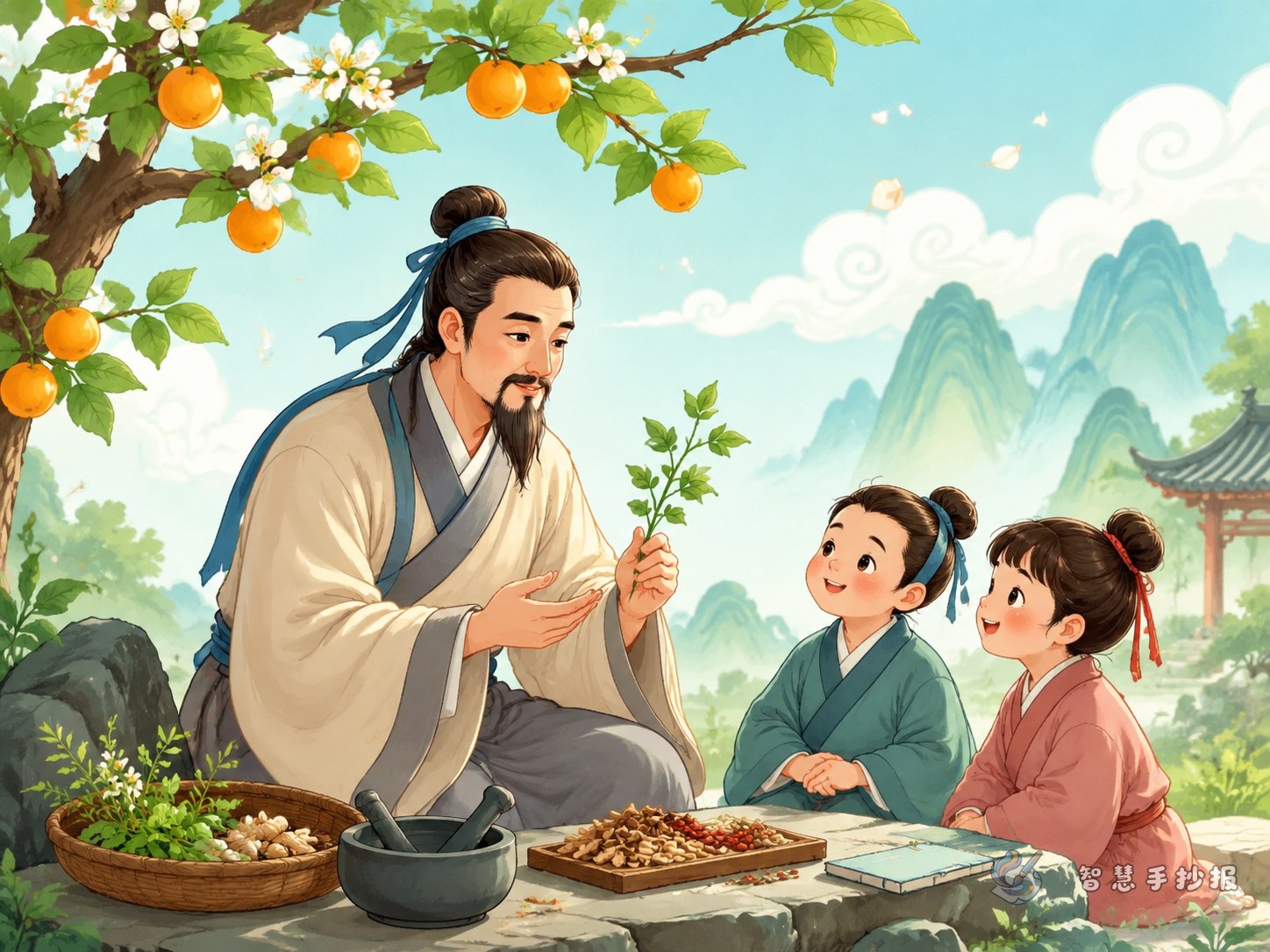
- Center scene: Draw Dong Feng with a traditional medicine case beneath a large apricot tree. Use sections of the tree canopy as text boxes.
- Balanced columns: Place the physician and legend on the left, then the phrase explanation and personal reflection on the right.
- Color palette: Combine apricot yellow, fresh green, and light brown. Keep text areas pale and uncluttered for easy reading.
- Visual order: Number four leaves or apricots to show the reading sequence, giving the poster a simple picture-story effect.
Present Folklore Carefully
Use wording such as “according to legend” or “in traditional accounts” when describing the apricot grove. Do not invent detailed treatments or turn medicinal information into health advice. The poster should focus on the origin of the story, the physician’s compassion, and the cultural meaning of the phrase.
Sketch the sections in pencil before copying the final text. Keep each paragraph to a few lines and check the title, spelling, and reading order at the end. After choosing the content, students and parents can continue arranging sections and colors in the 智慧手抄报 WeChat Mini Program.