Choose one thread: turn the legend into a short journey
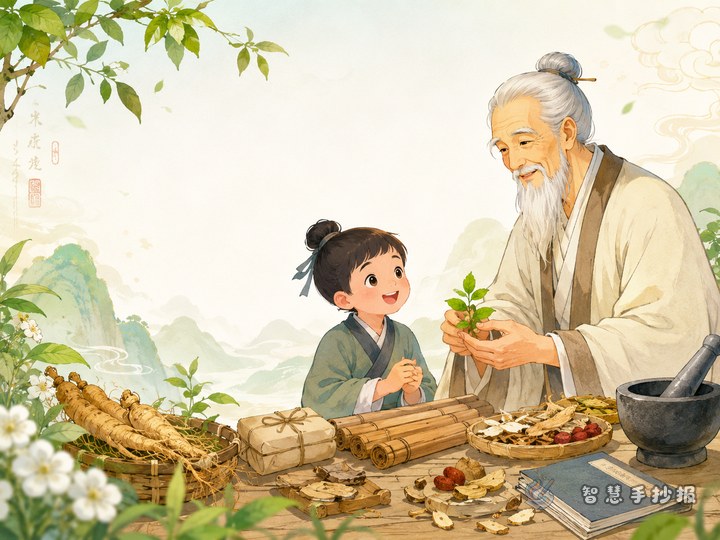
The heart of this story is not a biography. It is one person tasting plants himself to learn what they can do. Treat the page as a trip up the mountain: setting out, meeting unknown plants, feeling ill, finding relief, writing down the results. That gives the writing a natural shape.
A short title such as Shennong Tastes a Hundred Herbs works better than a broad heading like Introduction to Ancient Chinese Doctors.
Three scenes that fill a single page
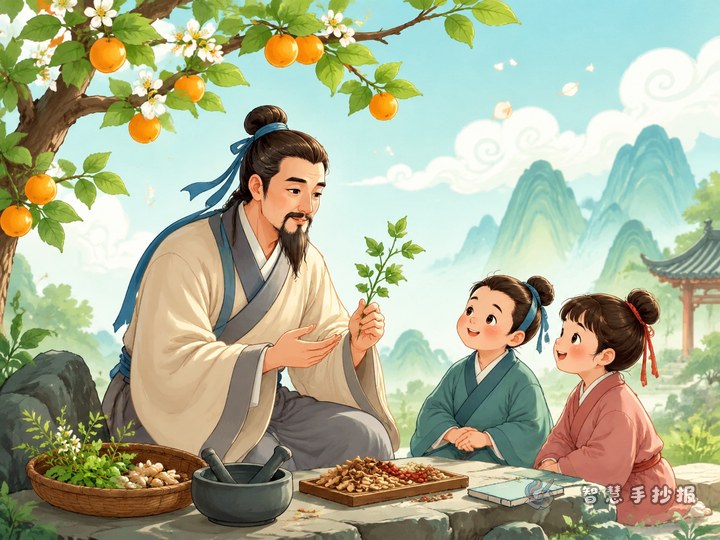
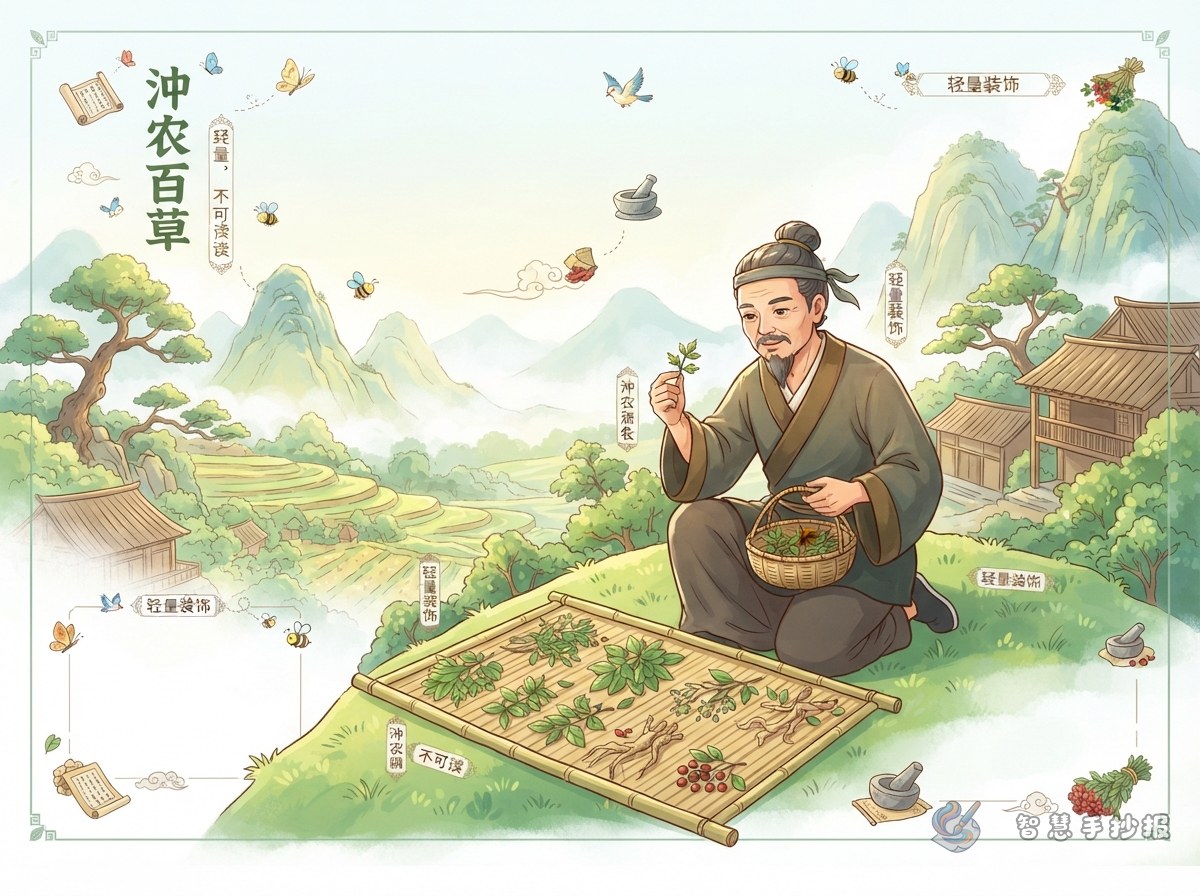
- Setting out with a basket: Shennong walks into the hills with a bamboo basket, picking and noting plants he does not recognise.
- Tasting the plants: Legend says he put herbs in his mouth to tell healing plants from harmful ones, and folk versions add that he was poisoned several times in one day.
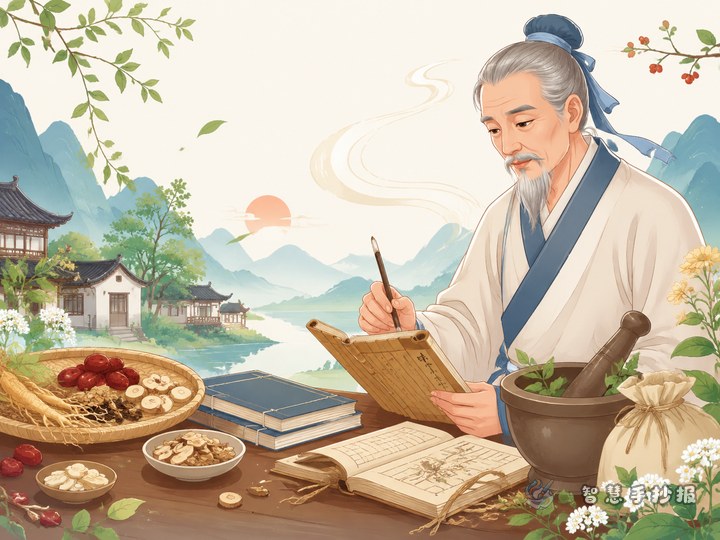
- Recording the results: After tasting, he noted each plant's appearance, flavour and use, so later generations had something to work from.
Some versions mention a reddish whip used to test plants for poison. That can go in a corner as a small fact, without extra detail.
Layout idea: build the page like an herbal sample book
Use one sheet of paper, place the main picture in the middle and arrange the text boxes around it, so nothing ends up squashed together.
What goes where
- Title band at the top: the big title, with a sun, mountain outline or a few leaves as decoration.
- Centre picture: Shennong with a basket, or one enlarged herb with clearly drawn stems and leaves.
- Story column on the left: two or three legend paragraphs in time order, each starting with a dot or number.
- Right side and bottom: herb cards and one horizontal strip of traditional medicine facts.
Grass green, earth yellow and pale brown suit the theme. Use dark green or black for headings so they read clearly from a distance.
Text you can copy straight onto the page
Younger students can draw more and write less; older students can fill every box with the items below.
- Herb card: one line each for name, appearance, flavour and use, for example ginger: a root, pungent, boiled in water to warm the body.
- One-sentence summary: He left behind what he learned from tasting plants, and that is one of the earliest sources of herbal medicine.
- Medicine fact strip: Herbal medicine comes from plants, animals and minerals, and plants make up the largest part.
- What I learned: one or two honest lines about the most surprising thing found while researching.
Two easy mistakes to avoid
- Shennong is not Li Shizhen. The Bencao Gangmu was written by Li Shizhen in the Ming dynasty. The herbal book linked to Shennong is the Shennong Bencao Jing, and it was compiled by later hands.
- Shennong belongs to legend. Wording such as legend says or according to tradition is safer than presenting the story as settled history.
Small touches that make the finished page look complete
Leave a small space for one personal sentence or a related old saying, then sign your name and class at the bottom. If the layout feels uncertain, open the Smart Handwritten Newspaper mini program in WeChat, pick a traditional medicine story template, type the text in, and copy the arrangement onto paper; it saves a lot of rough-draft time.