Build the Theme Around a Handy Emergency Book
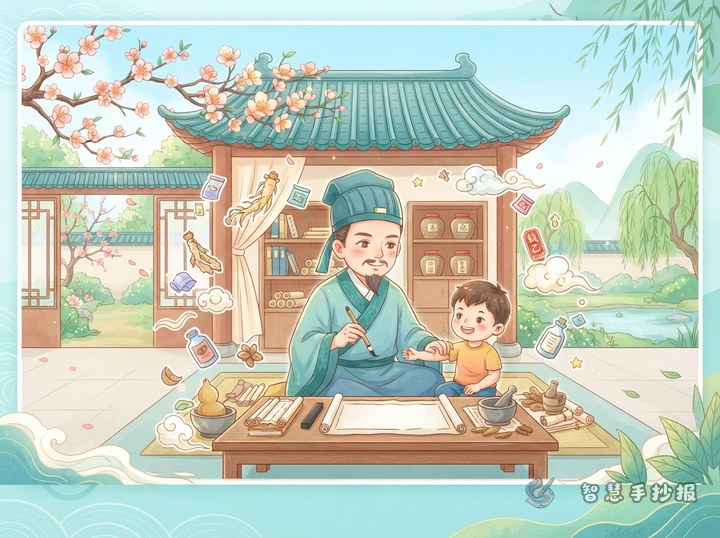
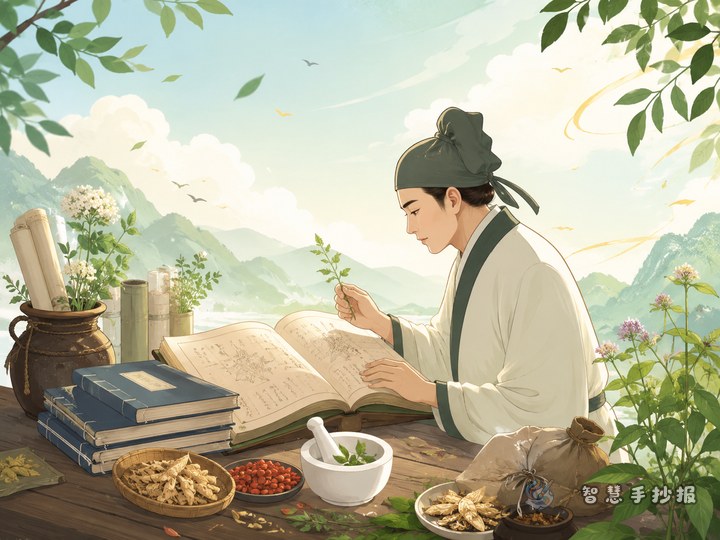
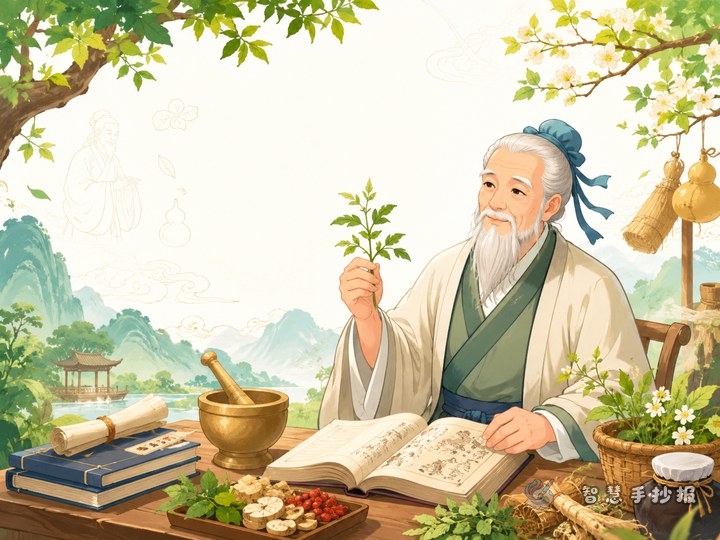
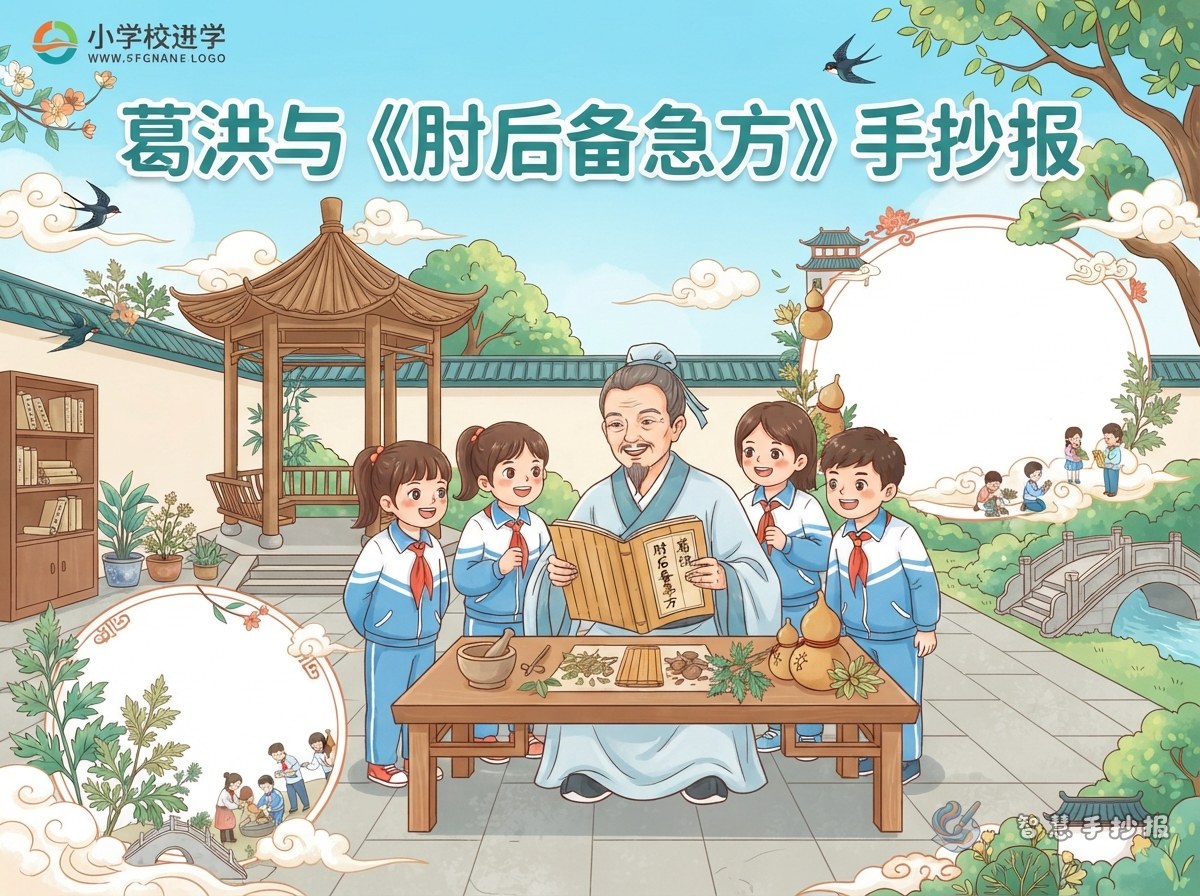
This hand-copied newspaper can tell the story of Ge Hong and his medical work Emergency Prescriptions Kept Up One's Sleeve. The title suggests a useful reference that could be kept close at hand and consulted when urgent illness occurred. Draw a rolled medical manuscript, a small medicine pouch, and several herbs near the heading to make the theme immediately clear.
Tell the Story in Three Short Scenes
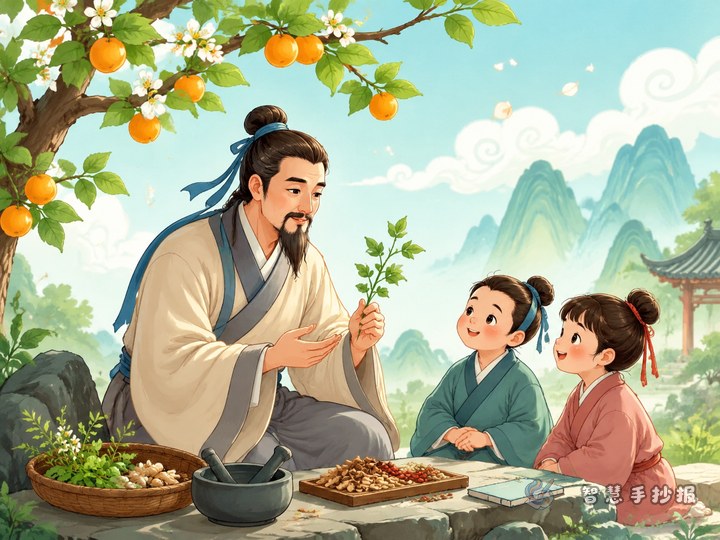
- Learning from practical experience: Ge Hong valued methods that addressed real illnesses and collected treatments that were relatively simple to use in his time.
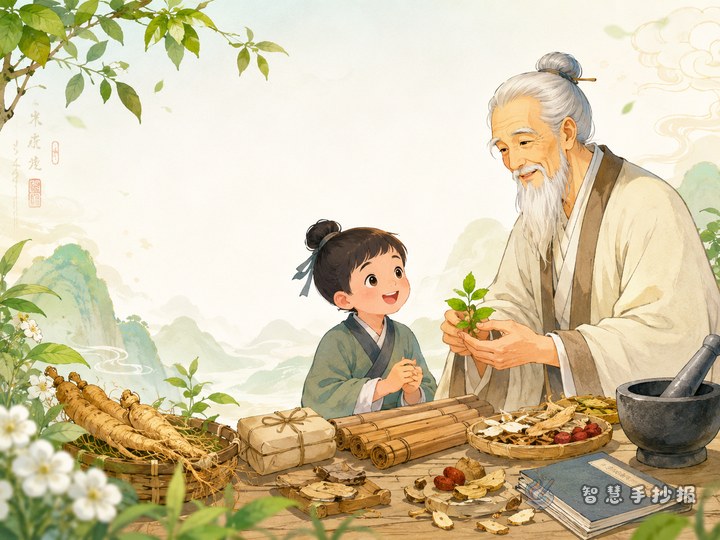
- Organizing emergency knowledge: He compiled information about urgent conditions and common illnesses so that useful guidance could be found more easily.
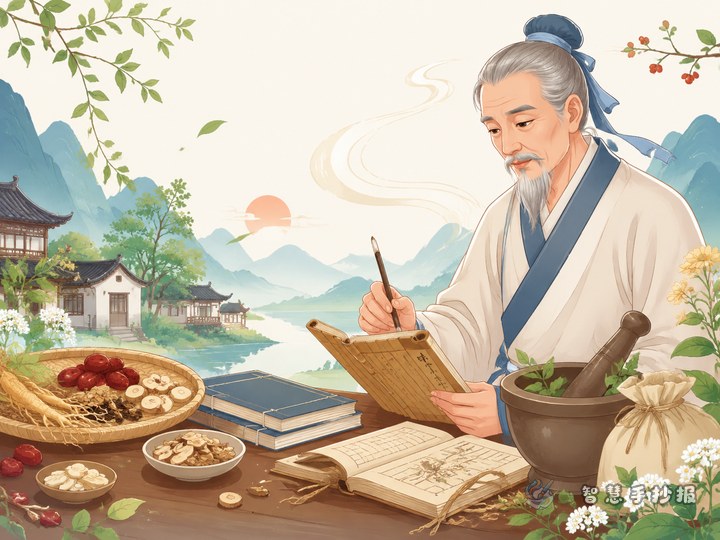
- Leaving a lasting lesson: His work reflects careful observation, practical thinking, and concern for ordinary people.
Ready-to-Use Writing Panels
A Short Profile
Ge Hong was a physician and thinker of the Eastern Jin period. He studied earlier medical knowledge and organized practical information in Emergency Prescriptions Kept Up One's Sleeve. His story represents careful learning, useful scholarship, and concern for public health.
What the Book Title Means
The title emphasizes keeping helpful knowledge close by for urgent situations. A school hand-copied newspaper does not need to reproduce ancient remedies. It is better to explain why the book was practical and what kind of medical values it represents.
What I Learned
Ge Hong's story shows that knowledge becomes more meaningful when it can help other people. Ancient prescriptions belong in a history project, not in home treatment. For any health problem, children should speak to a parent, teacher, or qualified medical professional.
Arrange the Page Like an Open Medical Manuscript
Use a horizontal page and place an open scroll in the center. Put a short biography on the left, the book's story on the right, and smaller sections about the title and personal reflections along the bottom.
- Choose cream, light brown, and soft green for a clean historical look.
- Decorate the borders with a few leaves, bamboo-slip patterns, or small medicine containers.
- Keep each text block to three to five lines and separate sections with dark, readable headings.
- A simple robe, manuscript, and medicine pouch are enough to identify the historical figure.
Check Facts, Readability, and Visual Balance
Before finishing, verify Ge Hong's name, historical period, and the title of the book. Make sure the story follows a clear order, the lettering is easy to read, and no illustration covers the text. You can then use the Smart Hand-Copied Newspaper WeChat Mini Program to choose a layout, adjust the panels, and continue creating your Ge Hong project.