
Turn the Poster into a Water-Safety Challenge Map
Organize the poster as a route from leaving home to returning safely. Draw a child at the starting point, then create stations such as “spot danger,” “choose a supervised place,” “stay with an adult,” and “leave the water safely.” Finish the route with the words “Get home safe.” This story-like layout helps readers remember the safety advice more easily than a plain list.
The title could be “A Water-Safety Challenge” or “Every Step Closer to Safety.” Add the subtitle “Treasure Life and Stay Away from Dangerous Water” to make the theme clear.
What to Write at Each Station
Station One: Check the Water Area
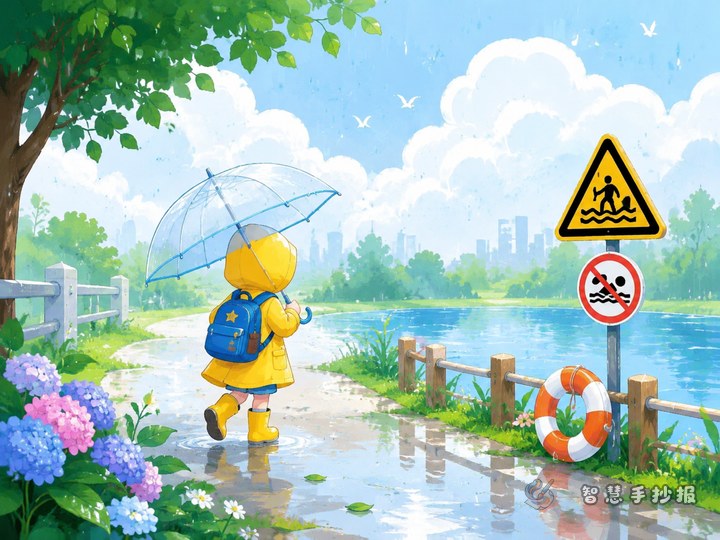
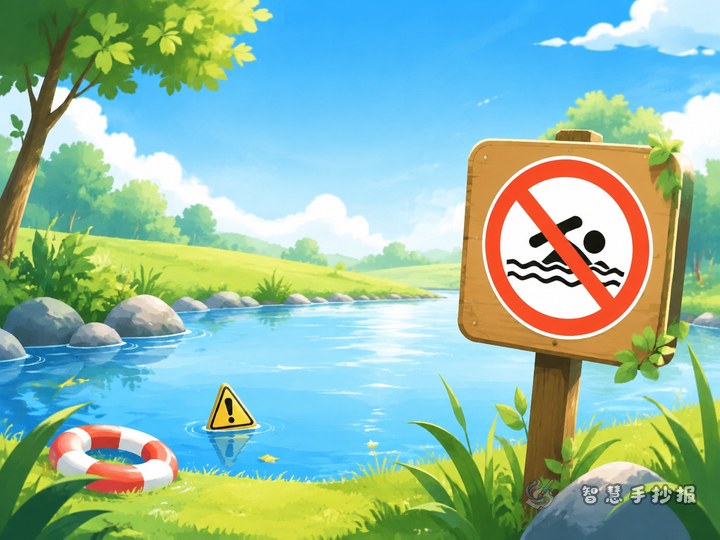
Remind readers not to play near rivers, lakes, reservoirs, ponds, ditches, or other dangerous water areas. Stay away from places without safety barriers or warning signs. Calm-looking water does not mean that the area is safe.
Station Two: Stay with a Responsible Adult
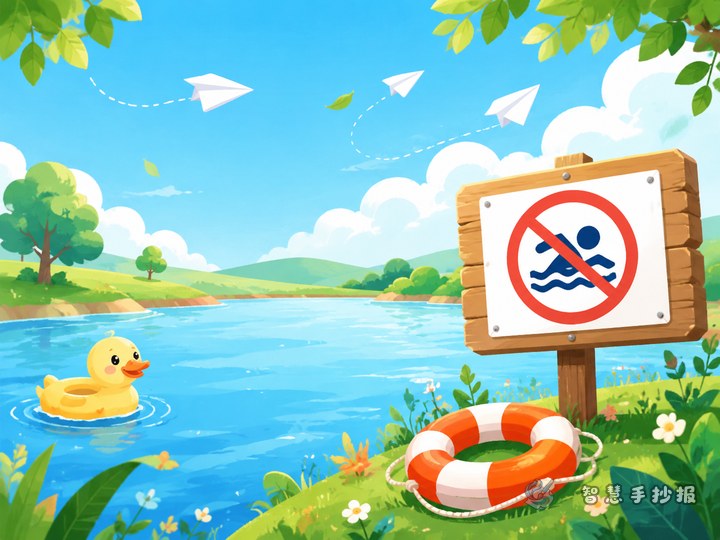
Tell a parent before swimming or playing in water. Choose a properly managed swimming area with lifeguards, and take part only with a parent or another responsible adult. Never swim alone or run, push, and play roughly beside the water.
Station Three: Leave the Water When You Feel Unwell
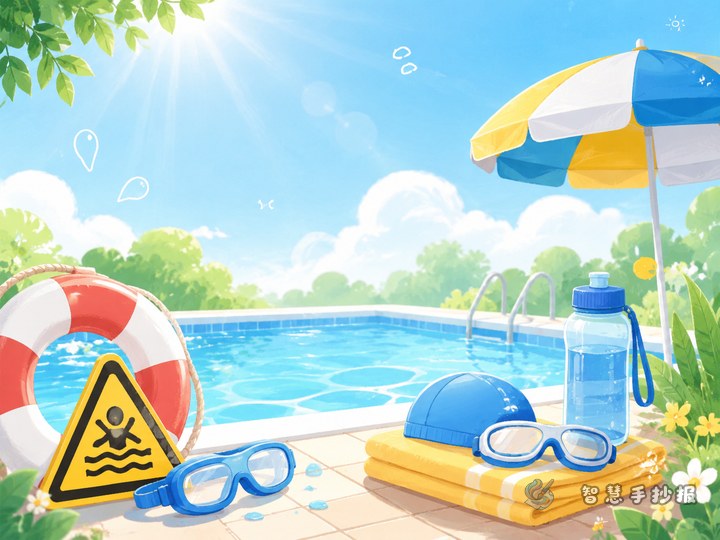
If you feel tired, dizzy, uncomfortable, or get a cramp, move toward the shore and call for help. Do not try to prove that you can keep swimming. A towel, drinking cup, and rest area can be drawn beside this station to show the importance of taking breaks.
Station Four: Get Help First
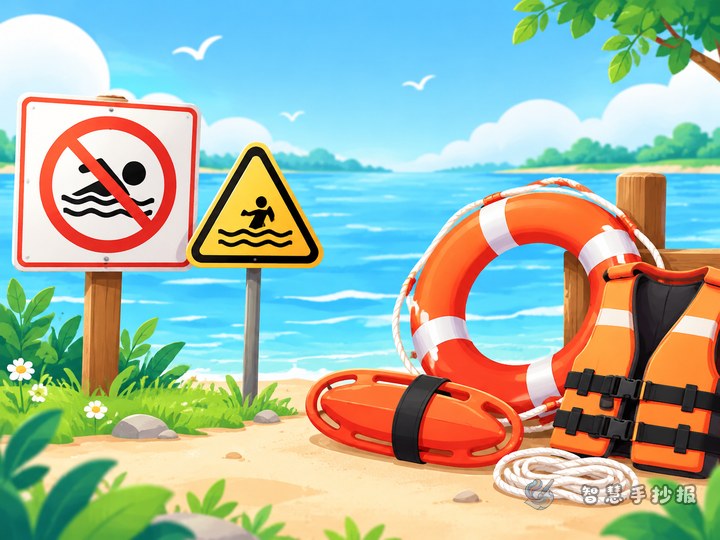
If a classmate falls into the water, do not jump in or form a human chain. Shout for an adult, call emergency services, and, only when it is safe, extend a lifebuoy, long pole, or rope toward the person.
Short Safety Messages to Copy
- Do not enter the water alone. Never swim or play near water without a parent or responsible adult.
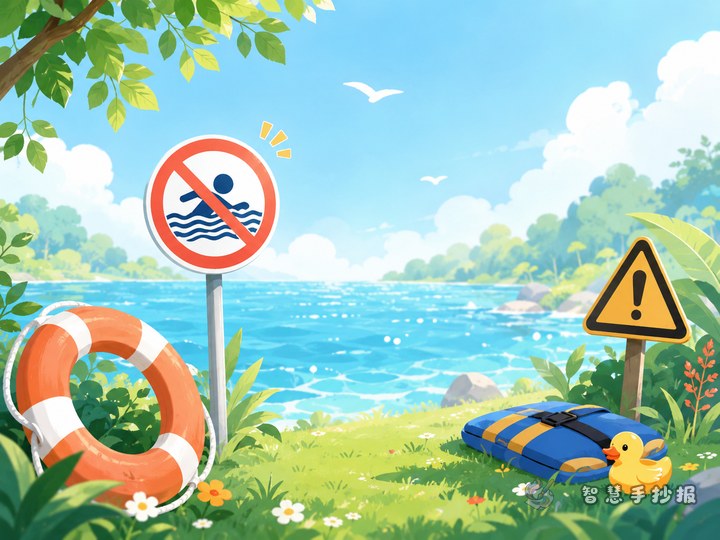
- Stay away from dangerous water. Rivers, ponds, reservoirs, and construction areas may contain hidden risks.
- Do not treat safety as a joke. Never push someone into the water, chase others along the shore, or dive in dangerous ways.
- Call for help in an emergency. Find an adult and avoid becoming a second person in danger.
How to Create the Challenge-Map Look
Try a horizontal or diagonal route. Place the main title in the upper-left corner, connect the four stations with bold lines, and put a short safety slogan in the lower-right corner. Use no more than three main colors. Blue wave lines can show the water, while yellow or red borders can mark danger areas. Keep the people and rescue objects simple and easy to recognize.
At the bottom, add a “My Safety Promise” section: “I will stay away from dangerous water, tell my parent before swimming, and call for help if someone falls in.” After preparing the text and sketch, open the WeChat mini program 智慧手抄报 to organize the layout, choose a template, and continue making the poster.