Tell the Story Through One Fallen Leaf
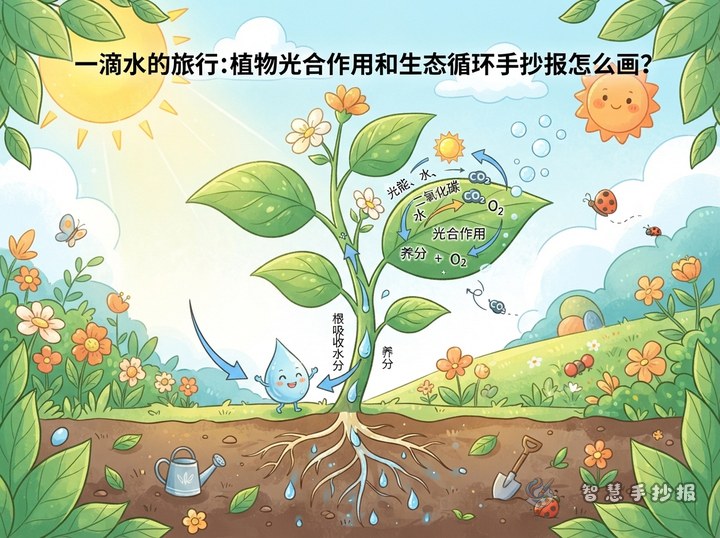
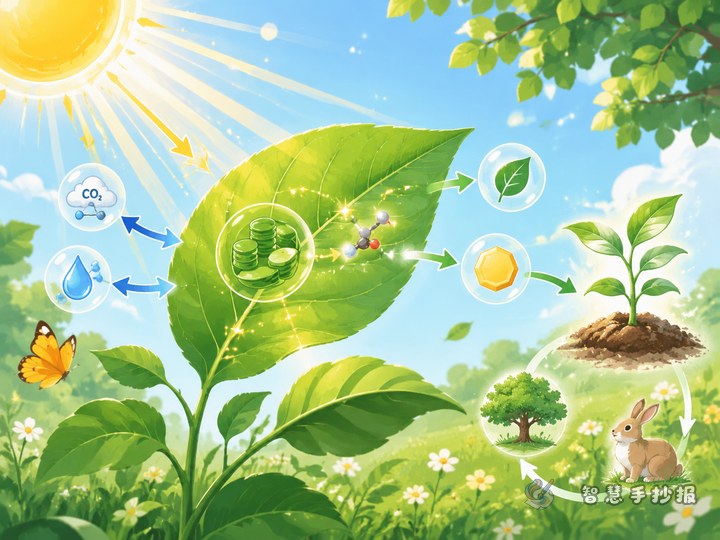
This poster can begin with a simple question: why does a leaf fall, and where does it go afterward? During its green stage, the leaf uses sunlight, water, and carbon dioxide in photosynthesis to make food for the plant and release oxygen. After the leaf ages and falls, decomposers gradually break it down. Some nutrients return to the soil, where roots can absorb them and support new growth.
Build Four Connected Sections
- A green leaf makes food: Explain that photosynthesis needs sunlight, water, and carbon dioxide.
- The leaf reaches the ground: Show an aging leaf falling and covering the soil.
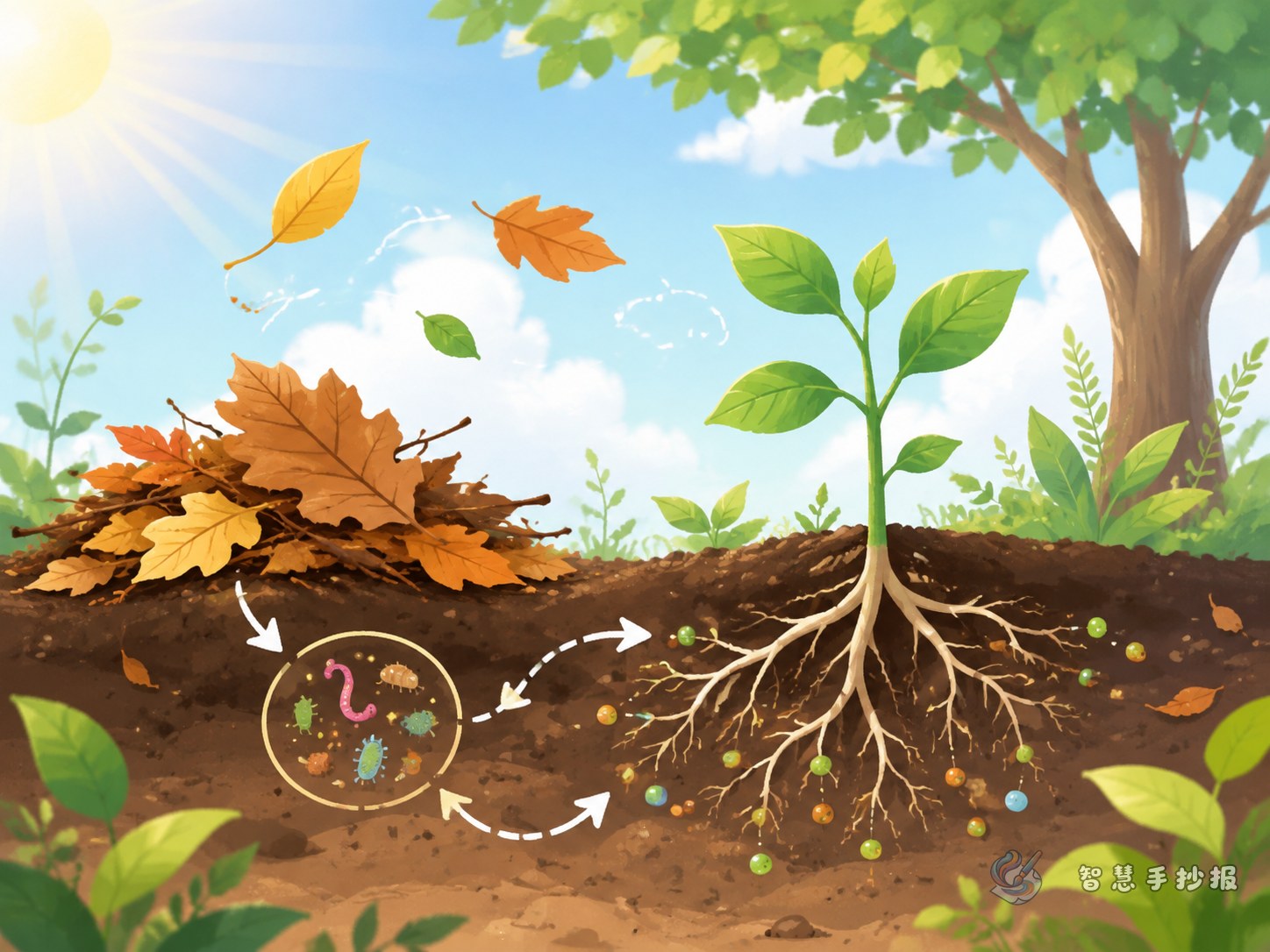
- Decomposers get to work: Introduce bacteria, fungi, and small soil animals that help break down dead leaves.
- Nutrients begin a new journey: Show nutrients returning to the soil and being absorbed by roots.
Short Text for the Poster
Leaves Capture Solar Energy
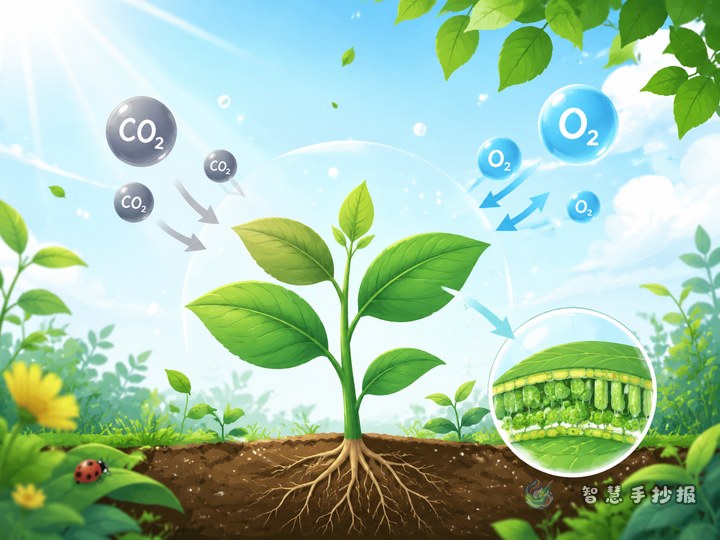
A green leaf works like a tiny solar-powered factory. With the help of chlorophyll, it captures light energy and uses water and carbon dioxide to make organic matter for plant growth. It also releases oxygen. Some of the matter stored in a leaf later enters the ground ecosystem when the leaf falls.
A Fallen Leaf Is Not Useless
Once a leaf reaches the soil, decomposers break it down over time. Temperature and moisture can affect how quickly this happens. Some inorganic nutrients produced through decomposition become part of the soil and may support another round of plant growth.
Every Part Has a Role
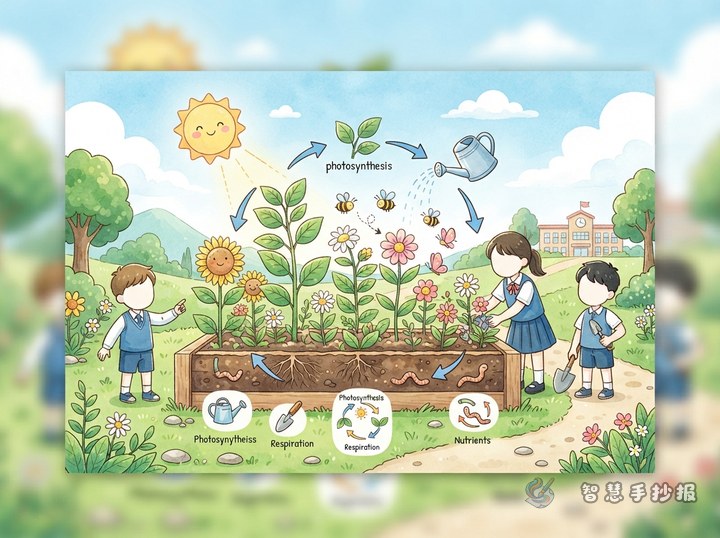
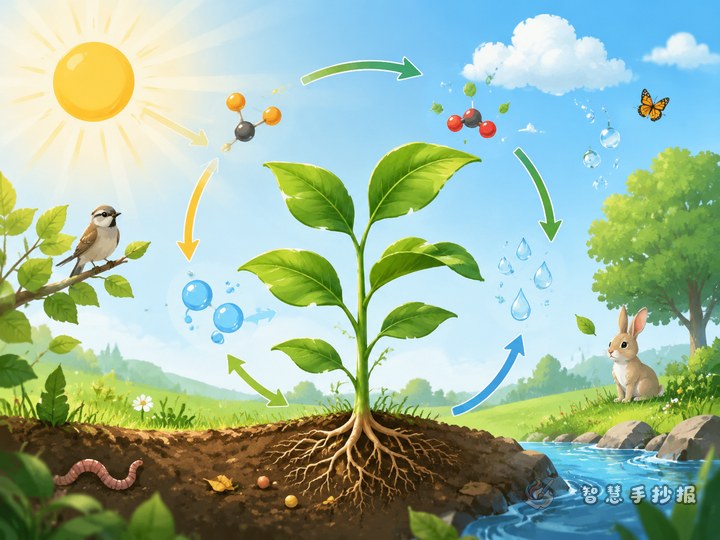
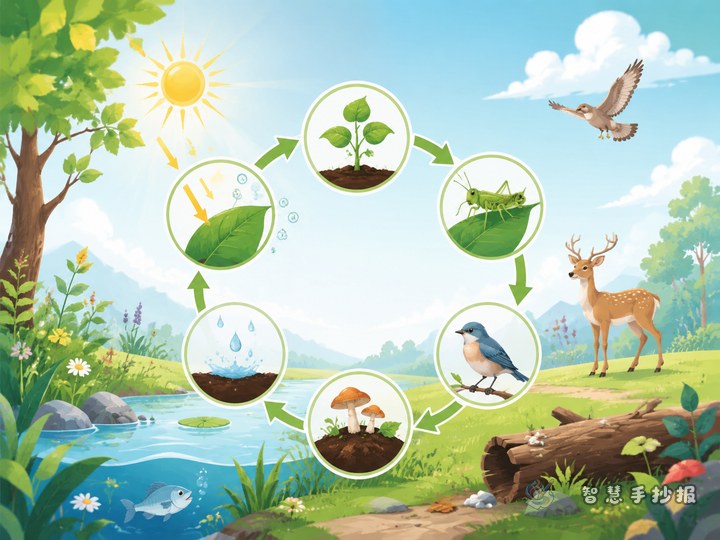
Sunlight supplies energy, plants make organic matter, decomposers process dead material, and soil stores water and some nutrients. Their connections help maintain the movement of matter through an ecosystem.
Design a Page That Visually Cycles
Place the title across the top and draw a small tree changing through the seasons in the center. Arrange four areas around it: sunlight and green leaves, falling leaves, decomposers, and soil with roots. Connect them clockwise with large arrows labeled with short verbs such as “make,” “fall,” “decompose,” and “absorb.”
- Use green and yellow for sunlight and healthy leaves.
- Add orange around the falling-leaf section.
- Use brown for the soil and include roots, fungal threads, or an earthworm.
- Keep text boxes away from the arrows so the cycle remains easy to follow.
Add One Important Science Note
Photosynthesis and decomposition are different processes. Photosynthesis allows plants to use light energy to make organic matter, while decomposers break down dead leaves. Matter can move through repeated cycles, but energy enters mainly as sunlight and gradually dissipates as it passes through the ecosystem. This distinction makes the poster more scientifically accurate.
After organizing the sections, students and parents can continue in the Smart Handwritten Poster WeChat Mini Program to choose a layout, adjust text areas, and refine the color scheme.