Start with a Question Instead of a Slogan
Many students find the phrase “the forest is the lungs of the Earth” but are not sure how to turn it into a poster. Use the question itself as the main title: “Is the forest really the lungs of the Earth?” Then add a smaller subtitle such as “A small poster about photosynthesis and the ecological cycle.” This gives your poster a clear focus.
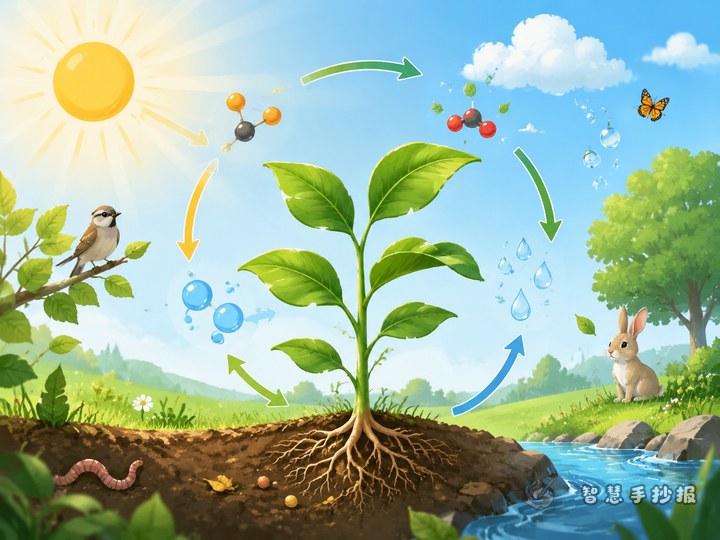
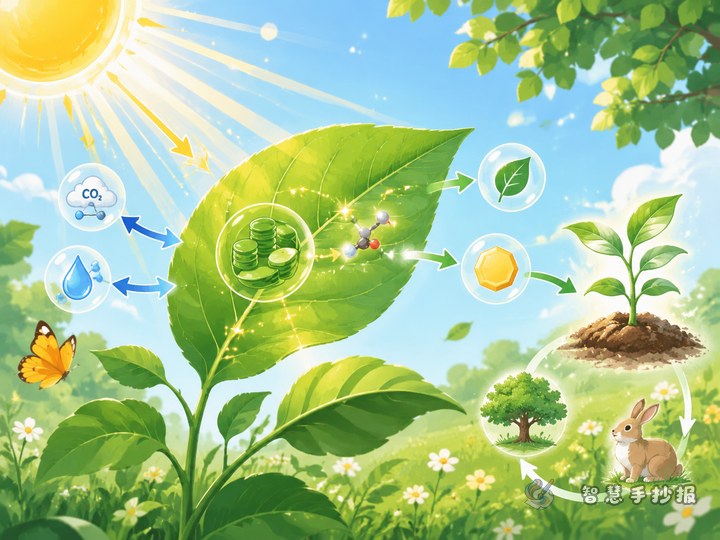
Keep one main line running through the whole page: sunlight to leaf, leaf to oxygen, oxygen to animals and people, carbon dioxide back to plants. If this line is clear, the poster will feel organized even with simple drawings.
Make the Center Image Breathe
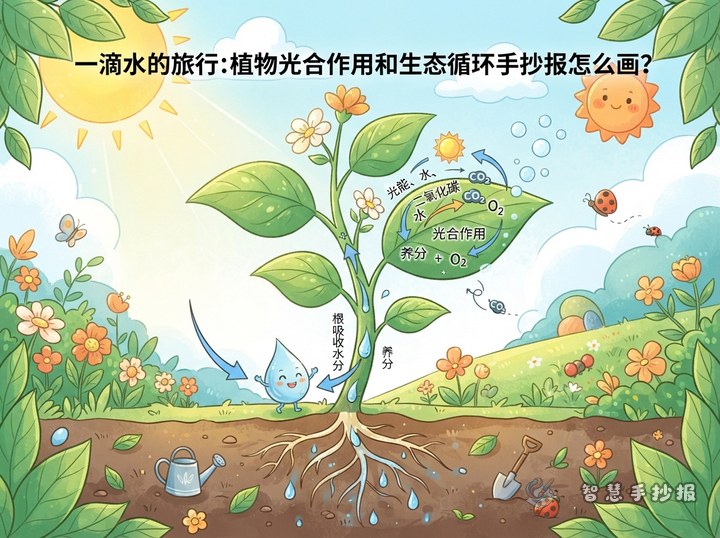
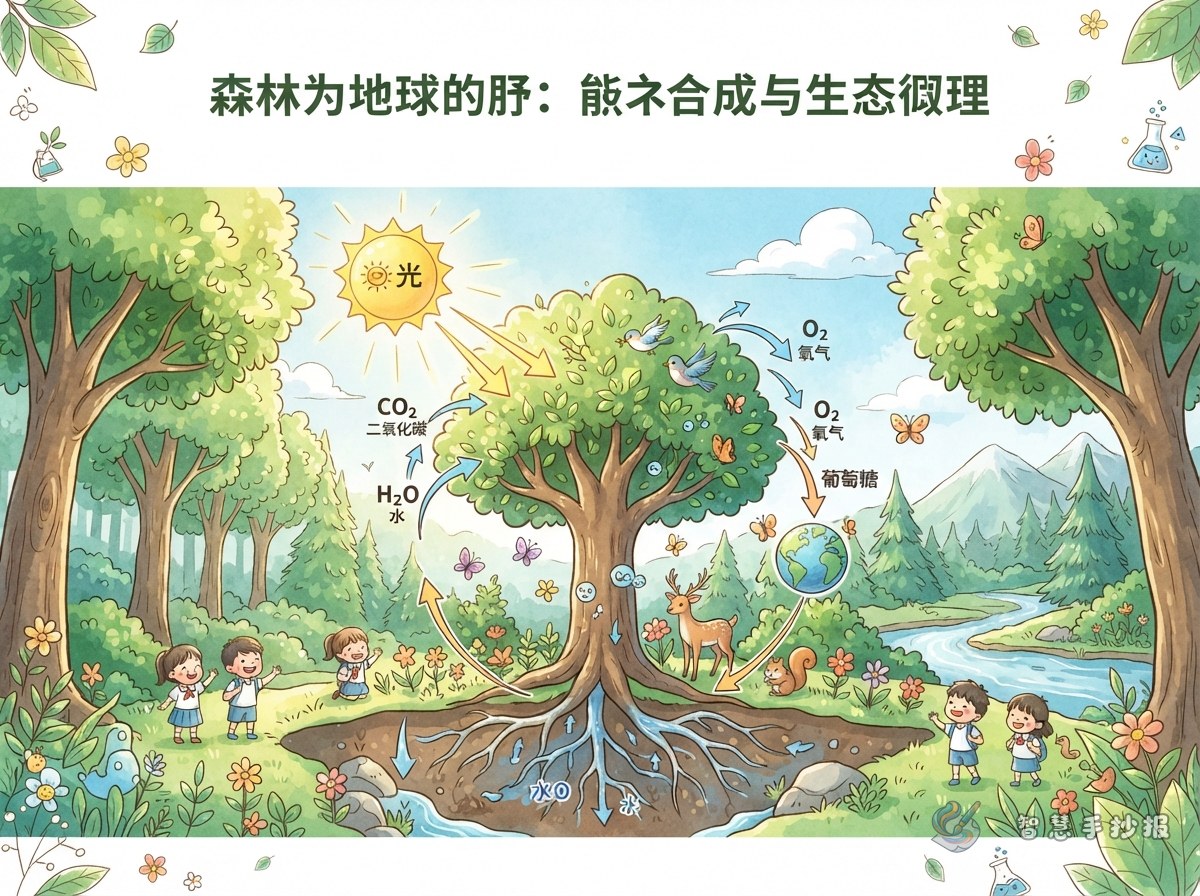
Draw a tree in the middle of the page, either as a cutaway view or as one giant leaf. The center image should show movement, not just stand still.
The Crown
- Draw light green leaves of different sizes. Add small arrows pointing upward and label them “oxygen.”
- Add a few clouds above the tree and write “fresh air” beside them.
The Trunk and Roots
- Draw arrows going up the trunk and label them “water from the roots.”
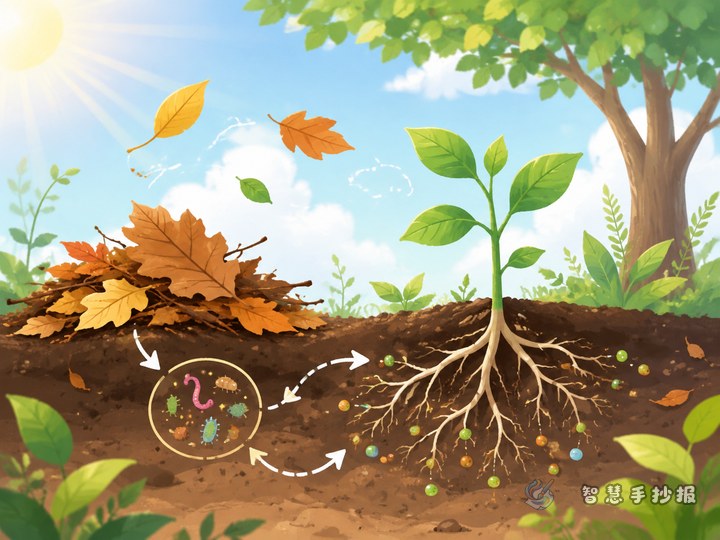
- Around the roots, draw soil, fallen leaves, and a few tiny insects to show nutrients cycling underground.
With one tree, you already include sunlight, water, carbon dioxide, soil, and decomposers.
Use Three Text Columns to Explain the Science
Column One: What Photosynthesis Does
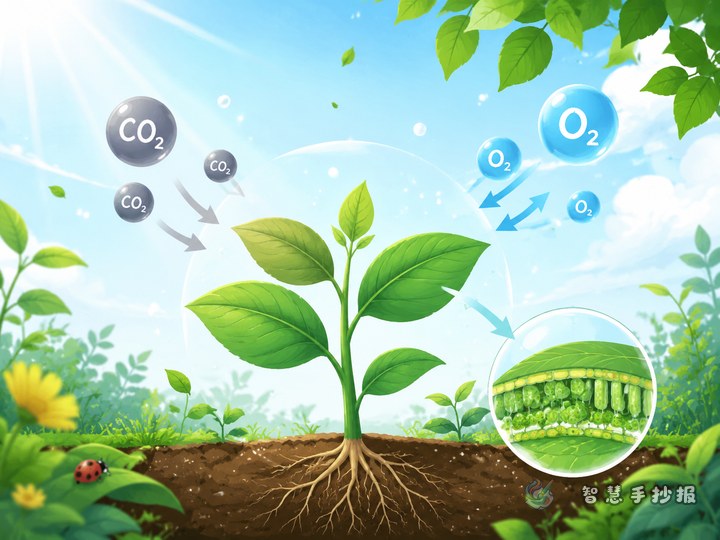
A leaf works like a tiny food factory. With sunlight, it uses water and carbon dioxide to make nutrients and releases oxygen. A simple sentence works well: plants make food for themselves and oxygen for us.
Column Two: Where the Oxygen Goes
Oxygen goes into the air and is used by people and animals when they breathe. Breathing and burning produce carbon dioxide, which returns to the air and is used by plants again. Draw this as two curved arrows forming a loop.
Column Three: Why Forests Matter
- Many trees release oxygen continuously, making the air better for breathing.
- Roots hold soil in place, and fallen leaves break down into nutrients that return to the earth.
- Forests give birds, insects, and small animals food and shelter.
Layout and Color Choices
- Place the main title at the top in dark green or brown, with two leaf shapes beside it.
- Let the center drawing take about one third of the page so there is still room for text.
- Put the three text columns in light yellow or light blue boxes, each with a small icon such as a sun, a water drop, or a leaf.
- Limit the palette to green, blue, brown, and yellow so the page looks clean.
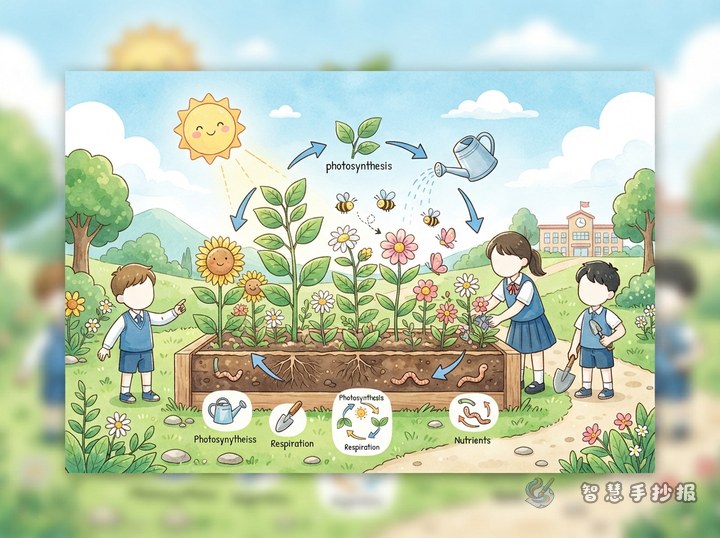
- Add small mushrooms, birds, or earthworms in the corners to make the poster feel lively.
Two Extra Touches for a Better Poster
- Create a “cycle track” along the edge of the page. Draw one long curved arrow, write “carbon dioxide” above it and “oxygen” below it, and let readers follow the arrow around the poster.
- Leave a small box titled “Green habits I can try.” Write two or three actions such as saving paper, not picking leaves, or watering the class plant. This turns science facts into real-life action.
If you want to save time on layout, open the WeChat mini program “智慧手抄报,” choose a plant or environment template, and place your finished text into the design.