Turn the Topic into “A Carbon Journey”
This hand-copied poster can begin with a simple question: where does carbon dioxide go after plants take it in? Instead of only explaining the definition of photosynthesis, imagine carbon dioxide as a tiny traveler. It enters a leaf, becomes part of the plant, moves through food chains, and returns to the environment through breathing and decomposition.
Use One Clear Cycle as the Main Picture
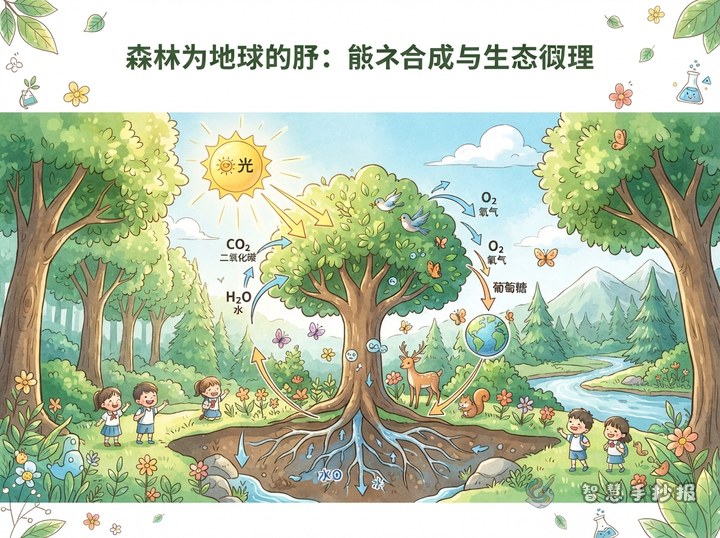
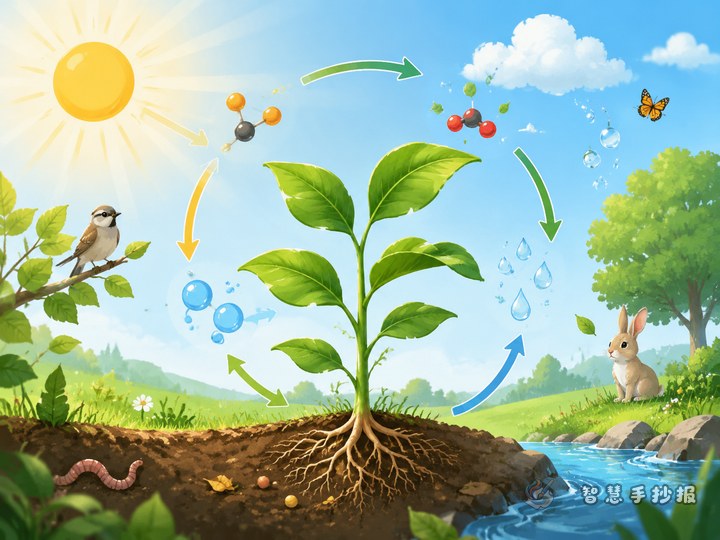
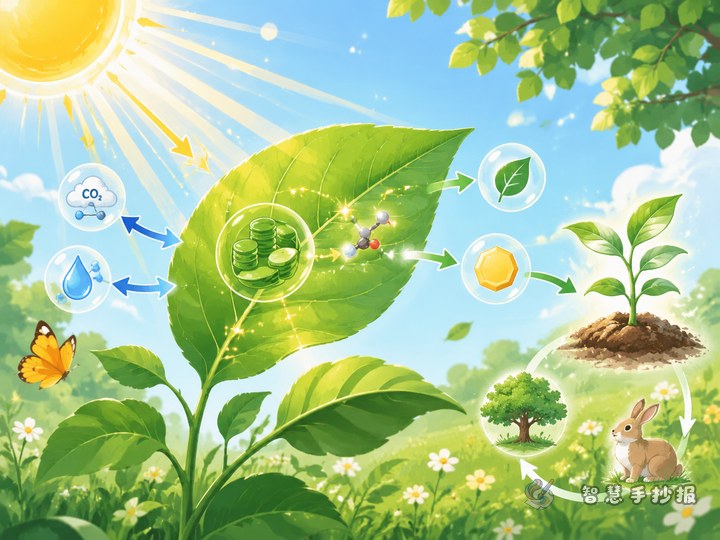
Place a tree or a large leaf in the center of the page. Around it, draw arrows to connect these steps: carbon dioxide in the air, photosynthesis in leaves, plant growth, animals eating plants, respiration, fallen leaves decomposing, and carbon dioxide returning to the air. Keep the arrows simple and use colors to show different meanings.
- Green arrows: plants take in carbon dioxide and make food.
- Yellow arrows: sunlight provides energy for photosynthesis.
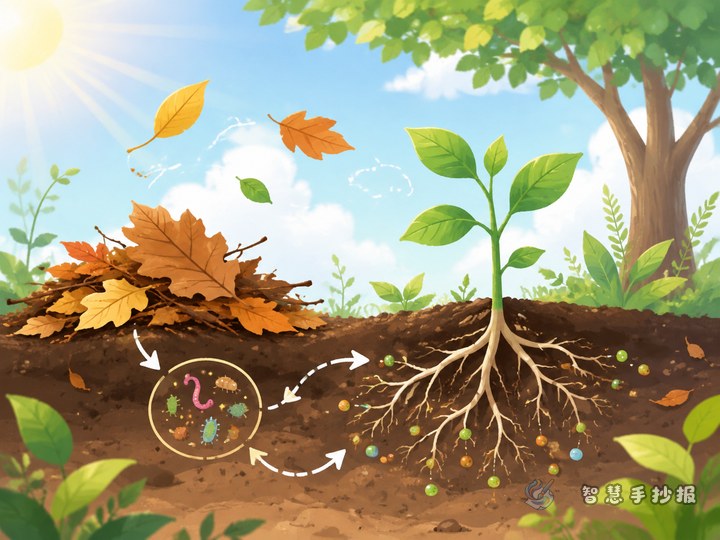
- Brown arrows: fallen leaves and branches are broken down by decomposers.
- Blue bubbles: oxygen is released into the air.
Short Science Text You Can Use
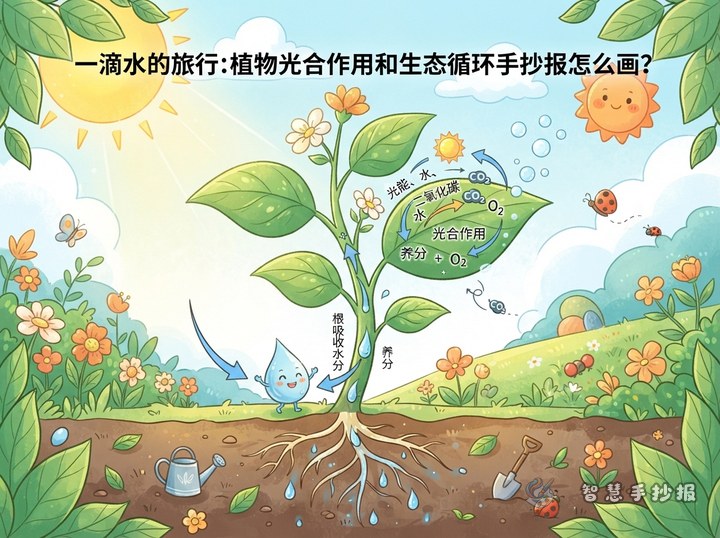
A leaf works like a small factory. With sunlight, it uses water and carbon dioxide to make food for the plant and releases oxygen. The food helps the plant grow roots, stems, leaves, flowers, and fruits. When animals eat plants, matter and energy move through the food chain. Fallen leaves, waste, and dead branches are broken down by bacteria, fungi, and other decomposers. Photosynthesis gives life energy, while ecological cycles help nature stay balanced.
Make the Page Easy to Read
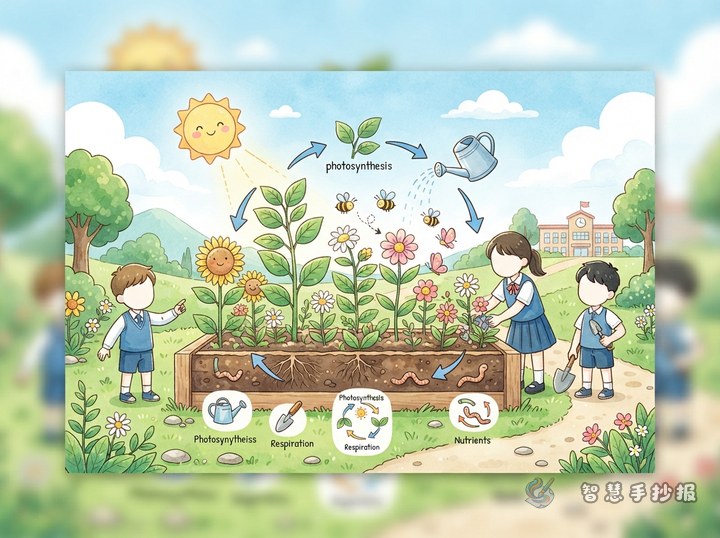
A good student poster should not be filled with long paragraphs. Divide the page into four sections: “Where Carbon Comes From,” “The Leaf Factory,” “Who Passes Matter On,” and “What We Can Do.” Keep each section to three to five short sentences and add small drawings such as leaves, the sun, mushrooms, earthworms, and birds.
Section One: Where Carbon Comes From
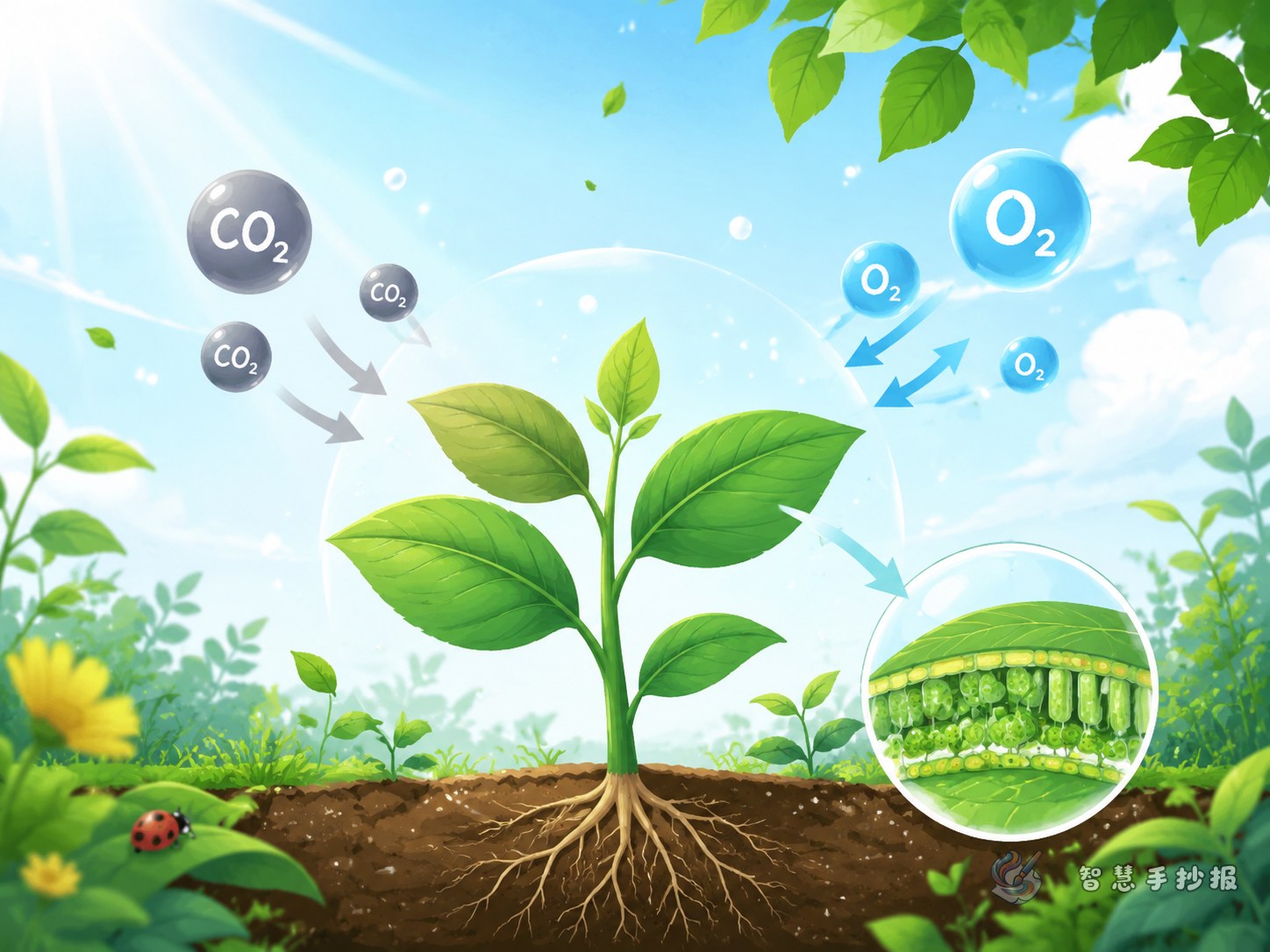
Carbon dioxide exists in the air. Plants take it in through tiny openings on their leaves. Although we cannot see it, carbon dioxide is an important material for making plant food.
Section Two: Members of the Cycle
Plants are producers. Insects, birds, and other animals are consumers. Bacteria, fungi, and earthworms are decomposers. Together, they help matter move through ecosystems.
Section Three: Action Corner
We can protect plants, save paper, join tree-planting activities, and reduce waste. These actions help plants grow well and keep natural cycles healthy.
Fresh Colors and a Friendly Title
Use light green, sky blue, warm yellow, and brown to show plants, air, sunlight, and soil. Good title ideas include “The Green Journey of Carbon Dioxide” or “From Leaves to the Ecological Cycle.” To continue making a neat printable poster, you can open the Zhihui Hand-Copied Poster WeChat mini program and adjust sections, borders, and grade-friendly text.