Start with a clear main idea
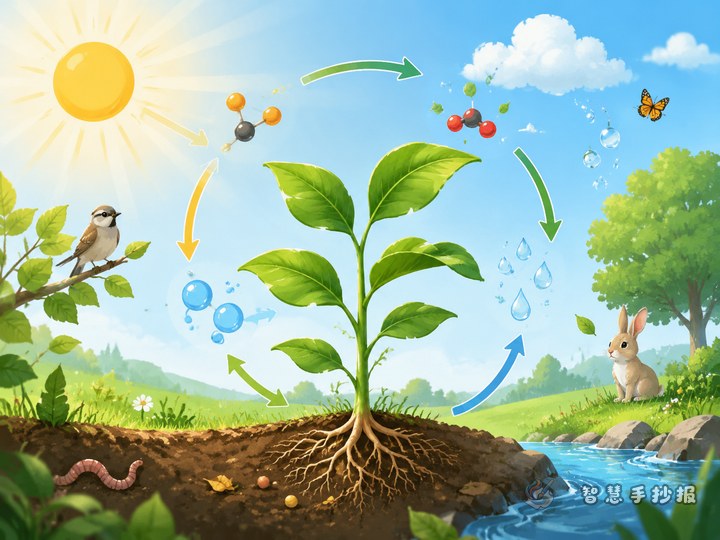
This type of handwritten newspaper becomes much easier when you follow one simple line of thought: sunlight reaches plants, plants carry out photosynthesis, animals and humans receive food and oxygen, and decomposers return nutrients to the environment. With this structure, the whole page feels connected instead of scattered.
You can choose a lively subtitle such as “How One Leaf Connects Life” or “A Green Journey Through Nature” to make the topic feel more vivid.
Sections you can place directly on the page
Section 1: Photosynthesis Basics
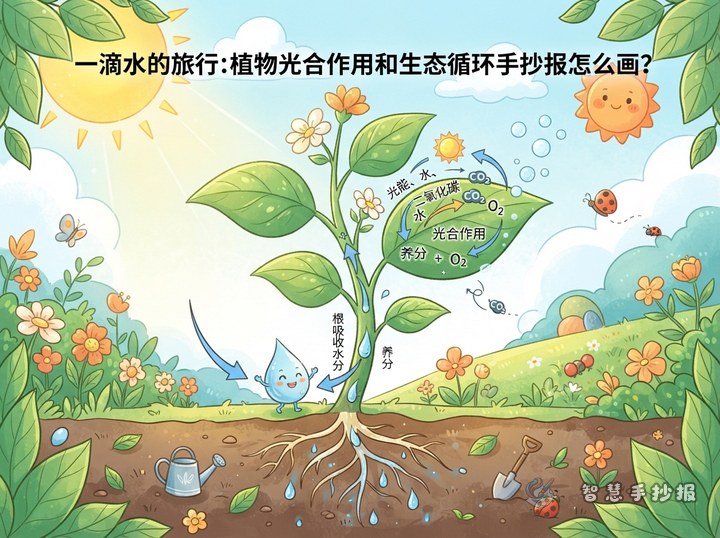
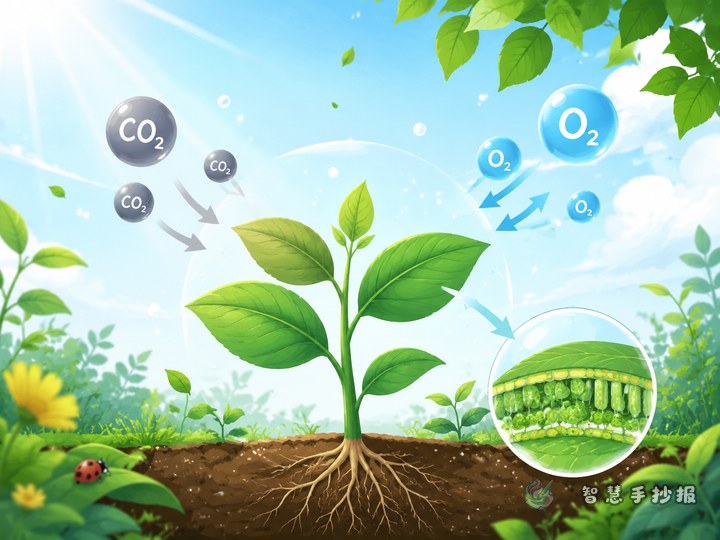
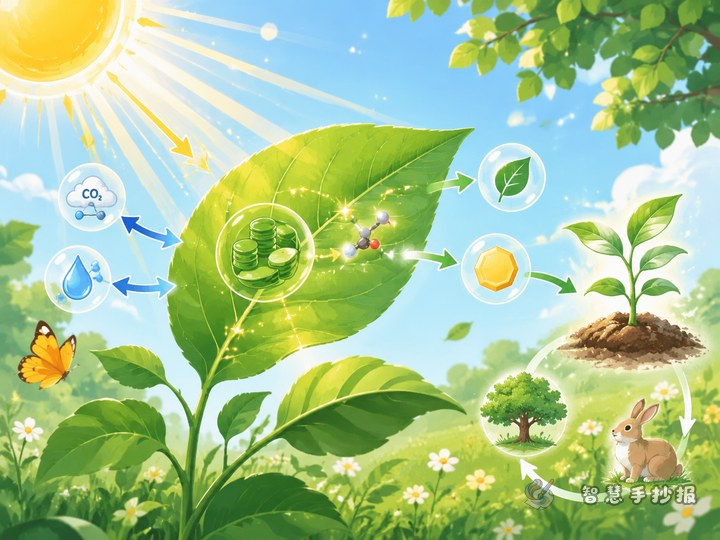
Use a short explanation: in sunlight, plants use chlorophyll to turn water and carbon dioxide into nutrients and release oxygen. The key point is helping readers understand that plants are the producers in an ecosystem.
Section 2: The ecological cycle in steps
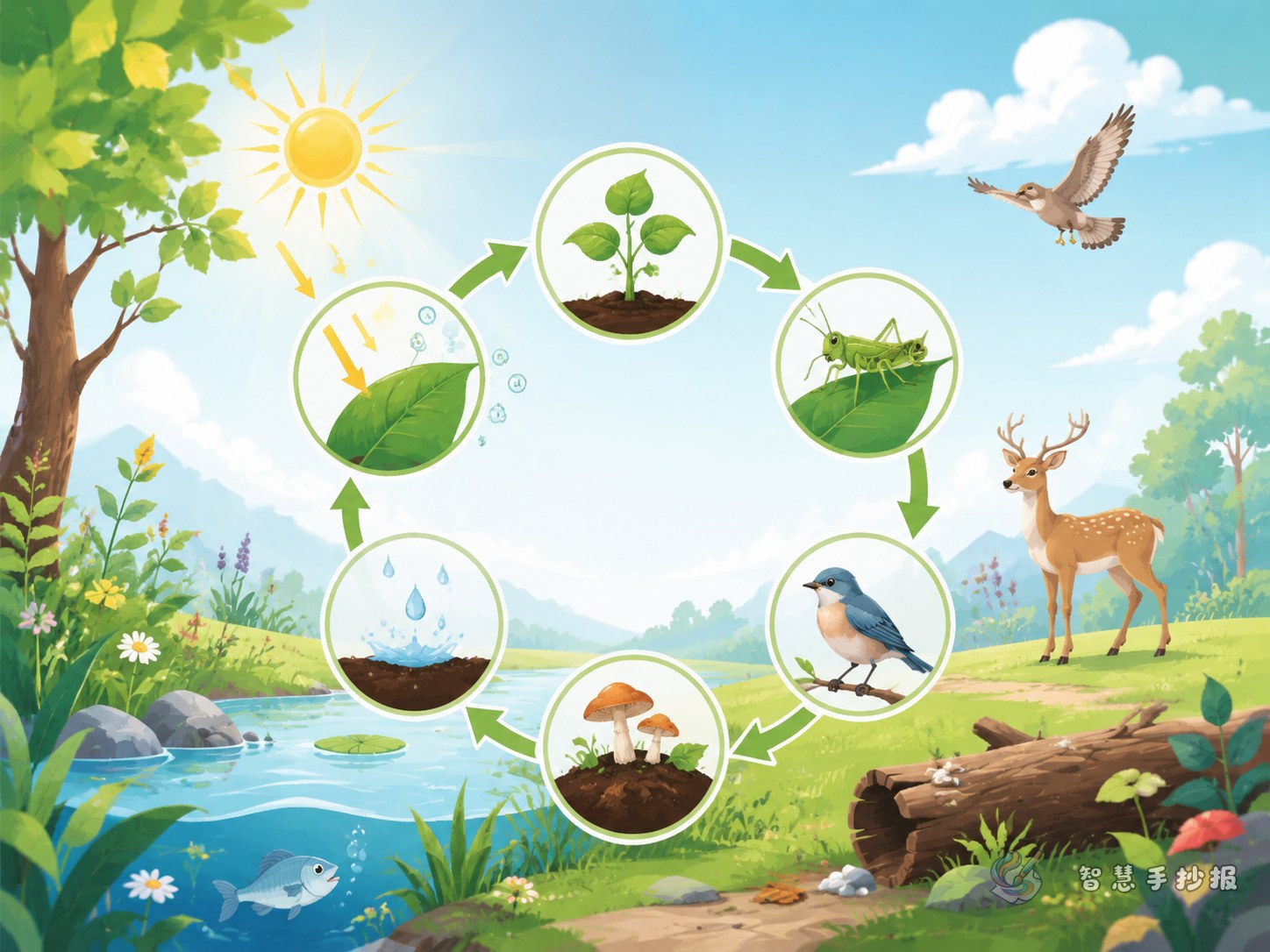
- Sunlight provides energy for plants.
- Plants absorb water and carbon dioxide.
- Plants make nutrients and grow leaves, stems, flowers, and fruits.
- Animals eat plants and gain energy.
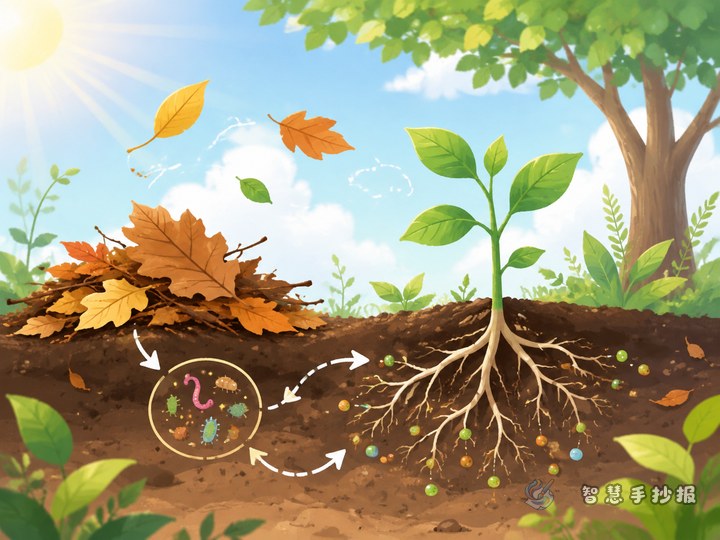
- Fallen leaves and remains are broken down by decomposers.
- Nutrients return to the soil and support plant growth again.
Section 3: A simple food chain example
You can include examples like “grass → grasshopper → frog → snake” or “leaf → caterpillar → bird.” These examples help show why plants are the starting point of many life relationships.
Section 4: What we can do to protect nature
- Care for trees and flowers.
- Save paper and protect forests.
- Do not litter and help reduce pollution.
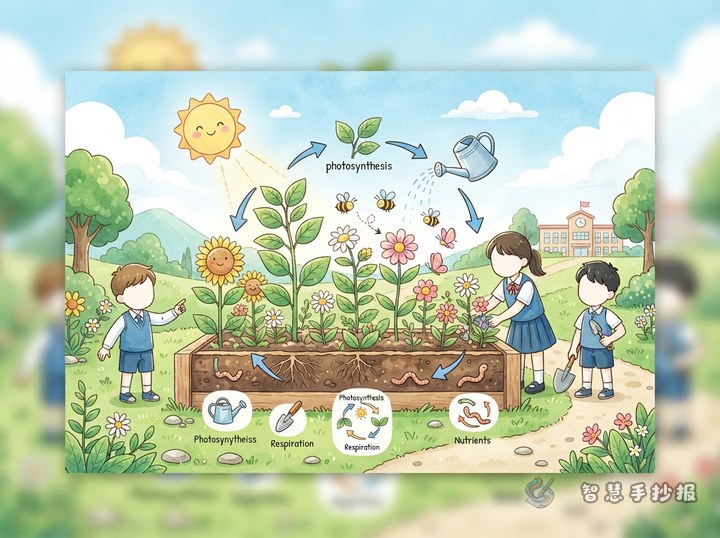
- Join planting and school greening activities.
Try a circular flow layout
If you want readers to understand the page at a glance, use a central title with surrounding content boxes. In the middle, draw the sun, a leaf, and arrows to represent photosynthesis. Around it, place sections about plant production, animal energy, decomposers, and environmental action.
Use arrows clearly and keep the color scheme simple: green for plants, blue for water and air, and yellow for sunlight. This makes the page both attractive and easy for children to follow.
Short lines to copy into the newspaper
- One green leaf connects sunlight, air, and life.
- Plants make food and begin many food chains.
- Without photosynthesis, ecological cycles would lose a key source of energy.
- Fallen leaves are not waste, but nutrients returning to the soil.
- Protecting plants means protecting our shared home.
Small tips to complete the work neatly
Do not fill the page with long paragraphs. Each section works best with two to four short lines. You can decorate the borders with leaves, vines, drops of water, the Earth, or insects to strengthen the ecological theme.
If you are short on time, complete the central process first, then add two knowledge sections and one action section. That is already enough for a clear and attractive piece. To continue organizing the design more quickly, students and families can also use the Zhihui Shouchaobao WeChat mini program for layout support.