Start with a clear idea: turn ancient money into a story about trade
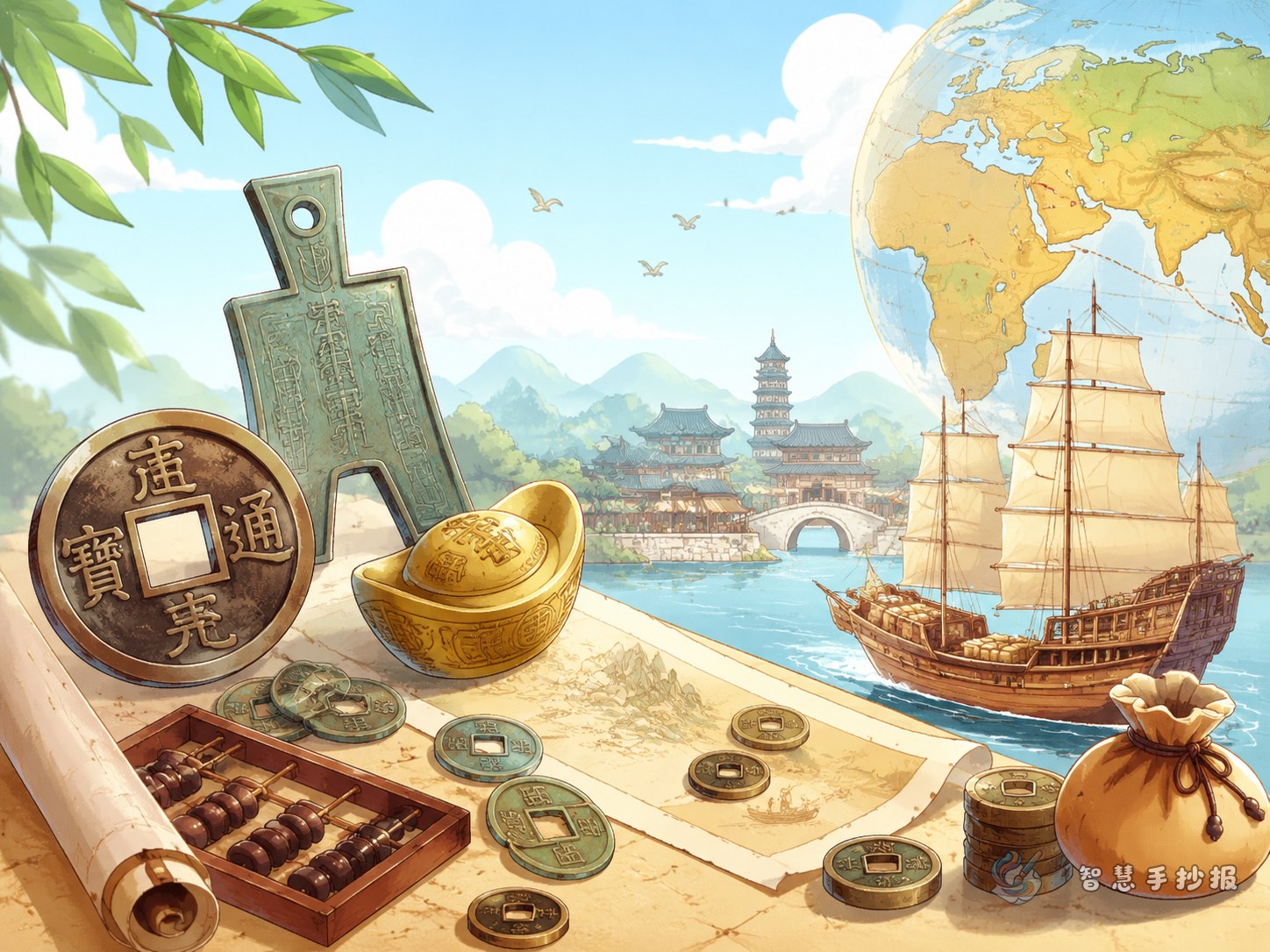
This handwritten newspaper works best when it explains where money came from, how people used it, and how it helped business grow. Instead of only listing dynasties, students can follow a simple line such as shell money, knife money, spade money, round coins with square holes, and the early form of paper money. This makes the topic easier to understand and more connected to daily life in ancient times.
Under the main title, add a short introduction: In order to exchange grain, cloth, tools, and other goods, people gradually created and improved money. The development of money made trade easier and helped markets become more active.
Useful sections for the page
Section 1: Ancient money facts
- Shell money: an early exchange item that was easy to recognize.
- Knife money and spade money: shapes that reflected tools used in work and life.
- Round coins with square holes: convenient to carry and string together.
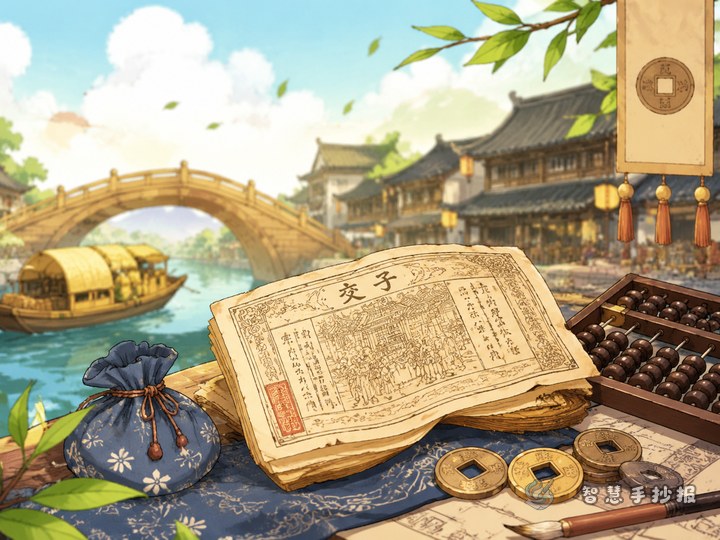
- Early paper money: showed that business had become more advanced and needed faster trade.
Section 2: What an ancient market looked like
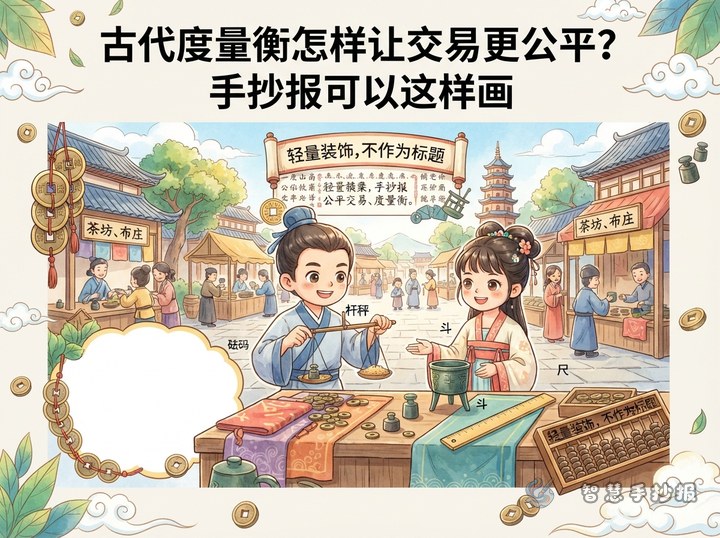
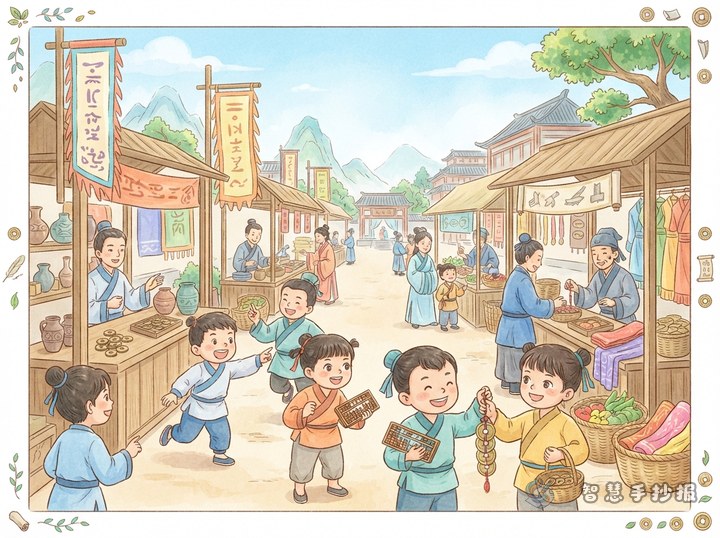
Students can write that ancient markets sold grain, silk, tea, pottery, and daily necessities. Merchants used money to complete transactions, and busy markets showed active trade between different places.
Section 3: Why money mattered
- It made exchange easier than trading goods for goods directly.
- It helped people measure value and price.
- It supported long-distance trade.
- It encouraged the growth of cities, handicrafts, and markets.
Short writing materials students can use
These simple sentences fit well in a handwritten newspaper:
- Ancient currency is a witness to the growth of commercial civilization.
- From object money to metal coins and early paper money, trade became more convenient.
- The use of money made buying and selling fairer and more efficient.
- The progress of commerce depended on markets, transport, and trust.
To make the page more interesting, add a thinking question such as: If there were no money, how much grain would a person need to trade for one piece of cloth?
Layout ideas that look neat and lively
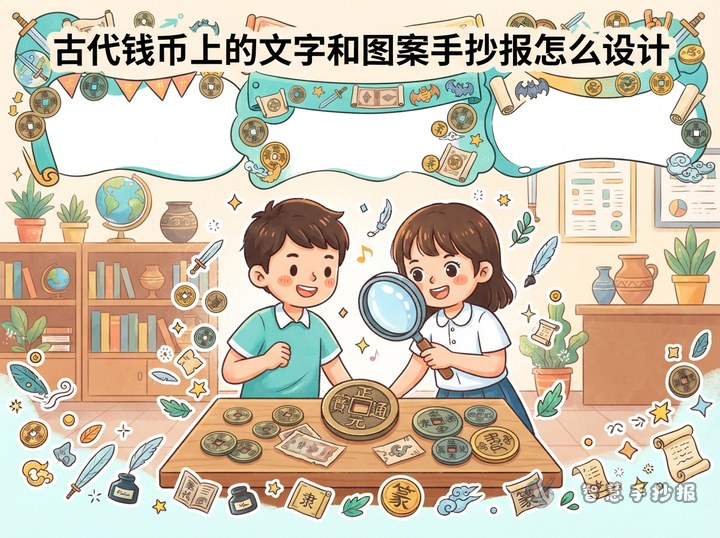
A good layout is a timeline plus market-themed sections. Put the currency timeline at the top, arrange the main title in the center, and place sections like ancient markets and the role of money on both sides. At the bottom, leave space for a short conclusion or a quiz area.
- Use a traditional-style border for the title.
- Choose different background colors for subtitles.
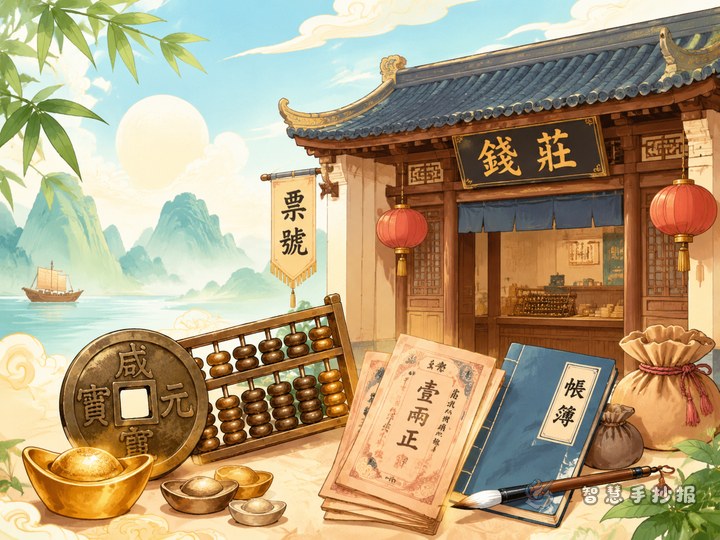
- Add simple drawings of coins, stalls, carts, or account books.
- Keep each paragraph short so it is easy for children to copy neatly.
How to end the handwritten newspaper
The ending can focus on the idea of progress: changes in ancient money show that society became more organized, trade became more frequent, and commerce became more prosperous. Through this topic, students can learn not only about old coins, but also about how business civilization developed step by step.
If you want to continue improving the layout, titles, and section design, you can also explore more ideas in the Zhihui Shouchaobao WeChat mini program.