Turn the theme into a walk through an ancient market
This topic works best when it is not written as scattered facts. Imagine yourself walking into an ancient market. First, you notice what people use as money. Then you see what they are buying and selling. Finally, you observe how trade helps towns and daily life grow. This creates a strong storyline for a handwritten newspaper.
A title such as Buying and Selling in an Ancient Market, Ancient Trade and Currency, or A Walk into an Ancient Marketplace works well for a student project.
Ready-to-use writing materials
What a market was
An ancient market was a place where people gathered to buy and sell goods. Farmers, craftsmen, and traders brought products such as grain, cloth, pottery, tea, and daily necessities. Markets made exchange more convenient and brought many people together.
What people used as money
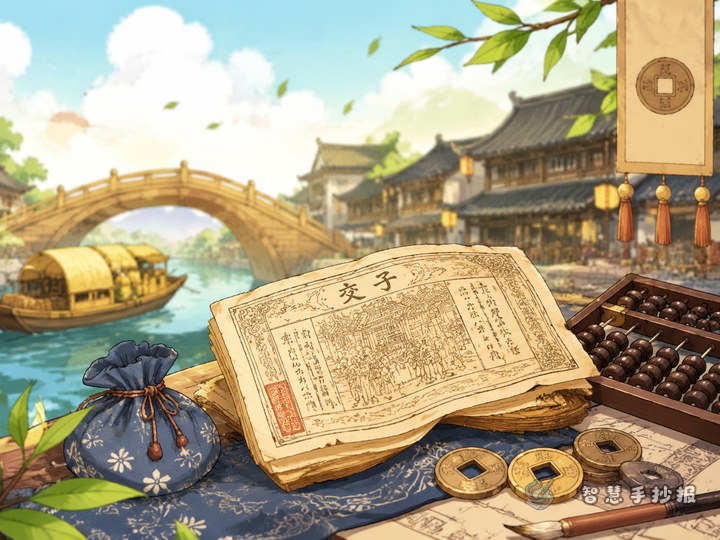
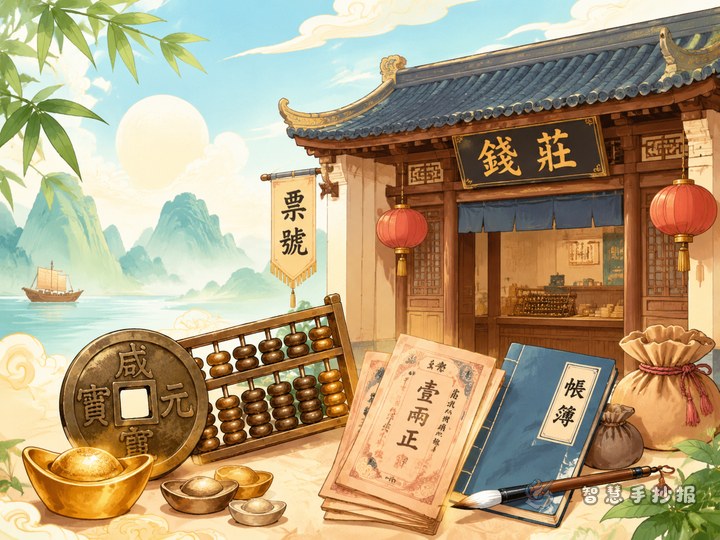
At first, people sometimes exchanged one product for another. Later, forms of money such as shell money, knife money, spade money, and bronze coins appeared. In later periods, silver was also used in larger transactions. The use of money made trade easier and more organized.
What could be seen in the market
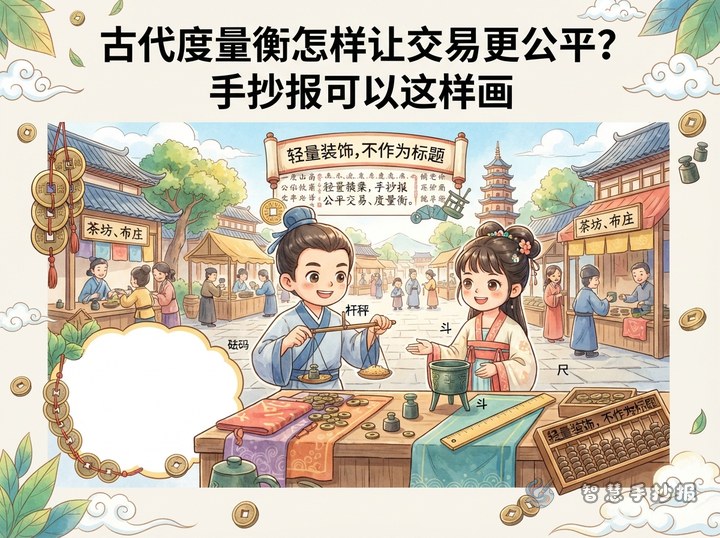
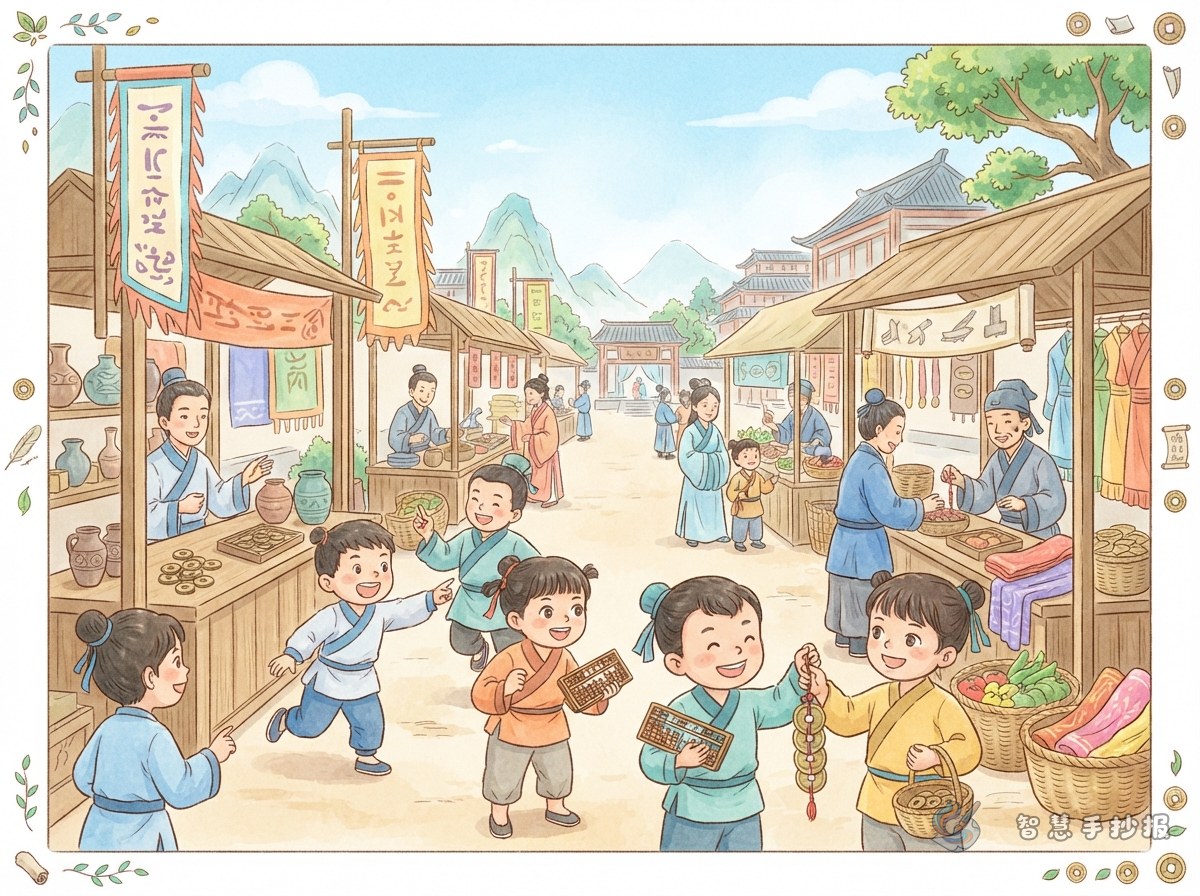
Ancient markets were often lively. There were street vendors, shop owners, customers, and travelers. You might see hanging signboards, carrying poles, carts, animals, and goods from different places. A market was not only a trading space but also a place for communication and connection.
How commerce changed society
The growth of trade helped cities become more prosperous. It also supported roads, transport, handicrafts, and connections between different regions. Commercial civilization shows that ancient society developed not only through production but also through exchange and organization.
Try a market-map layout instead of equal boxes
This topic looks great when the page feels like a street scene. You can place a road or market lane in the center and arrange different sections along both sides, so the reader feels like walking through the market while reading.
- Top area: the main title with coin or banner decorations.
- Left side: ancient currencies, with small coin sketches.
- Middle area: a short scene showing buying and selling.
- Right side: how commerce changed towns, transport, and daily life.
- Bottom area: a conclusion such as “A small coin can reflect a thriving society.”
Illustration ideas that match the topic
You do not need complicated drawings. The key is to make readers quickly recognize money and trade.
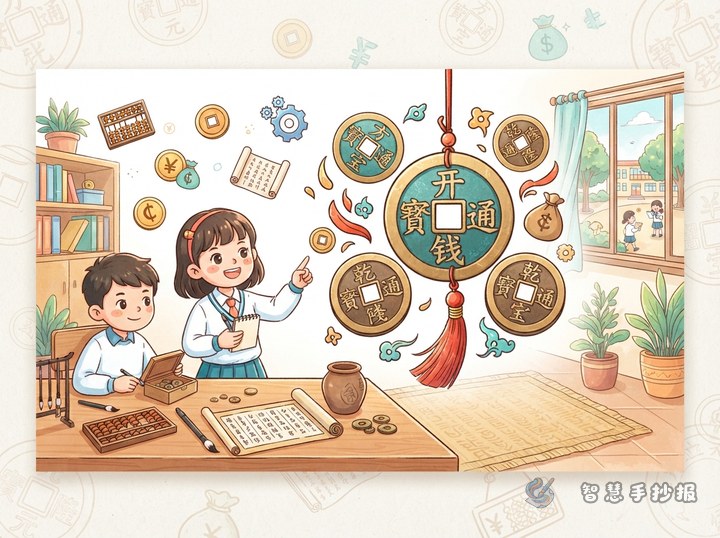
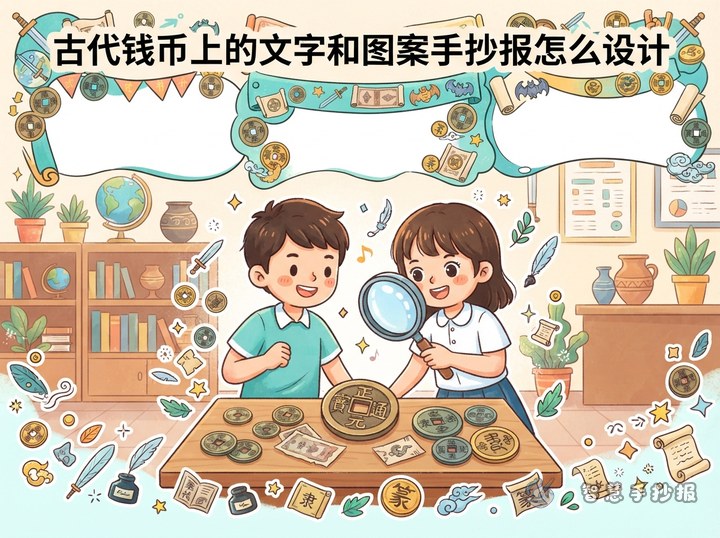
- Draw several types of ancient money, such as shell forms, knife shapes, spade shapes, and round bronze coins with square holes.
- Add market stalls, baskets, cloth, grain bags, or tea jars.
- Use small icons like signboards, abacuses, carts, and carrying poles.
- Connect money, goods, merchants, markets, and cities with lines to form a simple knowledge chain.
Warm earthy colors, green, brown, and muted red work well for an ancient market feeling. Keep enough blank space so the page stays neat.
Short lines and a simple ending
If you still have empty space, use short lines like these:
- Money made exchange easier, and markets made life busier.
- A small coin could connect a large ancient marketplace.
- The growth of trade showed the progress of society.
- Through market life, we can see the energy of ancient civilization.
You can end with a short reflection: Ancient markets showed not only many kinds of goods, but also the importance of money and the development of commercial civilization. Through this handwritten newspaper, I learned that behind one small coin there was wisdom, exchange, and social progress.
If you have already planned your sections and want to continue improving the layout, colors, and text arrangement, you can use the Zhihui Shouchaobao WeChat mini program to keep creating your page.