Choose a theme that feels clear and vivid
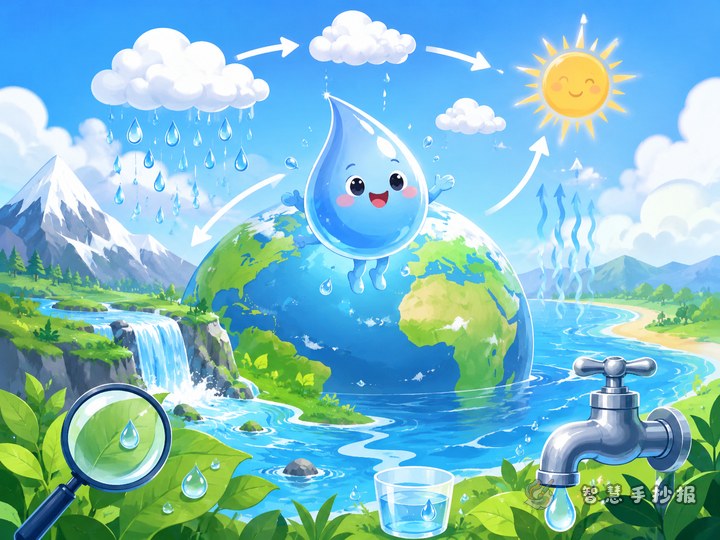
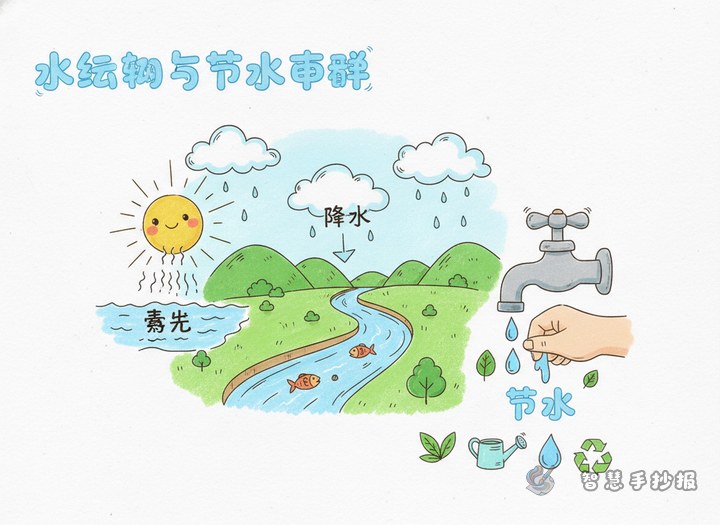
This poster can focus on the question How many steps does one drop of water go through before it becomes clean and usable? This angle helps students connect the water cycle with water conservation on the same page. Instead of listing dry terms, it tells a story children can easily follow.
A good main title could be “Where Does Tap Water Come From and Where Does It Go?” with a subtitle such as “Learn the Water Cycle and Save Every Drop.” It sounds natural and gives you a strong structure for the poster.
Explain the journey of water in the center section
The natural water cycle
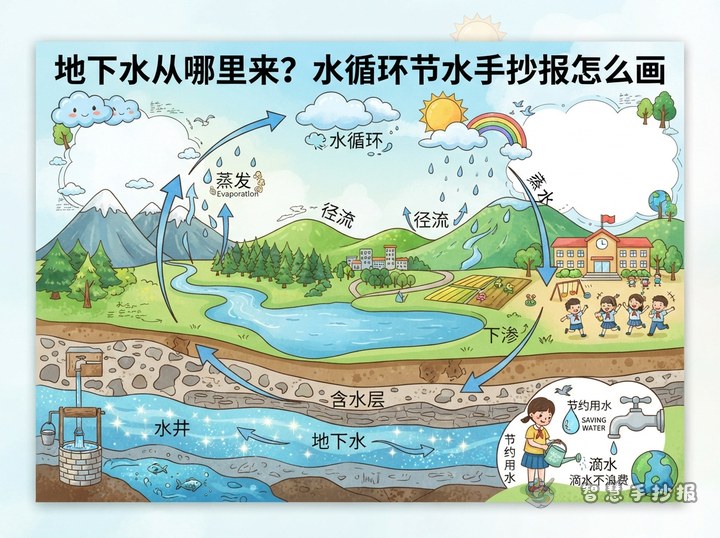
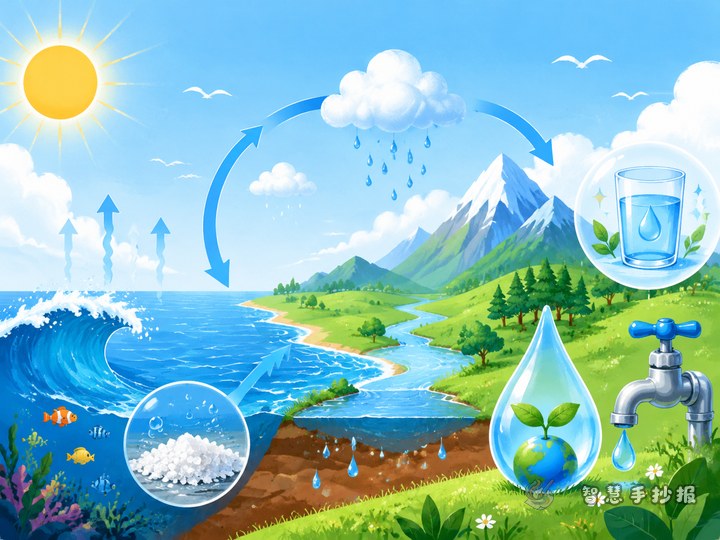
Use simple sentences to describe the main stages: sunlight causes evaporation, water vapor rises and cools to form clouds, clouds release rain or snow, and the water returns to rivers, lakes, soil, or underground before starting the cycle again.
- Evaporation: liquid water turns into vapor
- Condensation: vapor cools and forms clouds
- Precipitation: rain or snow falls back to Earth
- Collection and infiltration: water gathers on land or moves underground
The water cycle at home
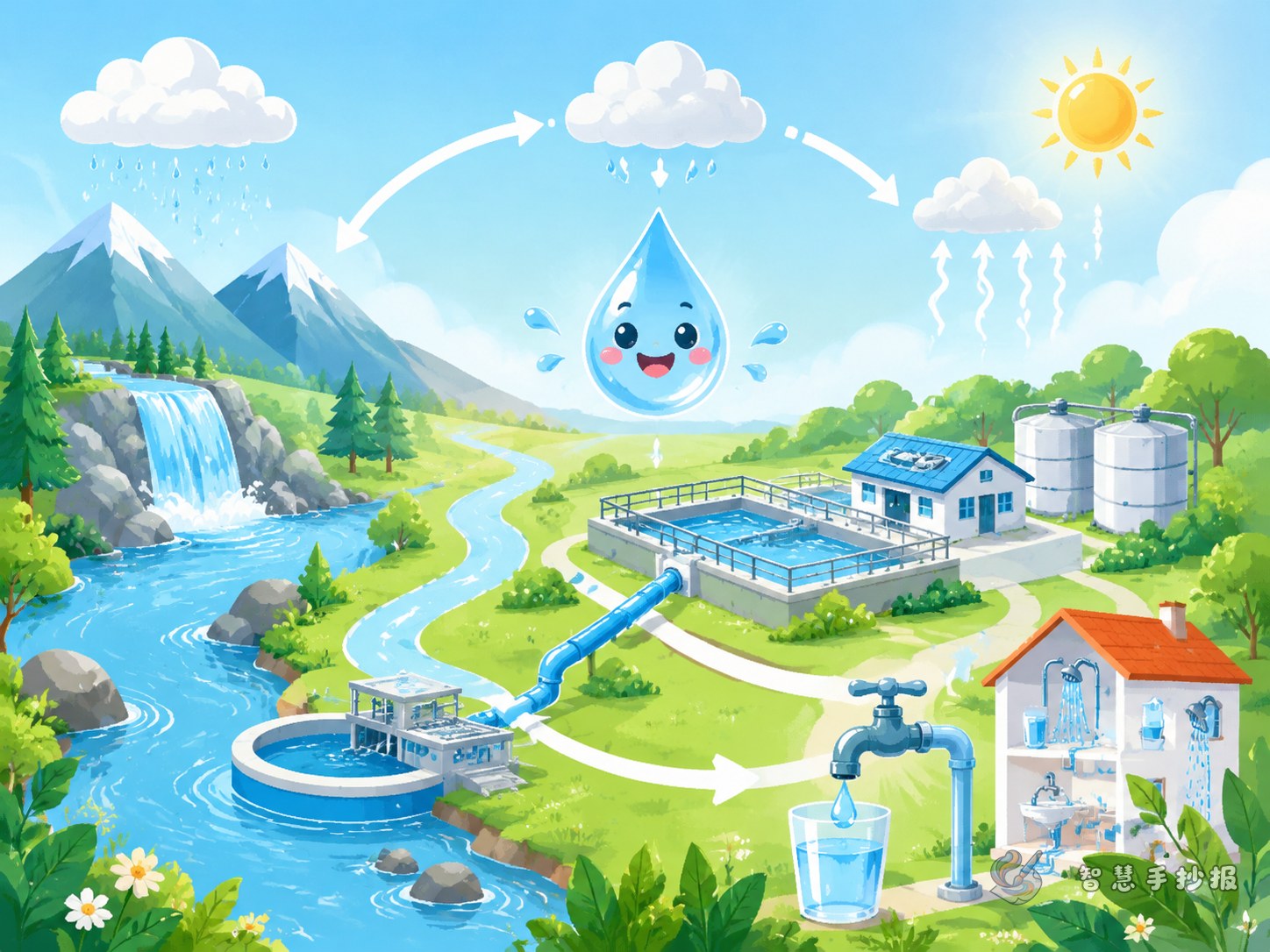
Add a small section about daily life: clean water is supplied to homes, used for washing and cooking, then wastewater goes through a drainage and treatment process before returning to the environment. This makes the poster more practical and complete.
Short lines you can place around the poster
A handwritten newspaper poster looks better with short, readable phrases instead of long paragraphs. You can use lines like these:
- Water keeps moving, but usable fresh water is limited.
- Saving water means protecting our future.
- One drop seems small, but many drops matter.
- Turning off the tap is an easy way to save water.
- Care for every drop and protect the water cycle.
You can also end with a simple message: Start today and become a student who understands water, values water, and saves water.
Try a route-map layout instead of a simple cloud-and-rain page
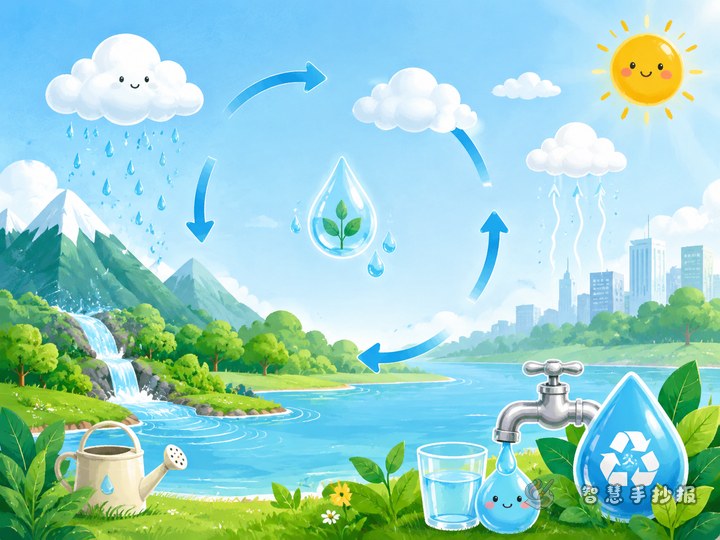
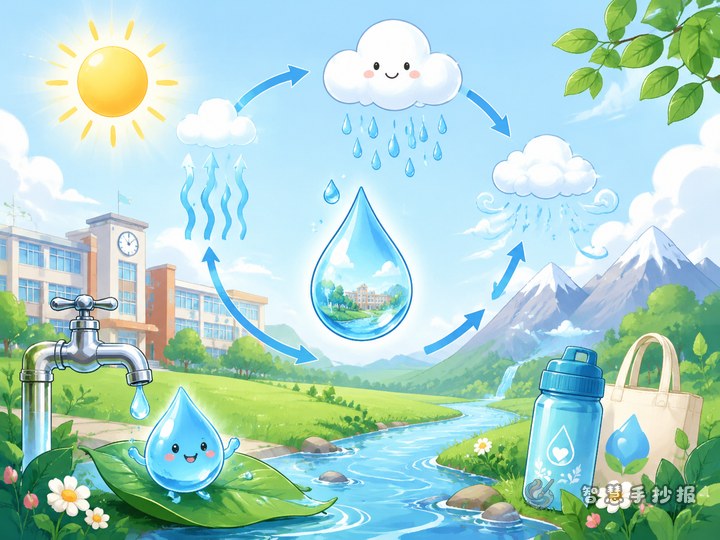
This topic works especially well as a journey map layout. Draw a cartoon water drop in the middle and connect the sky, mountains, rivers, household taps, and wastewater treatment with arrows. This creates a natural reading path.
You can divide the page into four areas: the sky at the top, the water cycle in the center, water-saving tips on the lower left, and slogans or quick facts on the lower right. Blue and green are the best main colors, with a little yellow for the sun.
Make the conservation section practical and specific
- Turn off the tap while brushing your teeth.
- Reuse vegetable-washing water for plants.
- Tell parents or teachers when you notice leaks.
- Use a gentle flow when washing hands.
- Do not throw trash into rivers, ponds, or drains.
If the poster is for class display, you can add a small box called “Three water-saving actions I can do” to make it feel more personal and active.
Finish with a neat and complete conclusion
Your ending does not need to be long. A short summary is enough: the water cycle keeps water moving around Earth, but clean fresh water still needs everyone’s care. When we know where water comes from and where it goes, we can better understand why saving water matters.
If you want to continue improving the layout, titles, and section arrangement, you can also visit the Zhihui Handwritten Newspaper WeChat mini program for more poster-making ideas.