Turn a daily question into a strong poster topic
Many children notice that after it rains, rivers and streams seem fuller. That makes the question Why is there more water in rivers after rain? a very good topic for a handwritten newspaper. It is easy to understand, closely linked to daily life, and perfect for introducing both the water cycle and water-saving awareness.
You can also add a short subtitle such as “Where does rainwater go?” or “How water travels in nature” to make the page more lively and inviting.
Build the main explanation in a simple sequence
Step 1: Water rises into the air
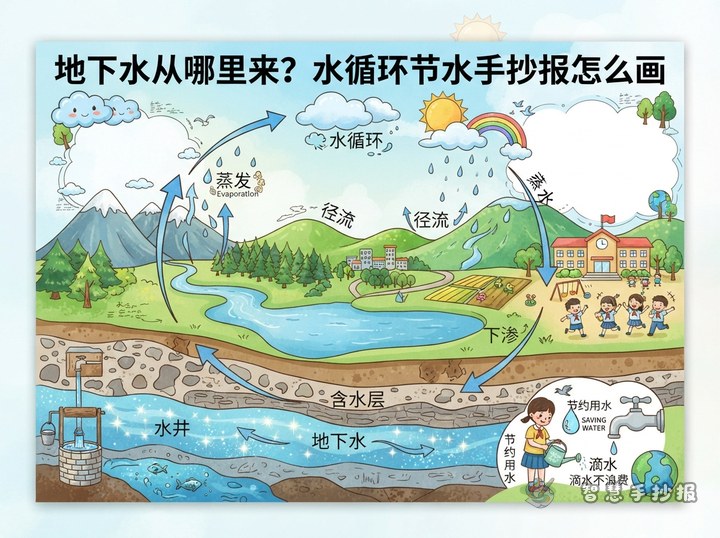
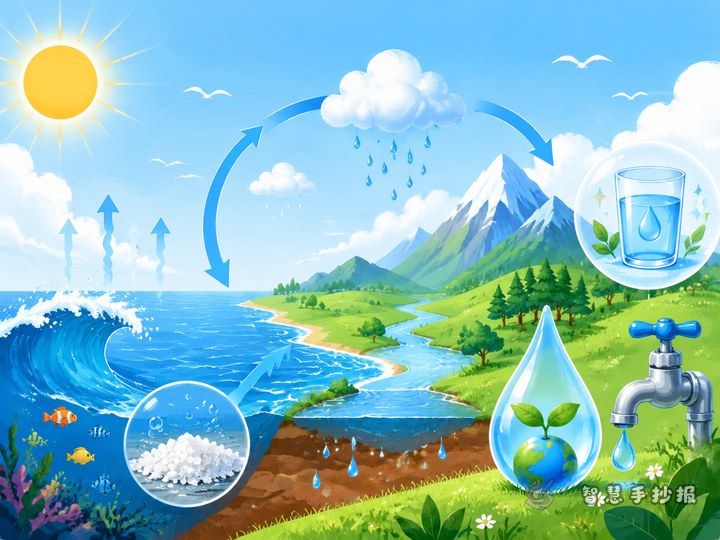
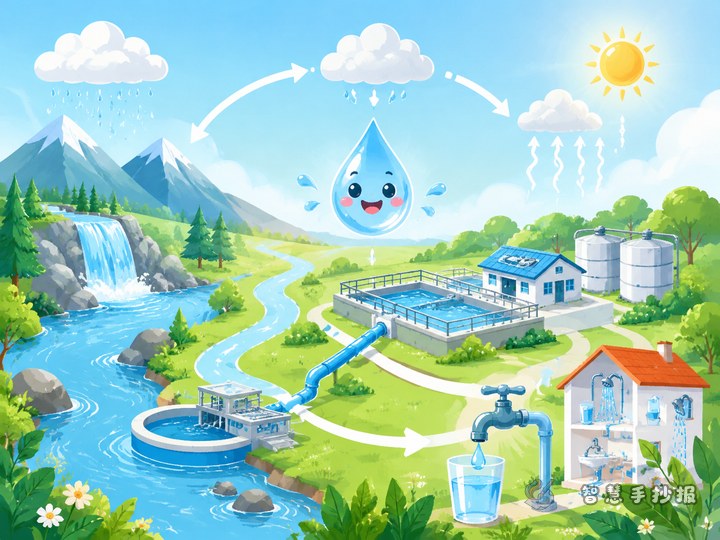
When the sun heats rivers, lakes, seas, and wet ground, part of the water changes into water vapor. This process is called evaporation. Plants also release water vapor into the air.
Step 2: Water vapor becomes clouds
As the vapor rises higher, it meets cooler air and turns into tiny droplets. These droplets gather together to form clouds. When the droplets become larger and heavier, precipitation happens.
Step 3: Rain returns to the land and rivers
Rain falls onto mountains, fields, roads, rooftops, and forests. Some of it flows over the land into ditches, streams, and rivers. Some soaks into the ground and becomes groundwater, which can slowly feed springs and surface water.
Step 4: The cycle continues
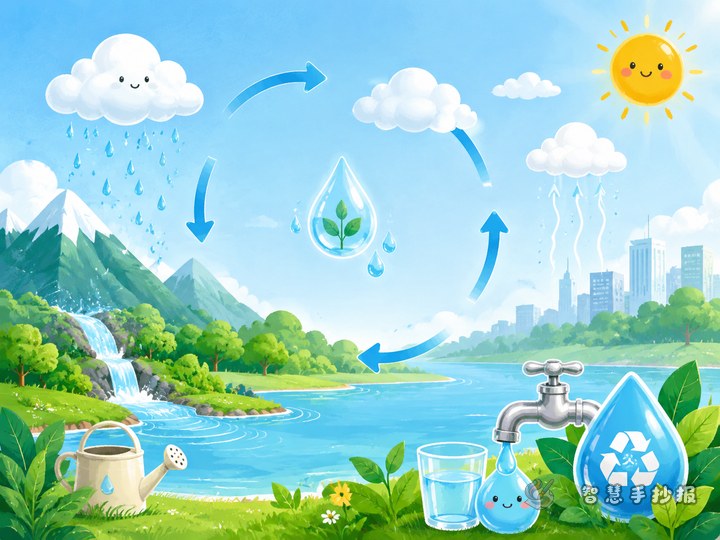
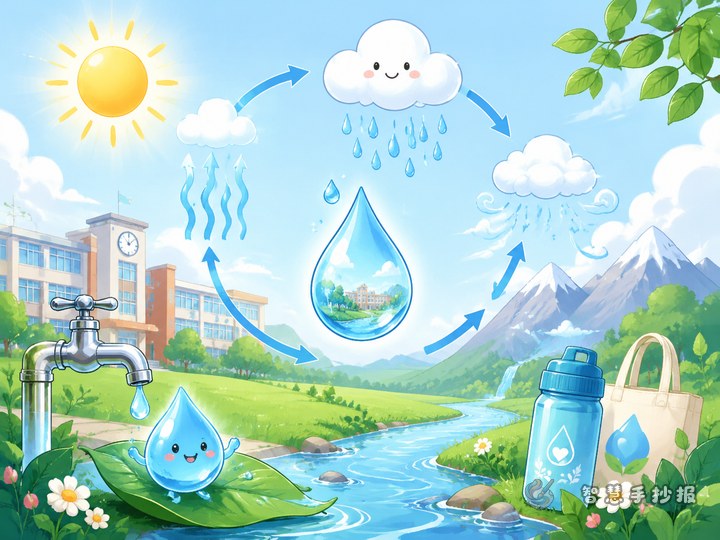
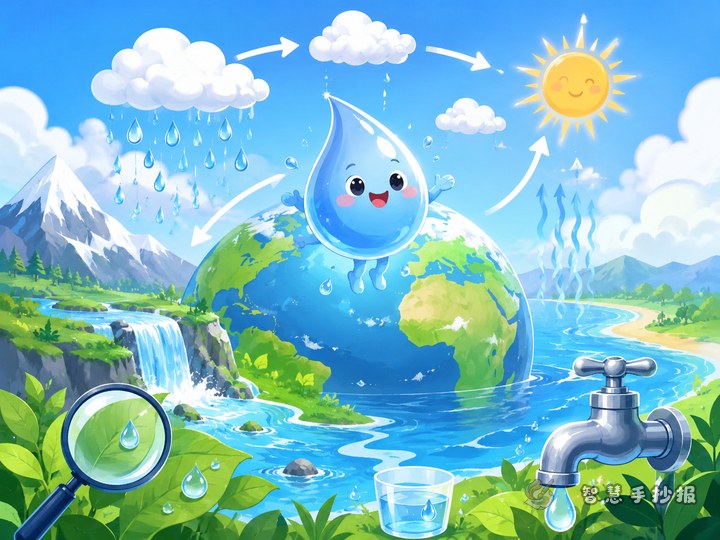
The water in rivers does not stay still forever. It can evaporate again and return to the sky. This repeating movement is the water cycle. If students explain these steps clearly, readers will understand why rivers gain water after rainfall.
Useful sections to place on the page
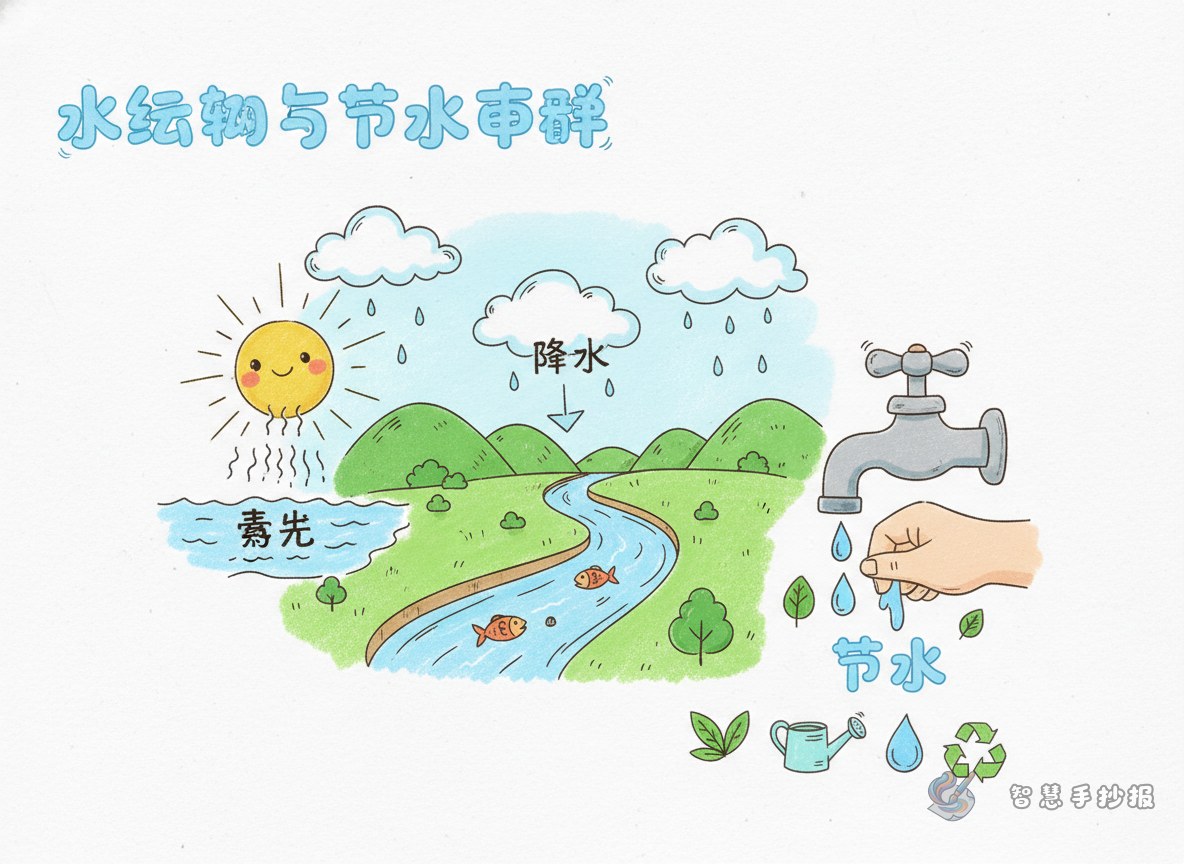
- Main question: Why is there more water in rivers after rain?
- Science words: evaporation, condensation, rainfall, runoff, infiltration.
- Observation box: puddles appear, streams run faster, plants look fresher after rain.
- Save water box: turn off taps tightly, reuse water for plants, repair leaks, avoid waste.
- Protect rivers box: do not throw rubbish into water and do not pollute natural water sources.
If space is limited, use two clear sections: one for the water cycle and one for saving water. This keeps the poster neat and easy to read.
Connect the water cycle with water saving naturally
Some students may ask: if water keeps cycling, why do we still need to save it? The answer is simple: cycling water does not mean water can be wasted. A lot of Earth’s water is not directly usable freshwater, and clean water can become hard to use once it is polluted.
- Wasting water increases unnecessary use in daily life.
- Polluting water reduces the amount of clean water available.
- Saving each drop helps protect usable water within the natural cycle.
This makes the handwritten newspaper more complete, because it includes both science knowledge and environmental responsibility.
Layout ideas that are easy for students to follow
A flowing layout works very well for this topic. Put the big question at the top, place clouds, raindrops, arrows, and a river through the middle, and arrange saving-water tips at the bottom. Arrows can guide the reader from sky to land to river.
Blue and green are the best main colors. Keep each text block short, and highlight words like evaporation, rainfall, runoff, and save water in bold.
A strong closing sentence for the poster
You can end with a short sentence such as: Rainwater reaches rivers through the water cycle, and protecting every drop is our shared responsibility. This answers the title question and brings the saving-water message back into focus.
If you already have your topic and sections and want to continue improving the layout and text, you can explore more ideas in the Zhihui Shouchaobao WeChat mini program.