Start with a clear idea: Does water travel around Earth?
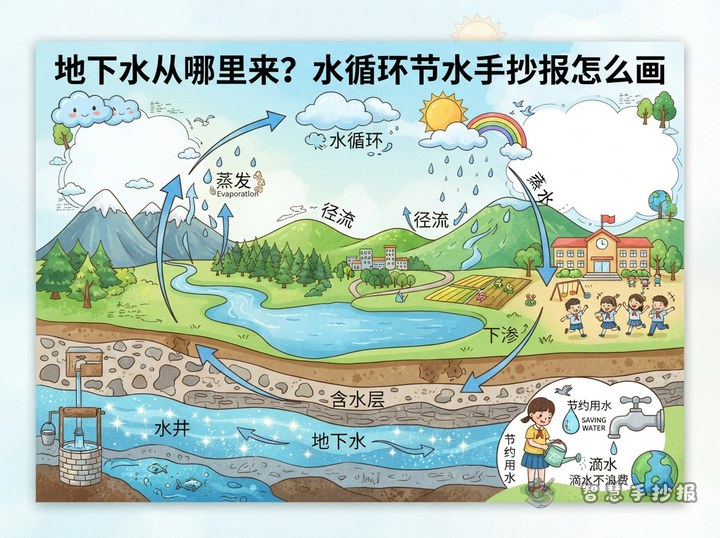
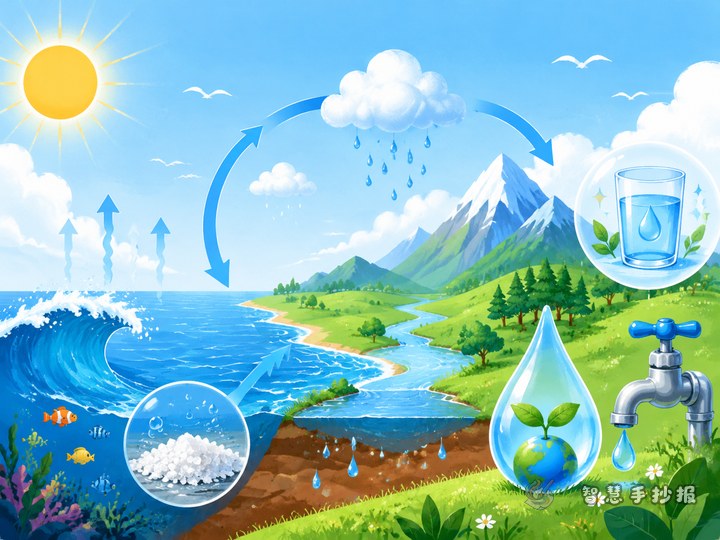
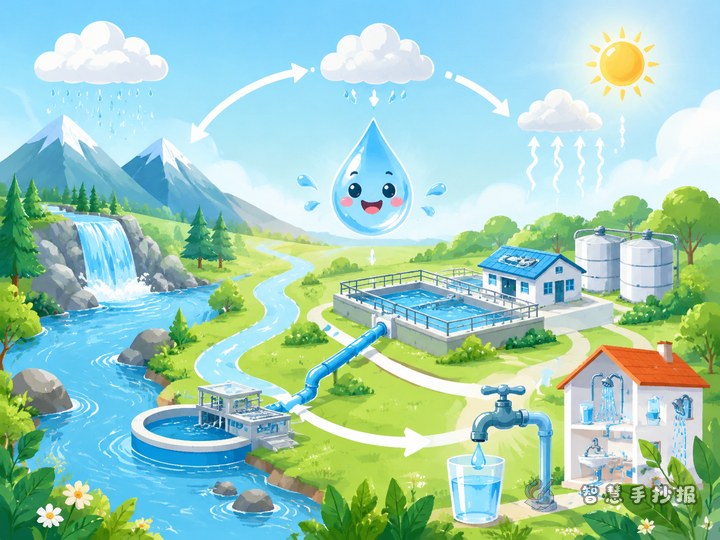
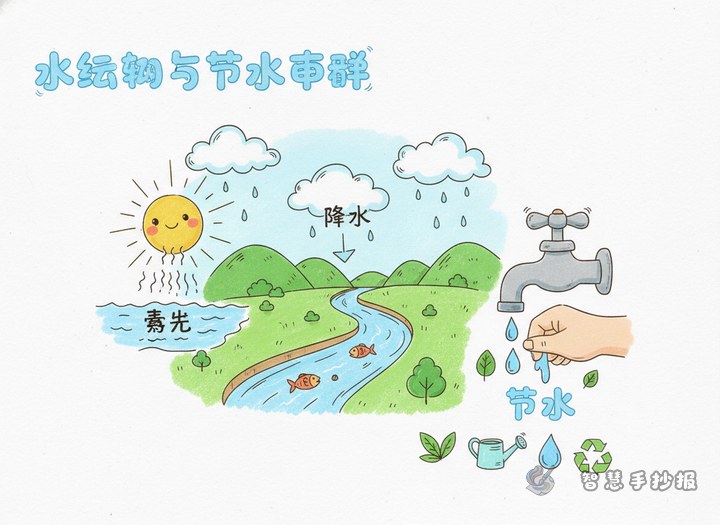
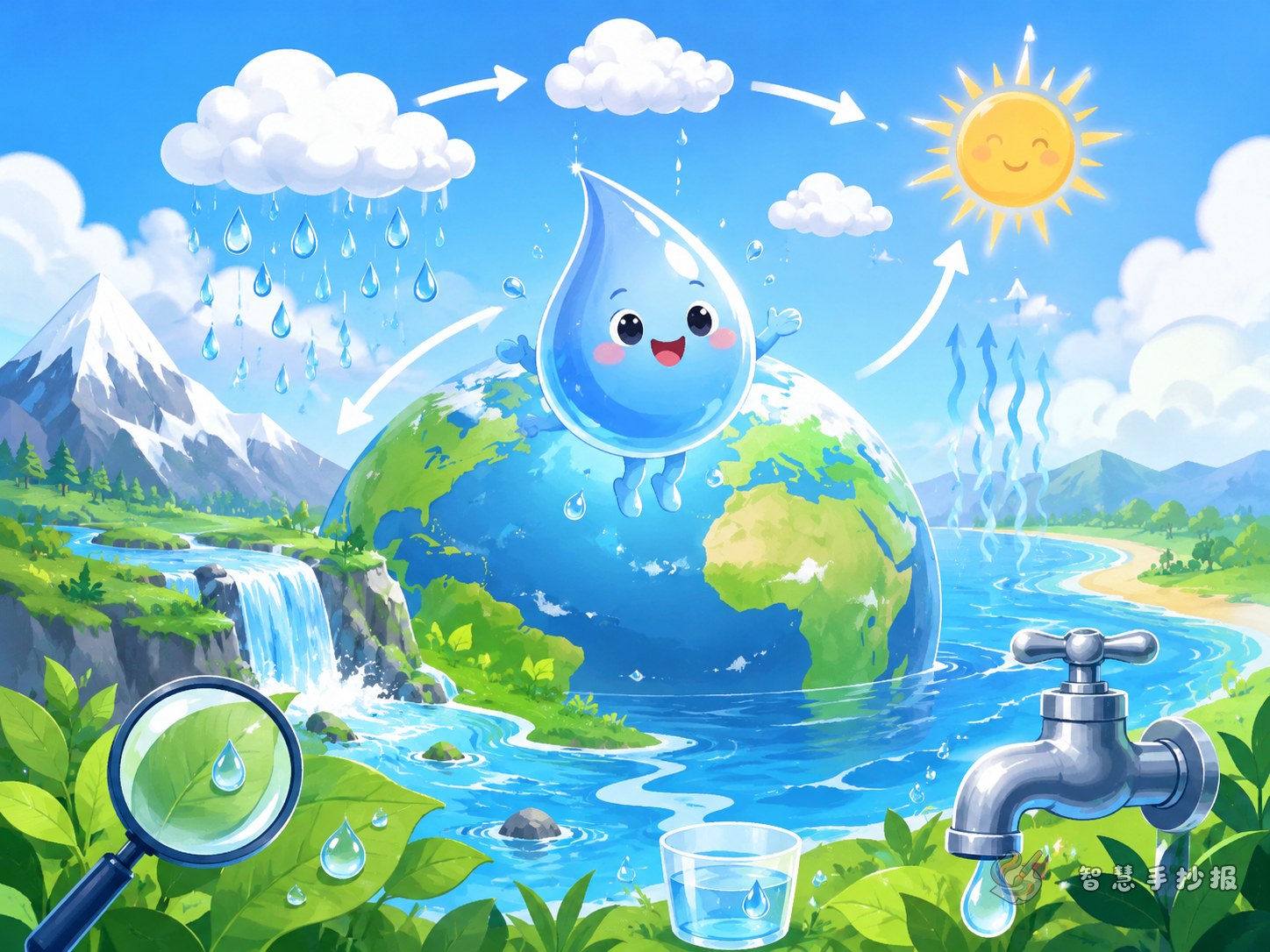
This poster can be built around the story of “a day in the life of a water drop.” It turns the science of the water cycle into something children can easily understand. Begin with a simple explanation: sunlight heats water on the ground, water turns into vapor and rises, cool air changes it into tiny droplets that form clouds, and then rain or snow brings the water back to Earth. After that, it flows into rivers, lakes, soil, or underground water and begins the cycle again.
This approach is easy to read, fits a handwritten newspaper well, and naturally connects to the idea that water circulates, but clean usable freshwater should still be saved.
Four sections that work well on the page
Section 1: The travel route of a water drop
- Evaporation: Heat from the sun turns water into vapor.
- Condensation: Water vapor cools and becomes tiny droplets.
- Precipitation: Droplets grow larger and fall as rain, snow, or hail.
- Collection: Water gathers in rivers, lakes, soil, and groundwater.
Section 2: Water cycle examples in daily life
- Clothes dry in the sun because of evaporation.
- Small drops on a cup lid show condensation.
- Rain and snow are forms of precipitation.
- Rainwater flowing across the ground shows collection.
Section 3: Why saving water still matters
Water keeps cycling on Earth, but the freshwater people can easily use is limited. It is not evenly available everywhere, and clean water needs protection. That is why saving water is important.
Section 4: Water-saving actions I can do
- Turn off the tap right after washing hands.
- Use a basin to wash vegetables instead of running water.
- Reuse rice-washing water or vegetable-washing water for plants.
- Tell adults if you notice leaking pipes or taps.
- Do not throw trash into rivers or lakes.
A simple layout idea
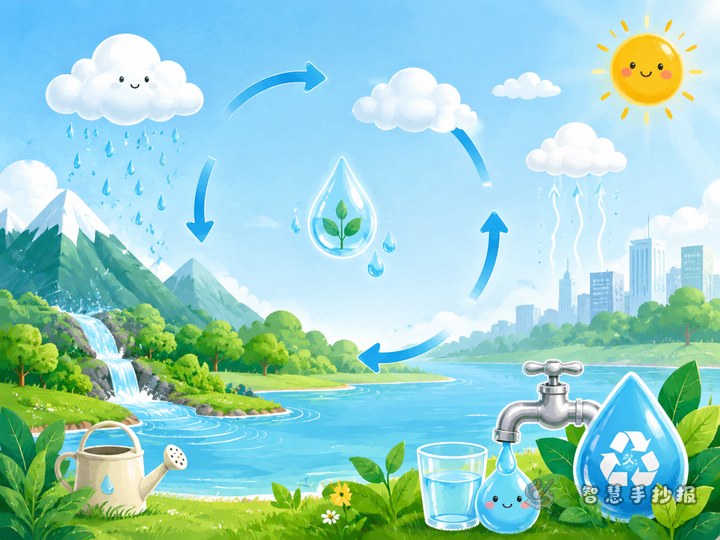
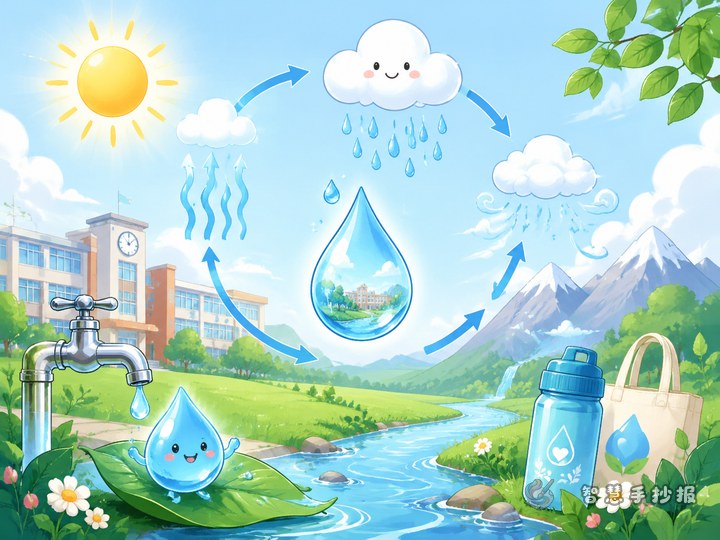
Place a large circular water cycle diagram in the center of the page with arrows connecting the ocean, sun, clouds, rain, rivers, and land. Put the travel route on one side, daily life examples on the other, and a water-saving checklist at the bottom. This makes the whole poster easy to follow.
Blue, light green, and white are good color choices because they look fresh and clean. You can decorate with clouds, water drops, waves, leaves, and umbrellas, but keep enough blank space so the page does not look crowded.
Short text materials you can copy
Opening sentence: Water looks ordinary, but it is always traveling between the sky, the land, and the ground below us. That amazing journey is called the water cycle.
Science sentence: The sun is like a hardworking mover, sending water from Earth into the sky, and clouds send it back again.
Action sentence: Water can cycle, but clean freshwater is still precious, so every drop should be saved.
Ending sentence: Learn about the water cycle, save water every day, and help make our planet greener and cleaner.
Helpful tips before finishing the poster
Keep each section short, with just a few lines, so it is easier to handwrite neatly. Make the main title larger than the body text. If you want to continue improving the layout, decorations, and final look, you can go to the Smart Handwritten Newspaper WeChat mini program for more making ideas and a faster poster workflow.