Build the theme around the journey of one drop of water
If you want to combine the water cycle and saving water on one poster, a smart idea is to use a title like The Journey of One Drop of Water or From the Sky to My Home. This helps the whole page feel connected instead of split into two unrelated parts.
A short opening line can say: Water seems ordinary, but every drop has gone through a long natural journey. When we understand that journey, we learn why saving water really matters.
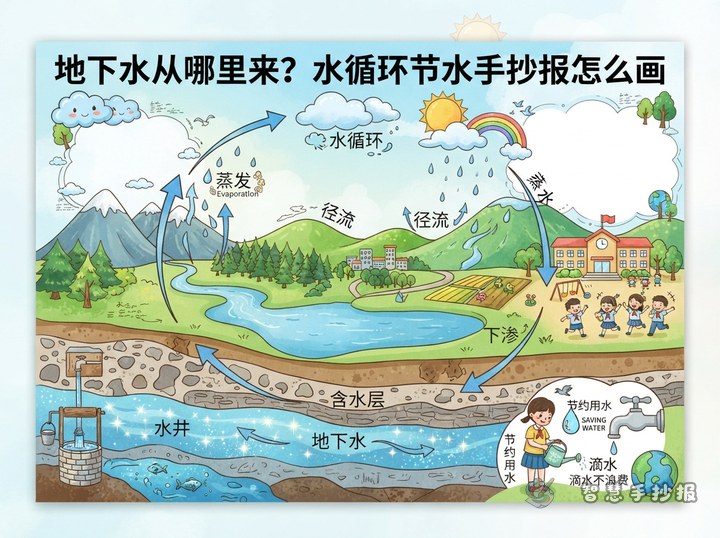
Explain the water cycle in simple steps
Use four easy stages
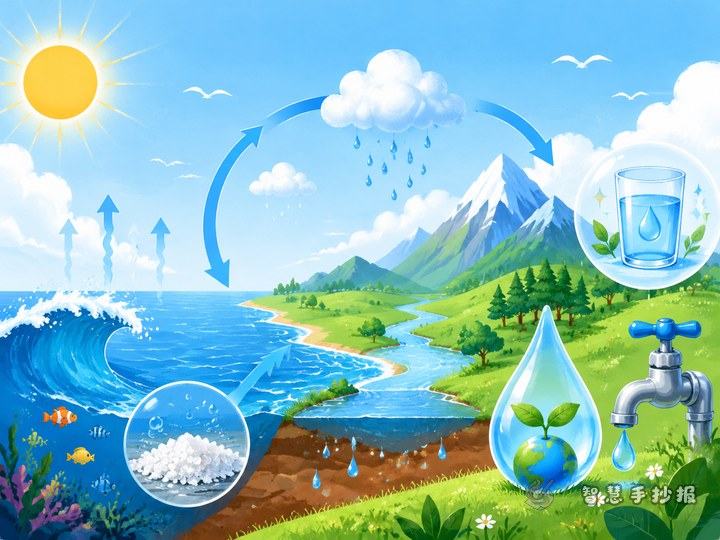
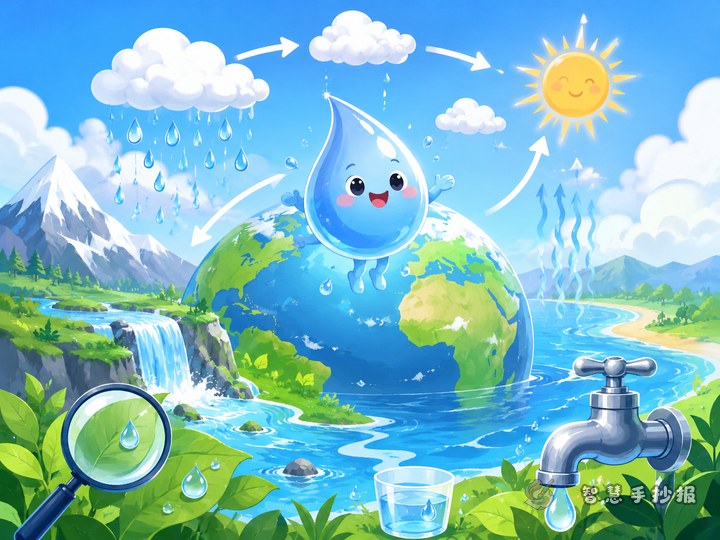
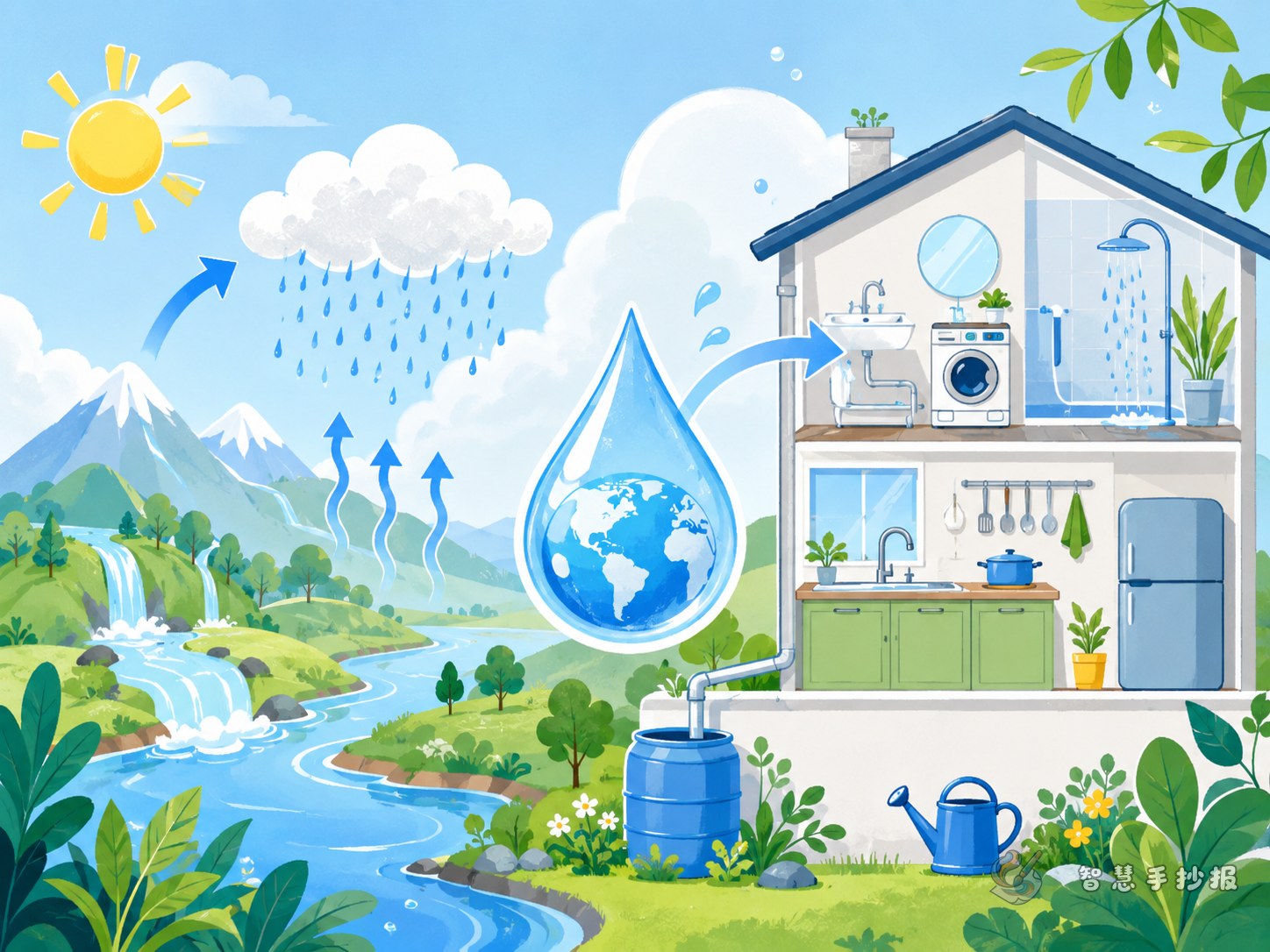
- Evaporation: The sun heats water in rivers, lakes, and seas, and some of it rises into the air as water vapor.
- Condensation: The vapor cools and turns into tiny drops, forming clouds.
- Precipitation: When the drops become heavy, they fall as rain, snow, or other forms of precipitation.
- Collection: Water returns to rivers, lakes, the ground, and underground areas, then the cycle begins again.
A simple summary sentence works well here: Water keeps moving through nature, but usable fresh water is still precious.
Short fact lines for students
- Water does not disappear. It changes form and location.
- The water we use every day is closely connected to nature.
- Learning the water cycle helps us understand why we should not waste water.
Connect science knowledge to real life
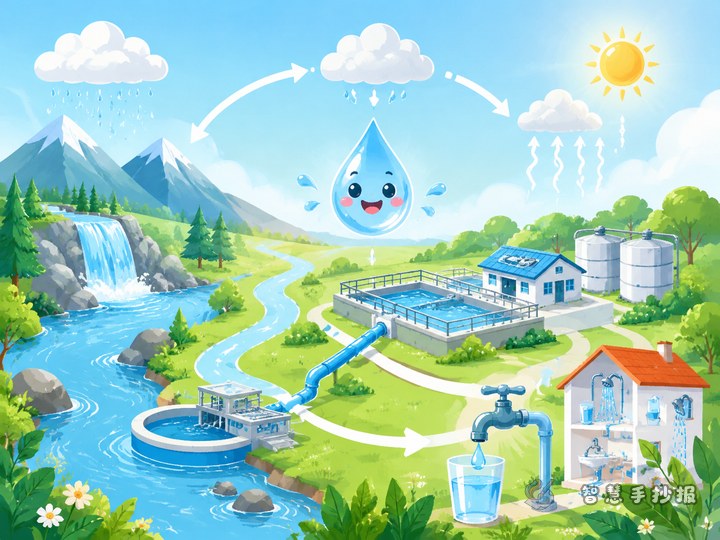
Some students may ask: if water keeps cycling, why do we still need to save it? This is a great section for your poster. You can explain that although water moves through nature again and again, only a small part is easy for people to use directly. Cleaning and delivering water also takes effort and resources.
- What we know: Water comes from nature and is not unlimited.
- What we do: We save water in our daily lives.
Best home water-saving ideas to include
This section is easiest to present as a checklist. It is practical and clear for readers.
- Turn off the tap while brushing teeth.
- Use only a small amount of water when washing hands or face.
- Use rice-washing water to water plants.
- Reuse vegetable-washing water for cleaning.
- Keep showers shorter and avoid unnecessary running water.
- Tell adults when a tap is leaking.
- Use a basin for small washing tasks instead of letting water run continuously.
If you want to add a personal touch, create a small box called Three Water-Saving Things My Family Can Do Today.
A layout idea that looks clear and lively
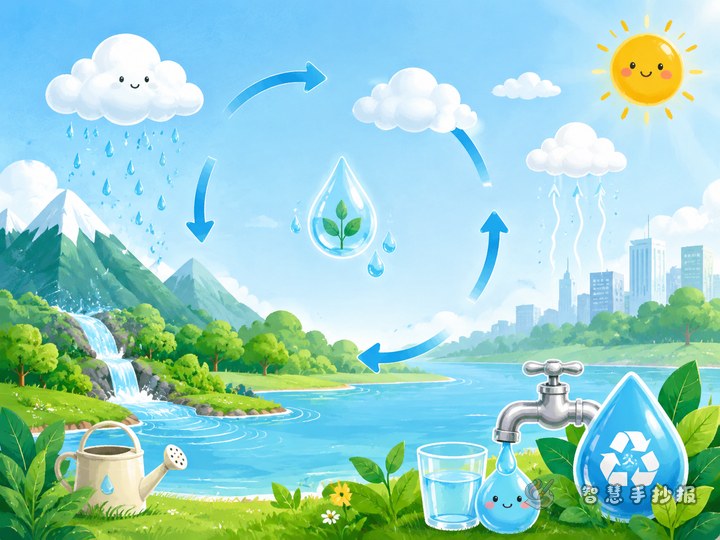
This kind of handwritten newspaper works well as a route-style layout. Put the main title at the top. In the center, use arrows or wave lines to show how water moves. Place the water cycle facts on one side and home water-saving actions on the other side. Put slogans at the bottom.
- Best colors: blue and green
- Decoration ideas: water drops, clouds, rain, rivers, taps
- Text style: short facts in the science area, list format in the action area
- Key phrases: Save Every Drop and Start Saving Water from Daily Life
If you want to finish the design more quickly, you can organize your sections first and then continue making the handwritten newspaper in the Zhihui Shouchaobao WeChat mini program.
Ready-to-use headings and slogans
Section title ideas
- The Journey of One Drop of Water
- Where Does Our Water Come From?
- Why Should We Save Water?
- Easy Water-Saving Tips at Home
- I Want to Be a Water-Saving Helper
Slogan ideas
- Save every drop and protect our home.
- Learn the water cycle and build good habits.
- Saving water starts with small actions.
- Children and families can protect water together.