Tell the story through a single thread
A kesi poster does not need to include every fact about traditional weaving. Begin with one warp thread, several colored weft threads, and one finished pattern. Possible titles include “Pictures Woven with Colored Silk” or “Discovering the Warp-and-Weft Art of Kesi.” Add fine thread lines, a shuttle, or tiny tassels near the title to set the theme.
Keep the introduction short: Kesi is a traditional silk weaving craft. Its warp threads remain continuous, while different colored weft threads are woven into selected areas to form patterns with clear edges. It is often described as a picture woven from silk.
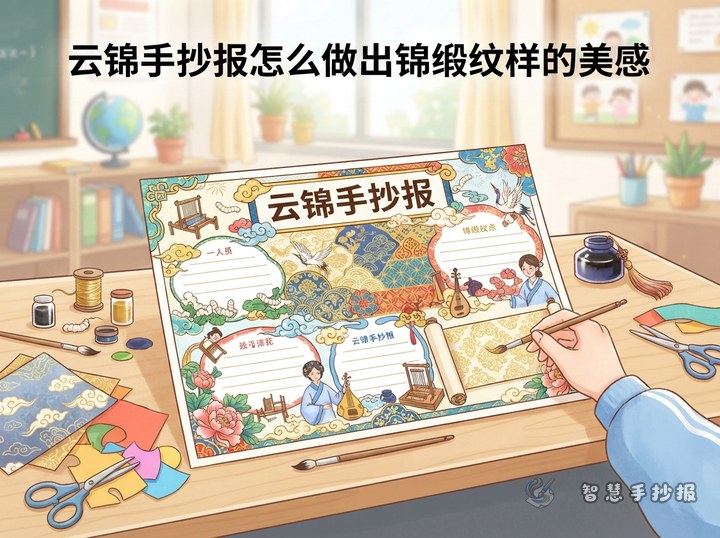
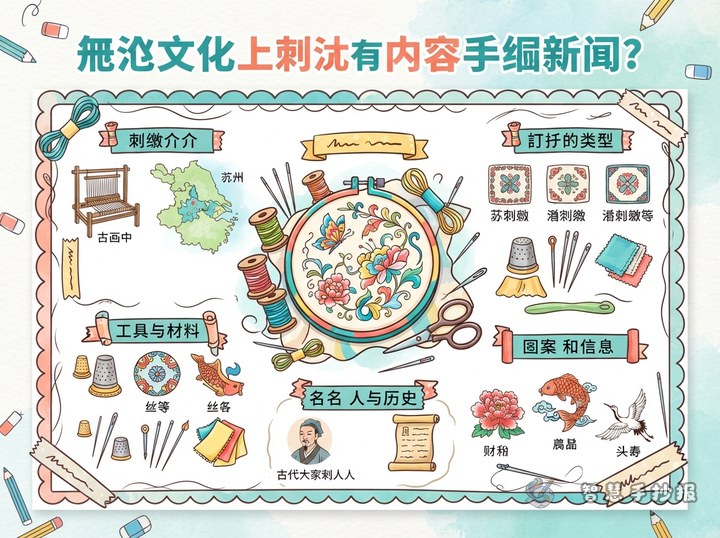
Build the page from four small woven panels
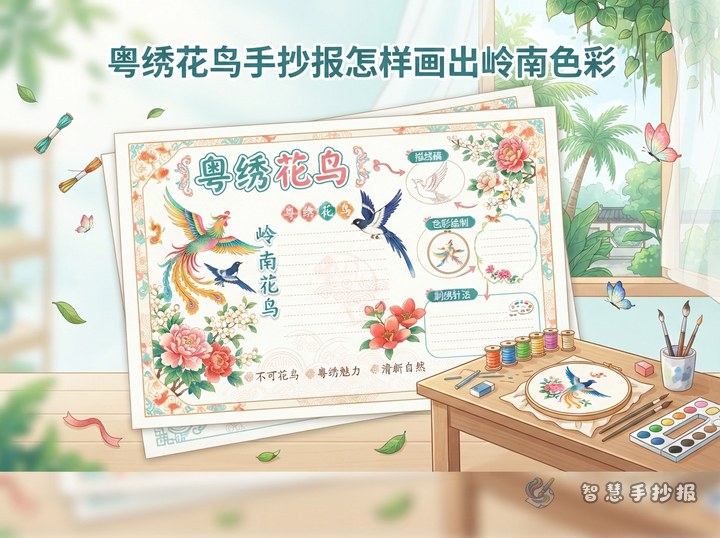
Divide the page into panels of different sizes, like small pieces of fabric on a loom. Connect them with thin lines or simple motifs, and make the reading order easy to follow from top left to bottom right.
- Craft profile: Explain the name of the craft and its main feature: pictures made with silk threads.
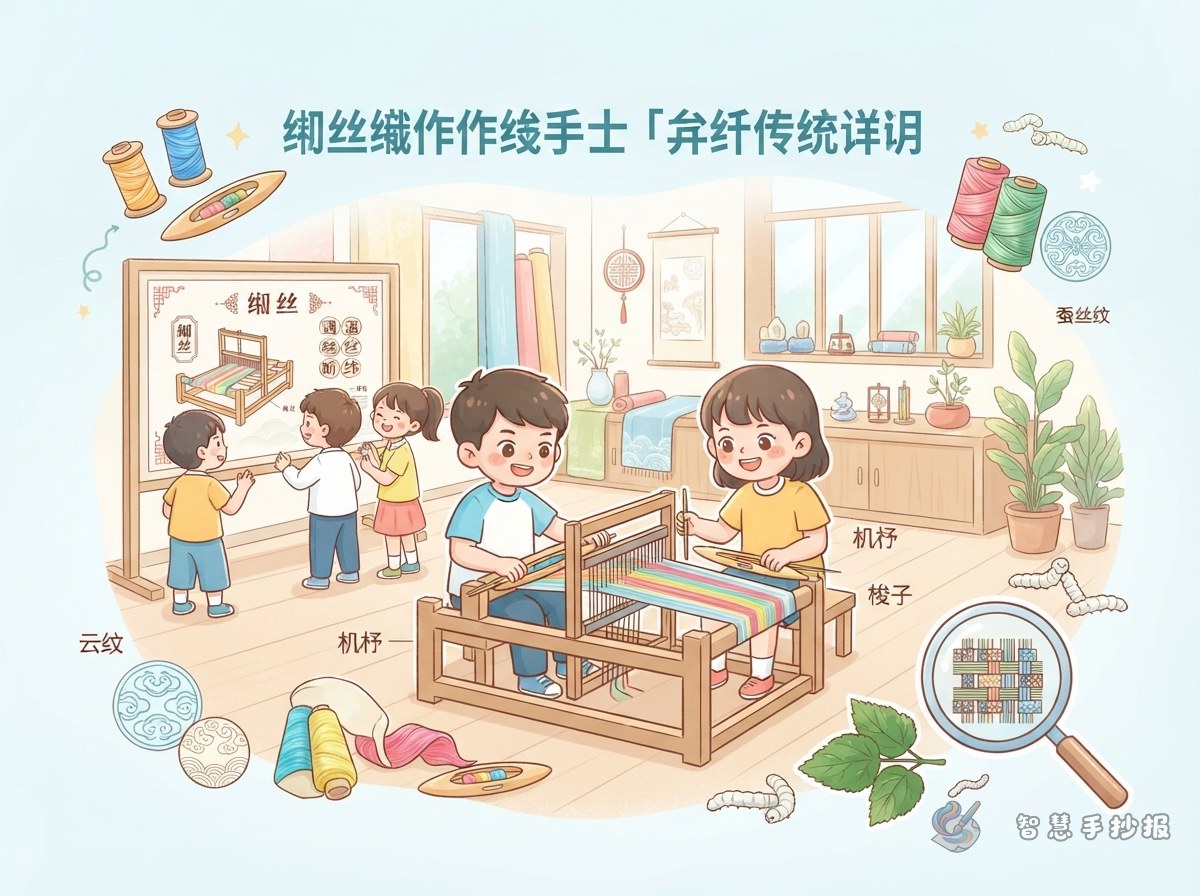
- Key technique: Explain continuous warp threads and separately woven colored weft threads with a small crossed-line diagram.
- Making process: List simple stages: preparing silk, planning a pattern, setting up warp threads, weaving colored wefts, and finishing the work.
- Pattern corner: Show flowers, birds, animals, or cloud motifs, and note that these designs often express wishes for a happy life.
Ready-to-use text for the poster
Paragraph one: Fine warp threads rest quietly on the loom while colored weft threads move like paintbrushes. By changing colors and positions according to a pattern, a maker slowly weaves flowers, leaves, birds, and clouds. The beauty of kesi comes from both delicate silk and patient attention.
Paragraph two: Traditional crafts preserve the wisdom of earlier generations. When we look at a kesi work, we can notice its colors, patterns, and changing threads. We can also appreciate the people who learn and pass on these skills.
Poster slogan: Let old silk threads keep telling their stories. Learn about traditional crafts through one handmade poster.
Arrange the layout like a piece of fabric
- Place the title near the top center and frame it with a thin border.
- Use the middle area for a loom or enlarged thread diagram. Add arrows and labels so the drawing teaches something.
- Put two main sections on the left and right, then add a small reflection box at the bottom about respecting traditional crafts.
- Decorate corners with shuttles, thread balls, flowers, or diamond-shaped woven patterns, leaving enough blank space for easy reading.
Check before you finish
Make sure the title stands out, the key technique is explained clearly, and all pictures and text relate to kesi. Leave breathing room between sections. To explore more layouts and title ideas for a traditional craft poster, continue designing in the Smart Handwritten Poster WeChat mini program and add your own handwritten details.