Start With One Idea: Public Transport Is a Whole Trip
Few journeys are just one ride. You walk or cycle to the subway station, take the train, change lines, and then catch a bus for the last part. Putting those scenes on one poster changes the theme from “good manners in a carriage” to “good manners all the way”. Choose a single main line, such as civility from platform to carriage, and let the whole page follow it.
Younger pupils can focus on comparing the two scenes with one drawing each. Older pupils can add a small “civility checklist” panel or a “green travel week” note to make the content more specific.
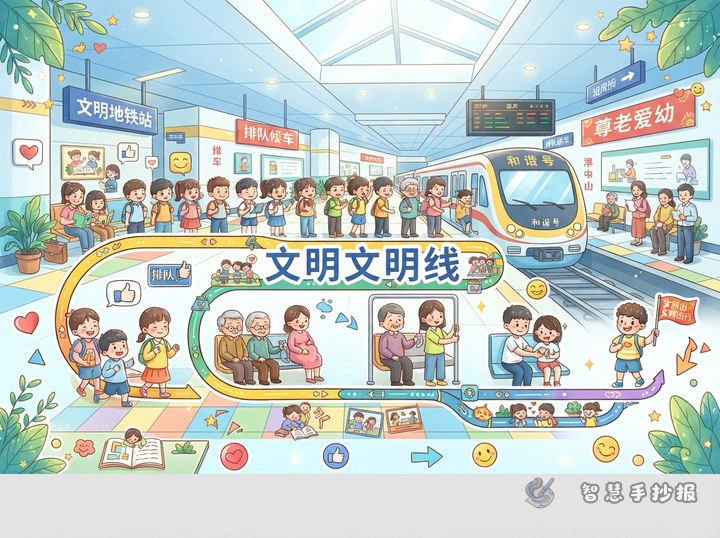
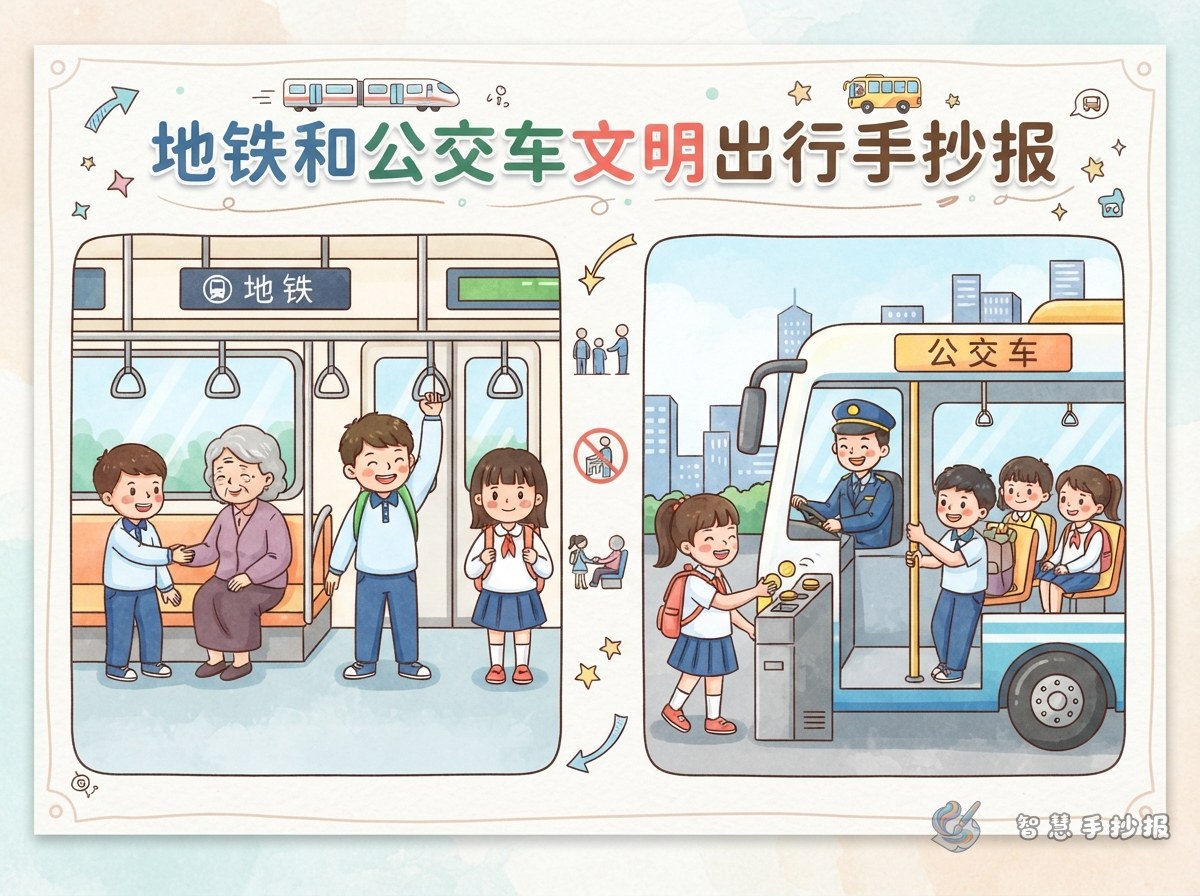
Split the Page: Subway Side, Bus Side, and a Journey Line Between Them
Divide the sheet down the middle, or use an upper and lower layout. Here is a left-right plan that works well:
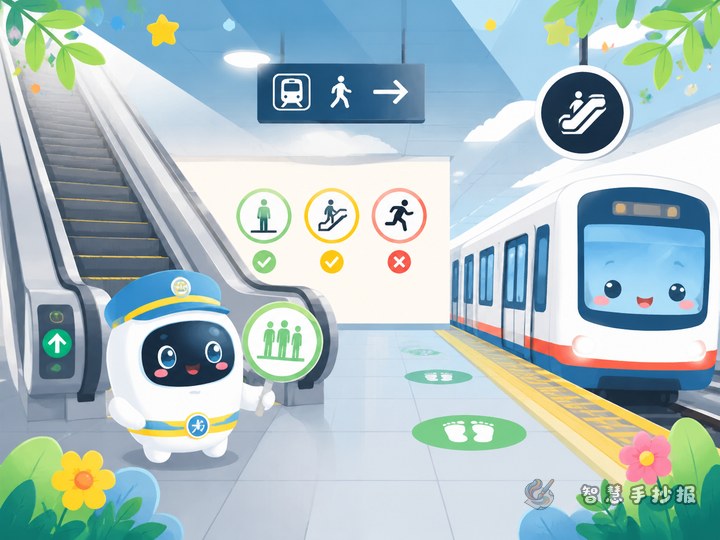
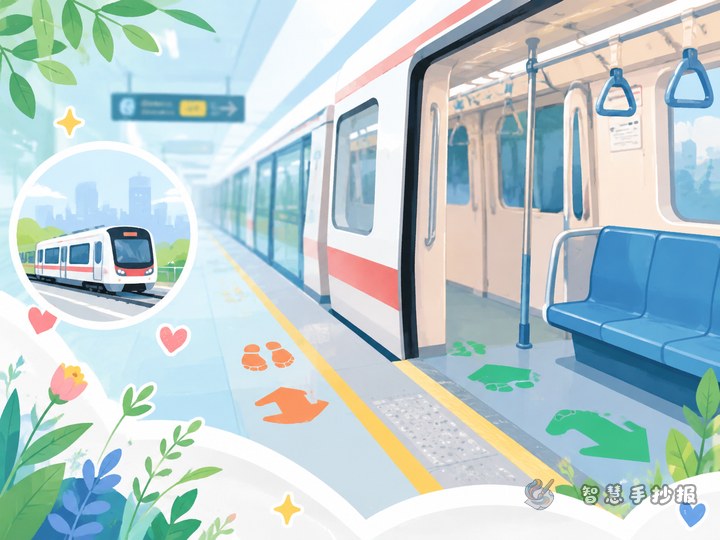
- Left half: subway platform and carriage. Draw the yellow line, the waiting area, the train doors and the hanging straps.
- Right half: bus stop and bus interior. Draw the stop sign, the front door, the poles and the seats.
- Middle: one journey line. A folded line, dotted line or row of footprints from left to right shows the changeover.
- Bottom: a civility checklist. Three to five short lines laid out in a row to close the poster.
This journey line is the skeleton of the page. Draw it first, then add text and pictures around it, and the layout stays under control.
Wording You Can Copy: Two Short Lists
On the subway side
- Wait behind the yellow line until the train has stopped.
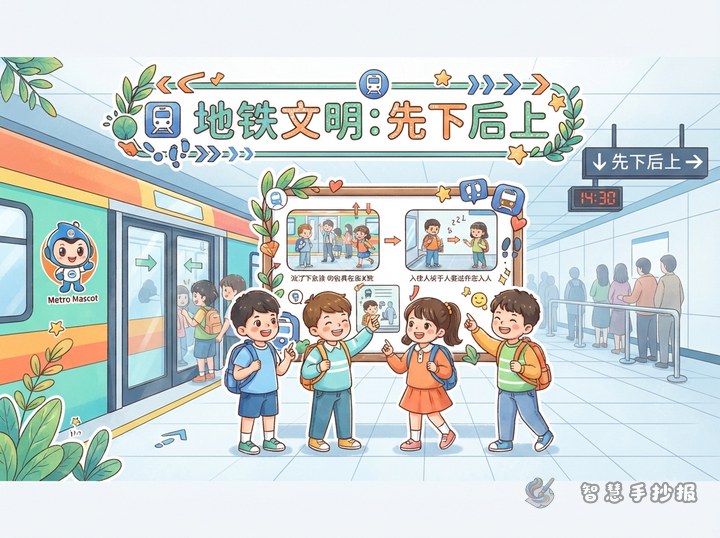
- Let passengers off first before you step in.
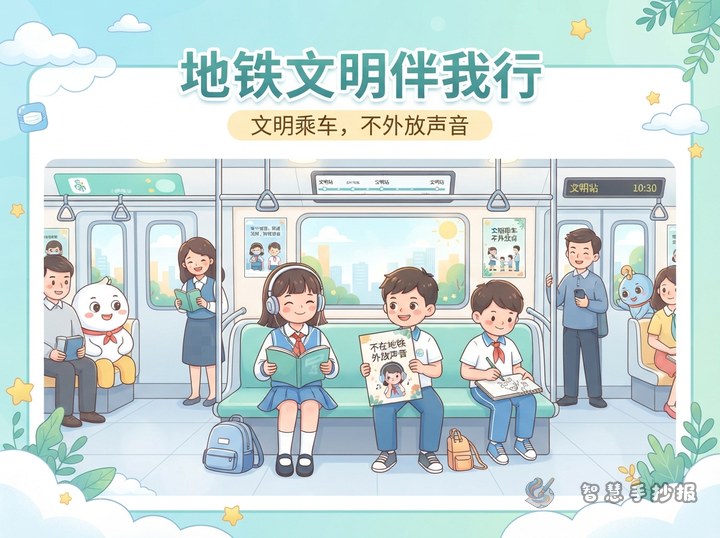
- Keep phone sounds down and speak softly on calls.
- Do not lean on the doors or rush to get on.
On the bus side
- Queue at the stop and board in turn.
- Get on at the front, get off at the back, and keep the doorway clear.
- Hold the handrail and stay seated while the bus turns.
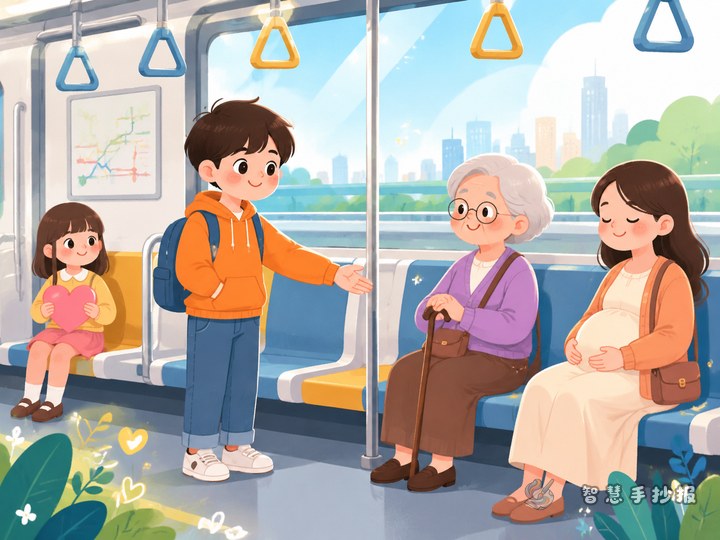
- Offer your seat to anyone who needs it more.
Two or three lines on each side are plenty. Write them large instead of copying a long paragraph. End with one short appeal: Civility on the way is not one person’s job — when everyone gives a little room, the trip is easier for all.
Titles, Colors, and a Few Small Drawings
Keep the title short and concrete, and place it on a drawn “front of the train”, for example “Civility All the Way”. Give each half its own color family — blue for the subway, green or yellow for the bus — and use orange for the journey line so the two sides are easy to tell apart.
You only need a few decorations: hanging straps, a stop sign, a card reader, a zebra crossing, a shared bike, a direction arrow. Choose four or five and put them in the corners. Do not let stickers or fancy borders cover the writing; the text is the point of a handwritten poster.
Last Check Before You Hand It In
- Read all the text once and check for spelling or missing words.
- Check that each line matches the scene drawn beside it.
- Stand back and see whether the title, both sides and the bottom list are readable.
- Add your class, name and date in the bottom right corner.
If you want to spend less time hunting for material, search for the 智慧手抄报 mini program in WeChat, pick short lines and layout references by theme, then copy them onto the paper by hand — and use the time you save to keep your handwriting neat.