Start with a Warm-and-Cold Contrast Theme
The Winter Solstice is both a solar term and a traditional Chinese festival. A poetry appreciation handwritten newspaper should not be just a list of poems. Use a simple theme such as “cold outside, warm inside” to connect snow, long nights, family reunion, dumplings, and tangyuan.
A good main title could be “Warm Poems for the Longest Night” or “Reading Winter Solstice Poems in the Cold.” Put the class, name, and date in a small box under the title or in the lower right corner.
Winter Solstice Poems and Short Appreciation Lines
A useful format is “poet + poem line + one short comment.” It keeps the layout neat and makes the appreciation easy to read.
Du Fu, “Xiao Zhi”
“The times and human affairs urge each other day by day; at the Winter Solstice, yang grows and spring returns.” This line says that after the longest night, daylight begins to grow again. A short comment can be: the poet finds hope even in the cold season.
Bai Juyi, “Thinking of Home on a Winter Solstice Night in Handan”
“I spend the Winter Solstice at the Handan post station, holding my knees before the lamp, with only my shadow beside me.” The lonely image of the shadow makes missing home feel quiet and real.
Lu You, “Winter Solstice in the Xinyou Year”
“Today the sun reaches its southernmost point, and my home is quiet.” A simple comment: the poem shows a plain, peaceful winter scene at home.
If there is extra space, add a folk saying such as “If you do not eat dumplings on Winter Solstice, your ears will freeze.” Place it near the customs box for a lively touch.
Columns That Fit on One Page
Divide the paper into four areas before writing. This prevents the text from becoming crowded.
- Poem Reading Corner: two or three poems, with only the best two lines from each and one short comment.
- Winter Solstice Facts: the date, the names “Winter Festival” and “Sub-Year,” and the northern dumpling custom or southern tangyuan custom.
- Nine-Nine Cold Chart: draw a plum branch with nine flowers, each having nine petals, or write a nine-stroke character grid to count the cold days.
- My Winter Message: a small box for one sentence to family, such as “May someone warm your porridge this winter.”
Make the Nine-Nine Cold Chart the Visual Star
The “nine-nine cold chart” is the most recognizable Winter Solstice element. Draw a slanted plum branch on one side. Leave some flowers empty and add a line beside it: “In the first and second nine, hands stay in sleeves; in the third and fourth nine, ice can carry you.” Another option is a grid of nine characters for children to trace one stroke each day.
For younger children, simplify it into nine circles labeled from “first nine” to “ninth nine.” Add snowflakes, dumplings, tangyuan, and a small stove around the circles. This keeps the project doable without difficult drawing.
Color and Decoration: Cool Background, Warm Accents
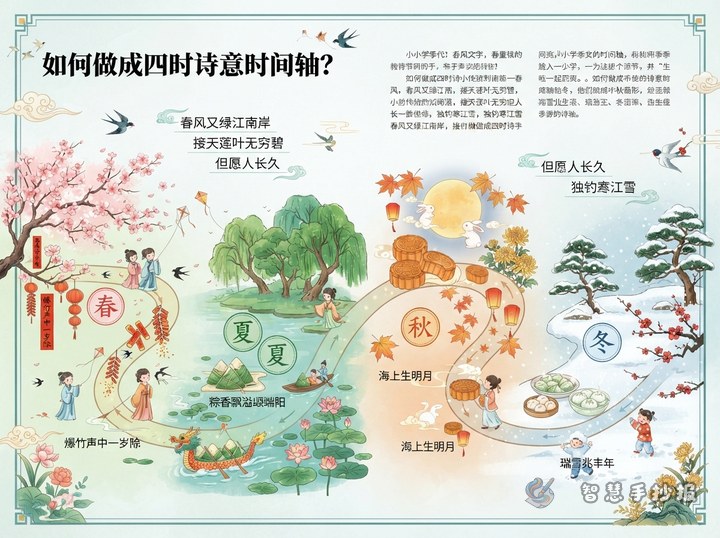
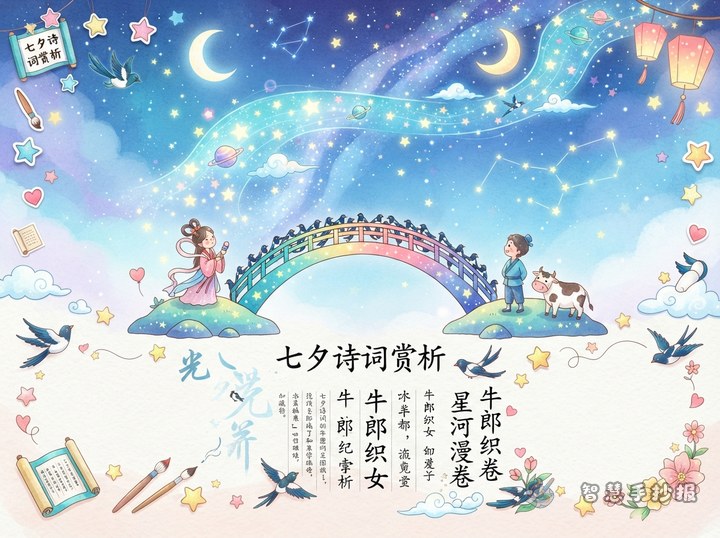
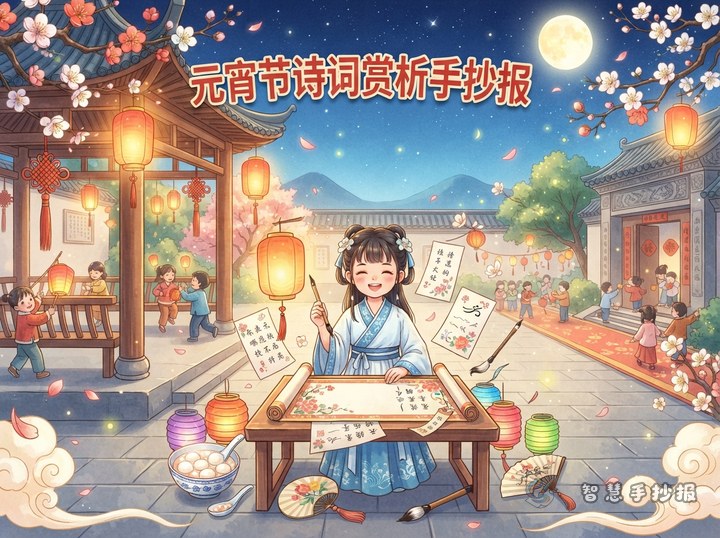
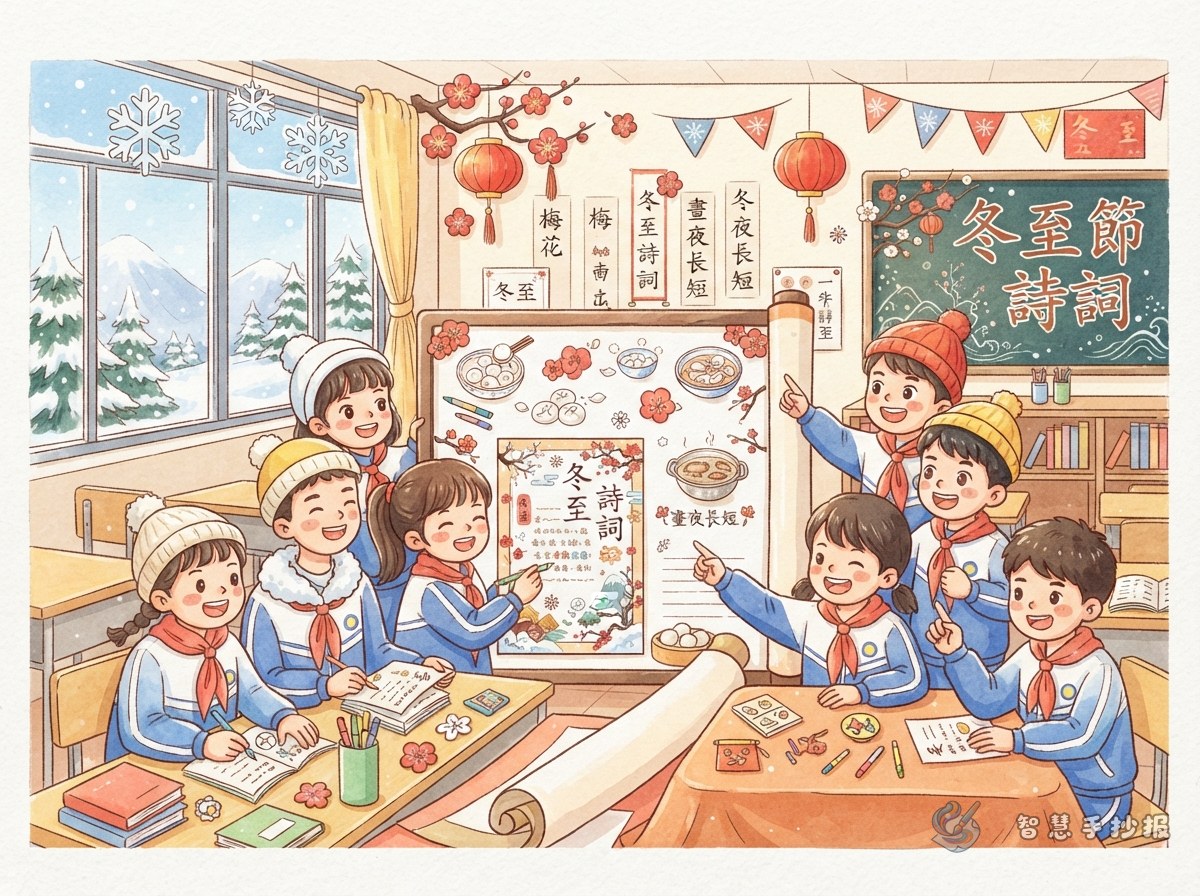
Use pale blue, gray-blue, or snow white for the background. Make the title dark blue or black, then add warm orange, yellow, and soft red accents. Decorate with plum blossoms, snowflakes, lanterns, dumplings, tangyuan, scarves, hot tea, and paper-cut window flowers. Borders can be plum branches, wavy lines, or small squares. Leave some empty space instead of filling every corner.
Draw light pencil lines before writing and erase them later. Use larger letters for poem lines and smaller letters for comments. A single main color with two accent colors will make the whole page look clean.
If Time Is Short, Do These Three Things First
Make sure you have one complete Winter Solstice poem, two clear appreciation sentences, and one custom or fact about the festival. The nine-nine chart and personal message can be simplified into small boxes. Parents and teachers can help children plan line breaks before writing.
For a quicker start, open the Smart Handwritten Newspaper WeChat mini program and choose a traditional festival poetry template. Fill in your chosen poem and comments, and the layout can become your own Winter Solstice poetry appreciation handwritten newspaper.