Use Ritual Dance Formations as the Main Idea
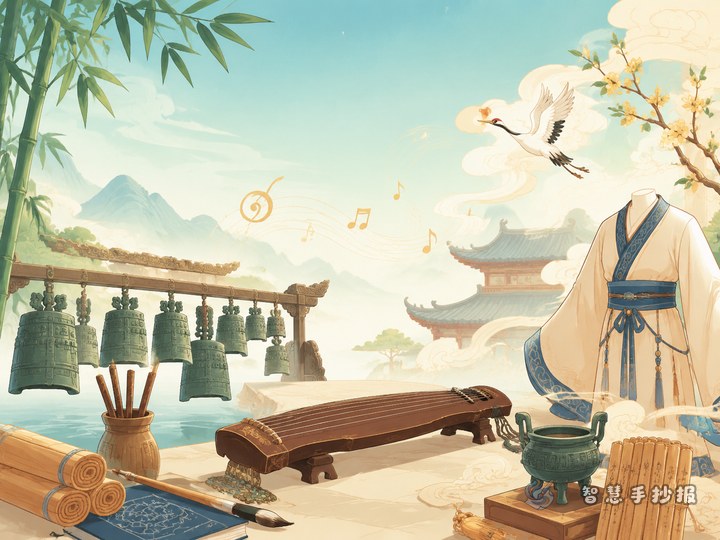
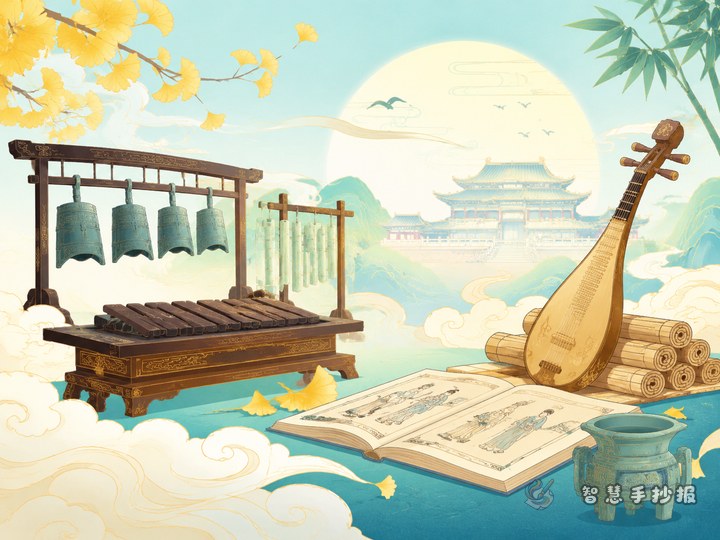
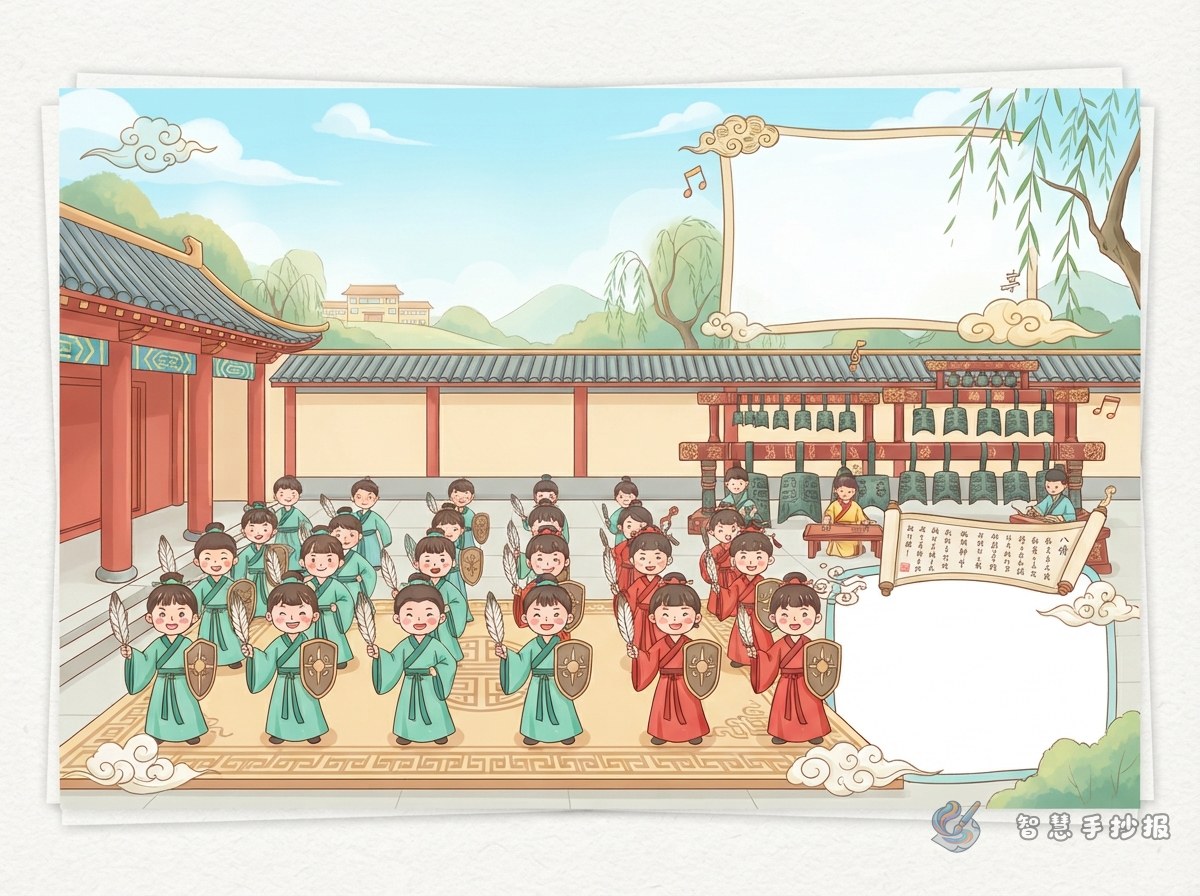
The Eight-Row Dance offers a vivid way to explore ancient Chinese rites and music. The word yi refers to a row of ritual dancers. Instead of filling the hand-copied newspaper with difficult historical terms, focus on four clear ideas: formations, instruments, dance props, and ceremonial order.
Build the Content Around Four Small Features
What Was the Eight-Row Dance?
It was a form of ceremonial music and dance rather than ordinary entertainment. Dancers moved in organized rows and followed a shared musical rhythm, creating a solemn and harmonious scene.
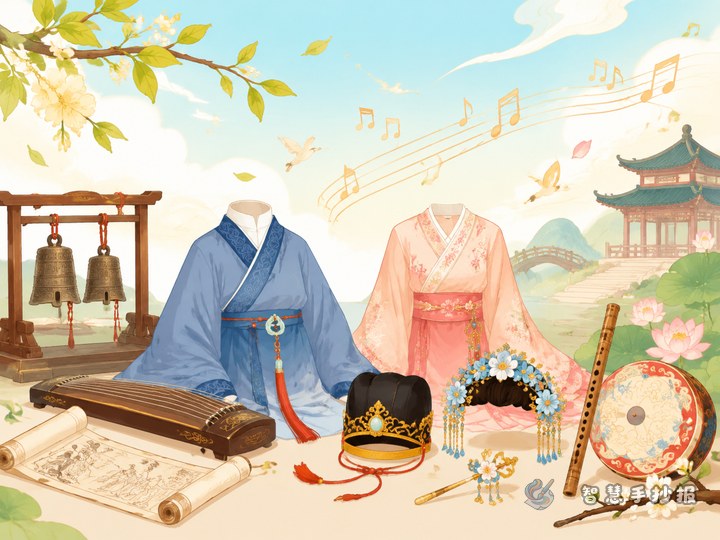
Feathers and Yue Pipes
Dancers are often represented with feathers and yue pipes or pipe-shaped props. These objects make the central illustration easier to recognize. Because customs changed over time, use careful phrases such as “often seen in representations of ritual dance” instead of treating every historical period as identical.
How Did Rites and Music Work Together?
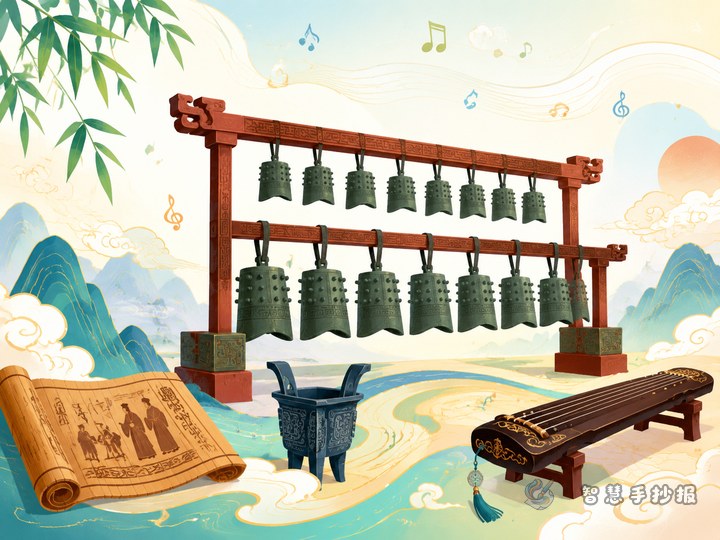
Rites established positions, actions, and sequence. Music helped create harmony through sound, rhythm, and movement. Together, they turned an abstract idea of order into something people could see and hear.
Why Does the Theme Still Matter?
The topic can connect ancient culture with familiar values such as respecting others, following shared rules, and cooperating as part of a group.
Short Texts Ready for the Page
Text one: In ancient ritual culture, rites and music supported each other. Rites gave ceremonies a clear order, while music brought voices, movements, and emotions into harmony.
Text two: Each dancer held a place within a larger formation. The repeated rows show how individual actions could contribute to an orderly whole.
Text three: Learning about ritual music is more than memorizing the names of objects. It is also a way to understand respect, cooperation, and shared responsibility.
Turn the Formation Into a Strong Layout
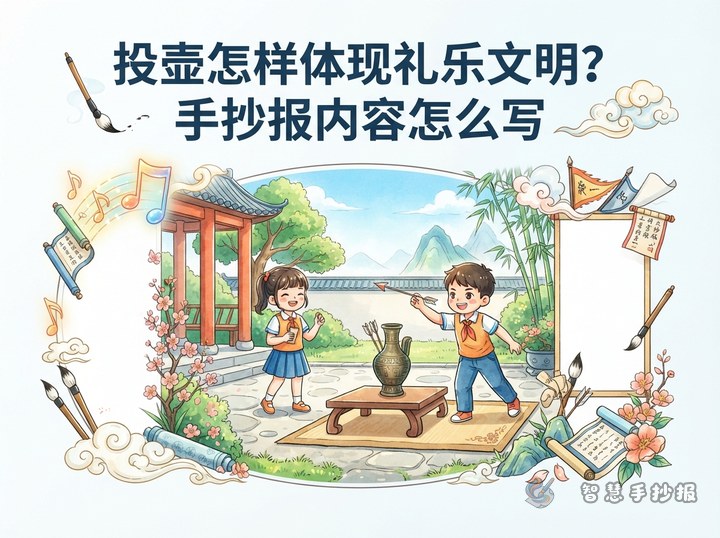
- Place the title at the top center and add a small bell outline, seal-style frame, or cloud motif.
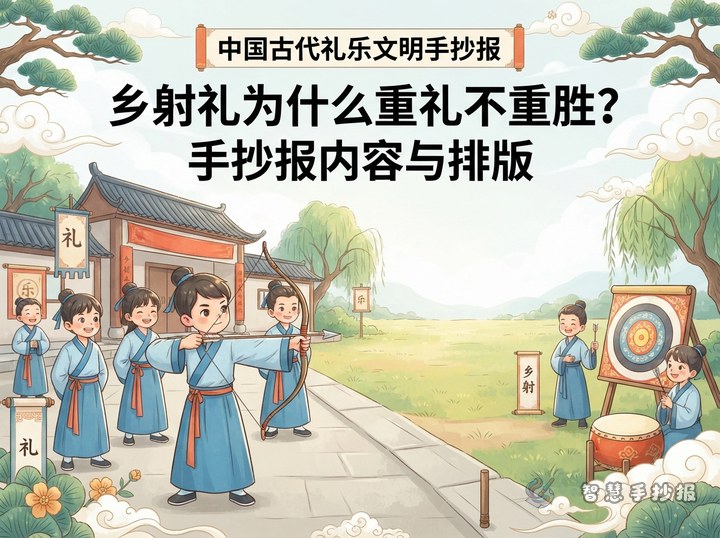
- Draw two or three rows of simplified dancers in the middle. Keep the figures evenly spaced and leave room around them.
- Create a short facts column on one side and a meaning-of-ritual-music column on the other.
- Use the bottom strip for the three short texts, with tiny feather, drum, or pipe drawings in open spaces.
Vermilion, black, green, and a small amount of golden yellow suit the subject. Limit the main palette to two or three colors and keep the writing areas pale and easy to read.
A Quick Accuracy and Design Check
- Does the title clearly mention the Eight-Row Dance and ritual music?
- Does the page explain why this was different from an everyday dance?
- Are historical customs described carefully without mixing different periods?
- Are the paragraphs short enough, with sufficient space around every illustration?
After choosing the sections, continue in the 智慧手抄报 WeChat Mini Program to select a layout, arrange the columns, and complete the hand-copied newspaper.