Start with a clear focus: artifacts tell history
For a museum and history-themed handwritten newspaper, it is better not to list random exhibits without a clear idea. A simple and effective approach is to build the whole page around one main theme, such as Stories of China Through Artifacts, Learning History from One Object, or What Museums Teach Us About Ancient Life. This makes the page feel organized and meaningful.
You can begin with a short introduction explaining that museums preserve more than old objects. They keep memories of ancient life, craftsmanship, customs, and culture. This opening helps connect all later sections.
A four-part layout is easy to read and easy to design
This topic works especially well with one main title at the top and four content blocks below. The layout looks neat, balanced, and suitable for school assignments.
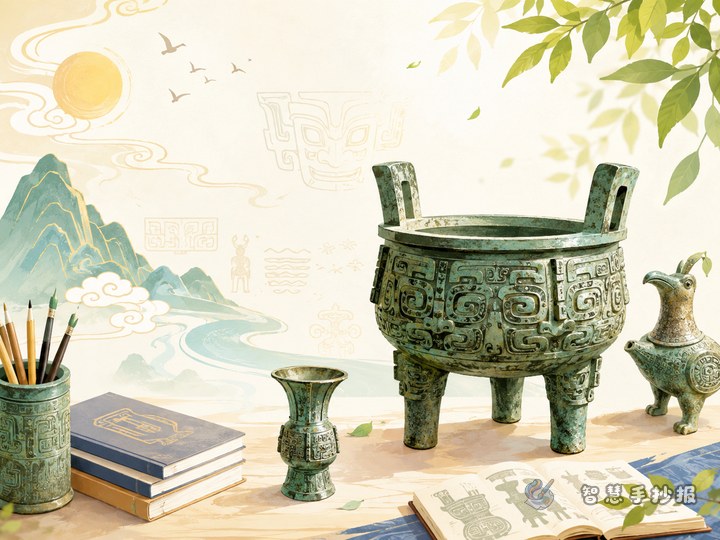
- Section 1: Artifact Profile — introduce one or two representative artifacts, including name, material, use, and special features.
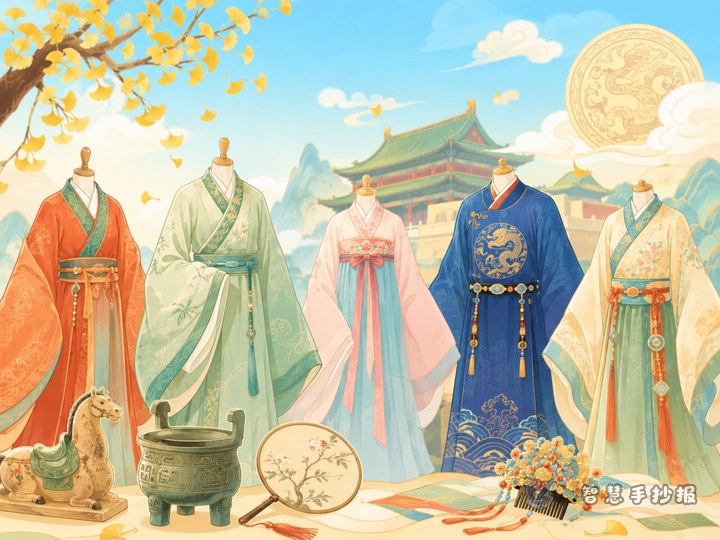
- Section 2: History Behind the Artifact — explain what the object tells us about its time, such as clothing, rituals, technology, or daily life.
- Section 3: Museum Manners — include reminders like staying quiet, viewing carefully, and not touching exhibits.
- Section 4: My Discovery — add a few sentences about what interested you most, making the work more personal.
To decorate the page, you can add simple patterns inspired by bronze designs, scroll borders, tiles, or seal stamps. Keep the decoration light so the writing stays clear.
Useful text materials you can write directly
Opening paragraph
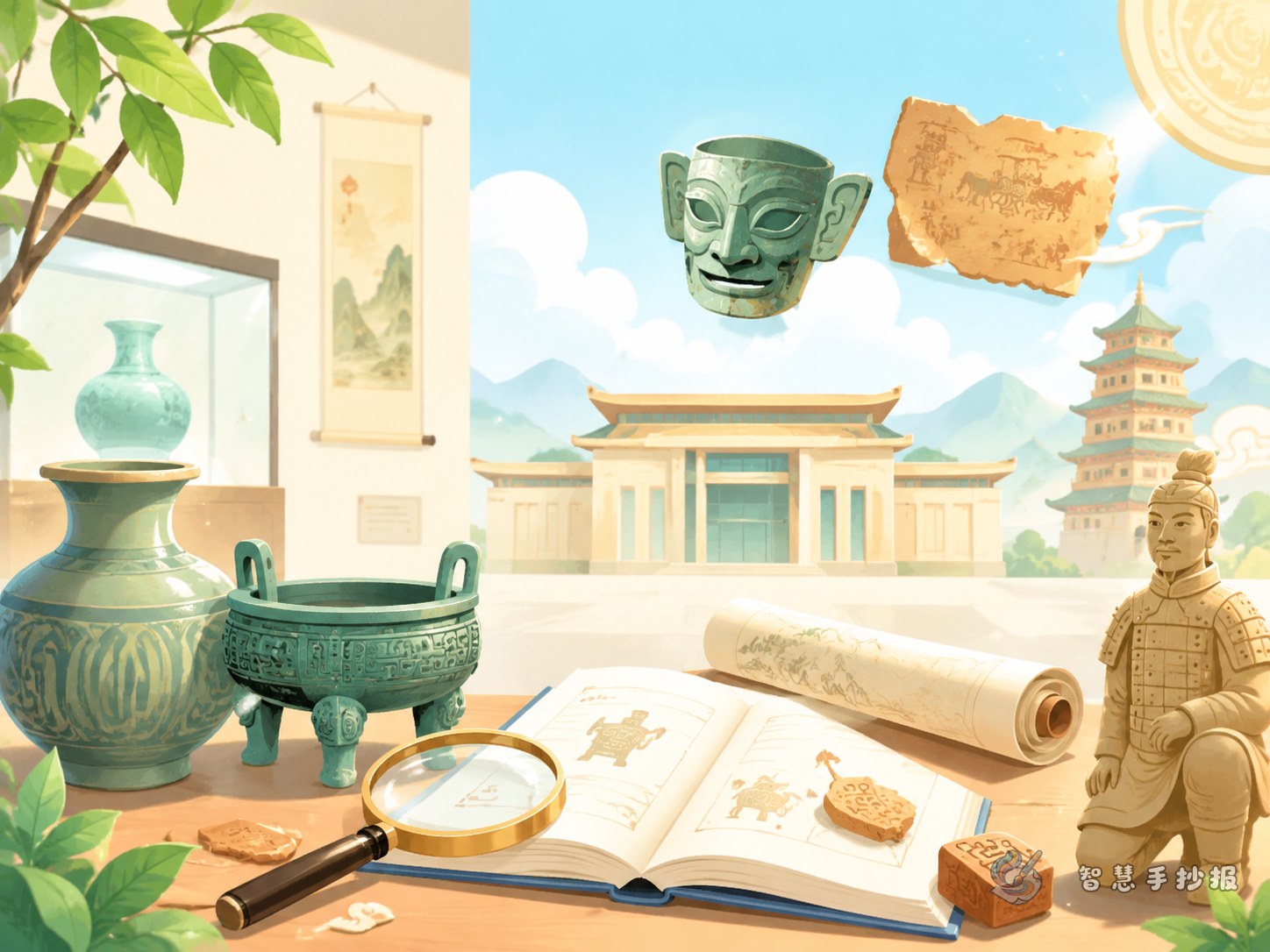
A museum is like a classroom across time. Every artifact quietly tells a story from the past. By observing these objects, we can learn about ancient life, culture, and wisdom, and better understand the richness of Chinese history.
Short theme lines
- Artifacts are silent, but history speaks.
- One artifact can reflect a whole era.
- Walk into a museum and feel the warmth of civilization.
- Protecting artifacts means protecting our shared memory.
Simple knowledge points
- Artifacts can help us understand how people in the past ate, lived, and traveled.
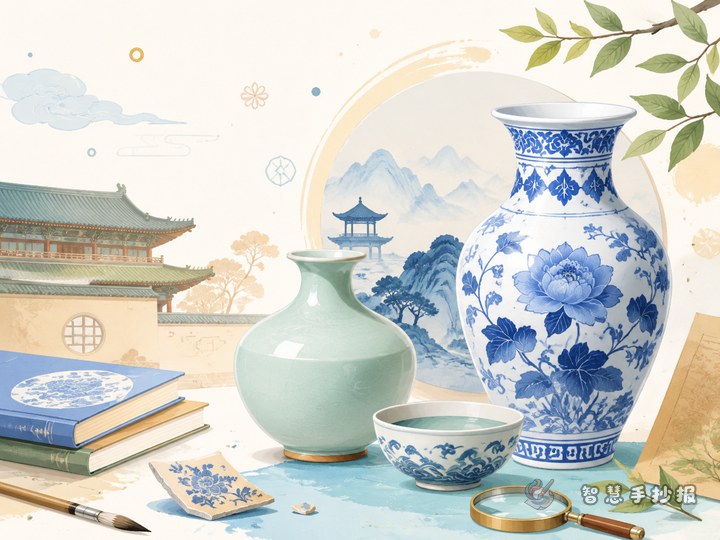
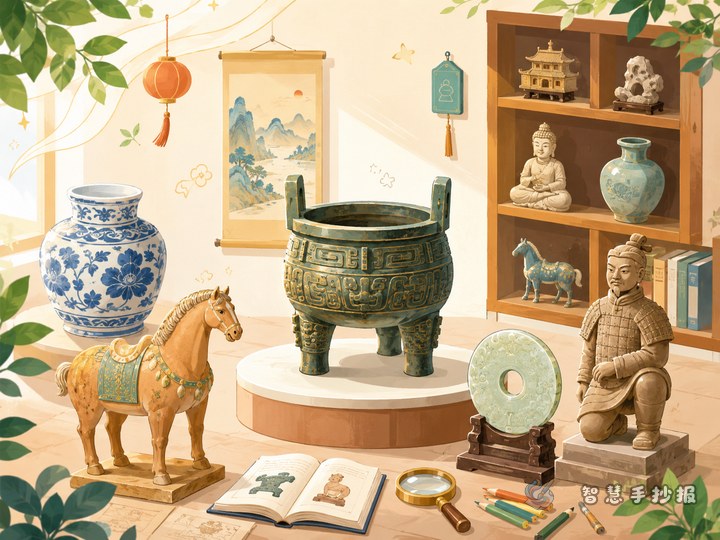
- Bronze ware, pottery, porcelain, paintings, and jade all show different levels of craftsmanship in different periods.
- Museums not only collect artifacts, but also protect, study, and share culture.
If you want richer content, you can also add small sections like “The Artifact I Most Want to Know More About,” “If an Artifact Could Speak,” or “My Museum Notes.”
Choose a title that sounds lively and student-friendly
A common problem with school handwritten newspapers is that the title feels too plain. A better title can make the whole work more eye-catching. Here are some good options.
- Main title ideas: Stories of China Through Artifacts, A Journey Through Museums, Hidden Codes in Historical Objects, What History Looks Like
- Section title ideas: Artifact Corner, History Magnifier, Museum Notes, Culture Journal, Visitor Manners
For colors, deep blue, brick red, dark green, and gold work well because they match the feeling of history and culture.
Make it readable first, then make it beautiful
The most important thing in a handwritten newspaper is that people can understand it at a glance. Make the main title the largest, section titles slightly smaller, and keep the body text short and tidy. Bullet points often work better than long paragraphs. Avoid using too many colors or too many decorations.
If you still need more ideas for layouts, titles, or visual elements, you can continue exploring examples in the Zhihui Shouchaobao WeChat mini program and adjust the design to fit your grade level and assignment needs.