Choose one visual focus first: an old street and a few roof shapes
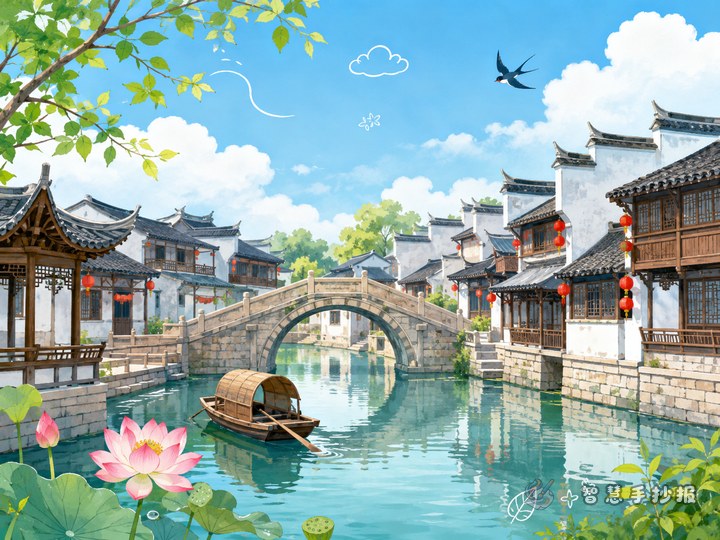
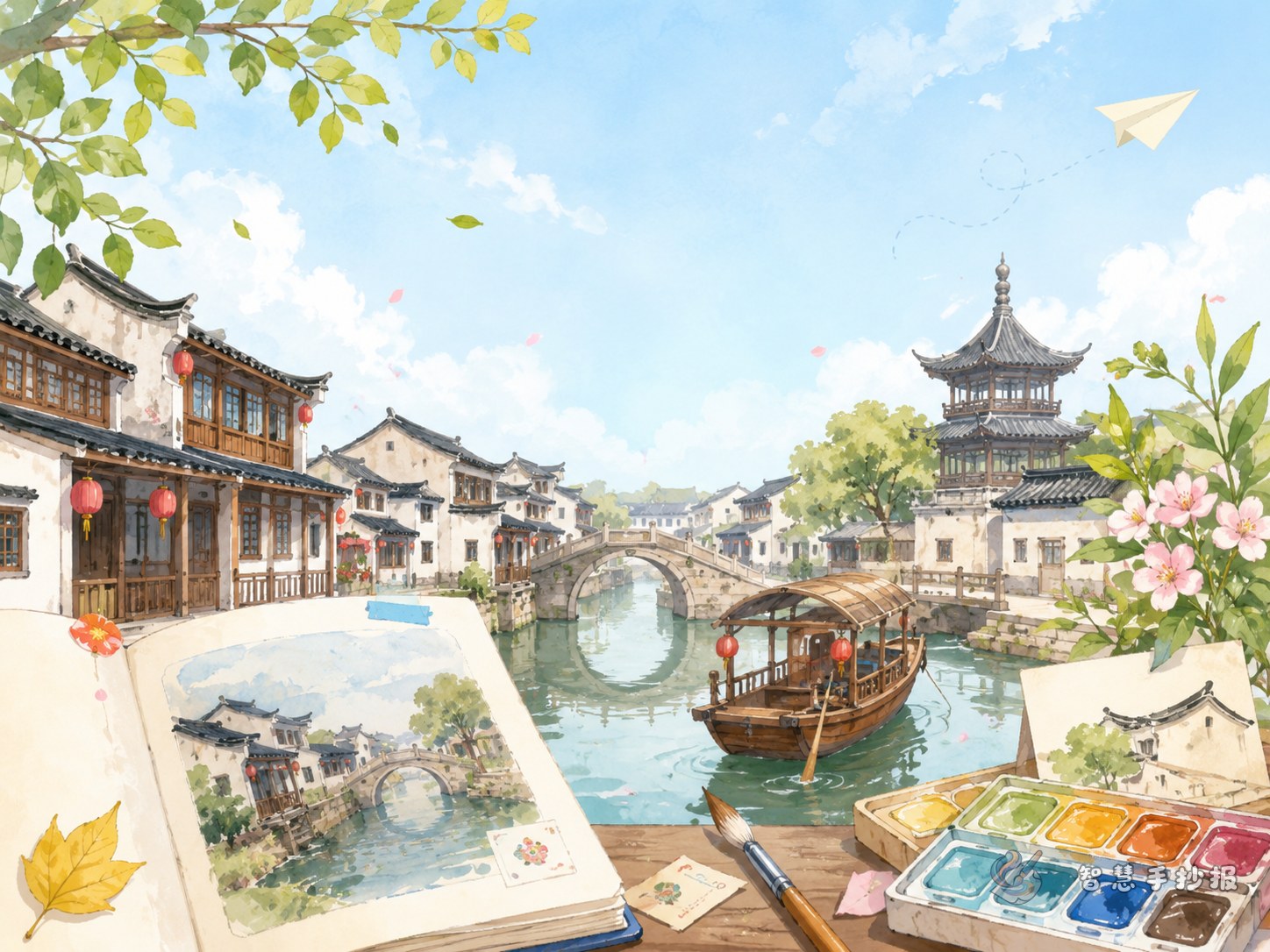
For this type of handwritten newspaper, you do not need to include every kind of ancient building. It works better to start with a few recognizable elements such as gray tiled roofs, wooden windows and doors, stone-paved lanes, small bridges, or an old archway. Then build the page around the idea of “stories hidden in an ancient town.” This keeps the theme clear and easy for children to present.
The main title can be something like “Ancient Houses That Tell Stories” or “Traditional Architecture in My Favorite Old Town.” A short subtitle may mention roofs, alleys, bridges, and craftsmanship.
How to divide the sections
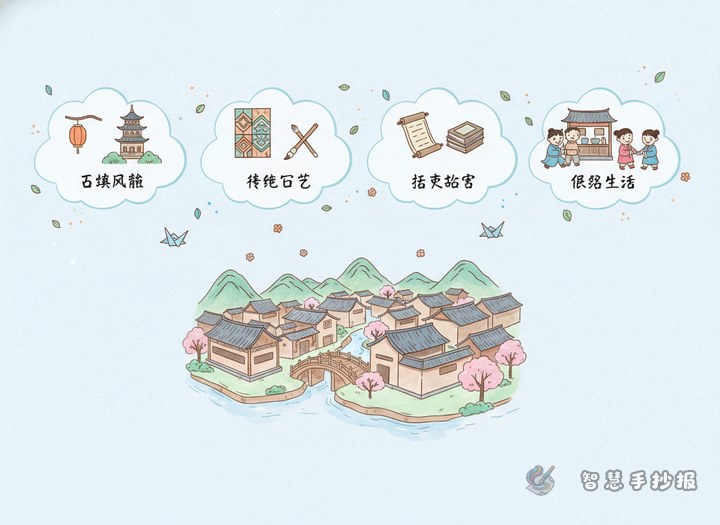
Instead of only describing scenery, divide the page into several sections so the poster feels complete and organized.
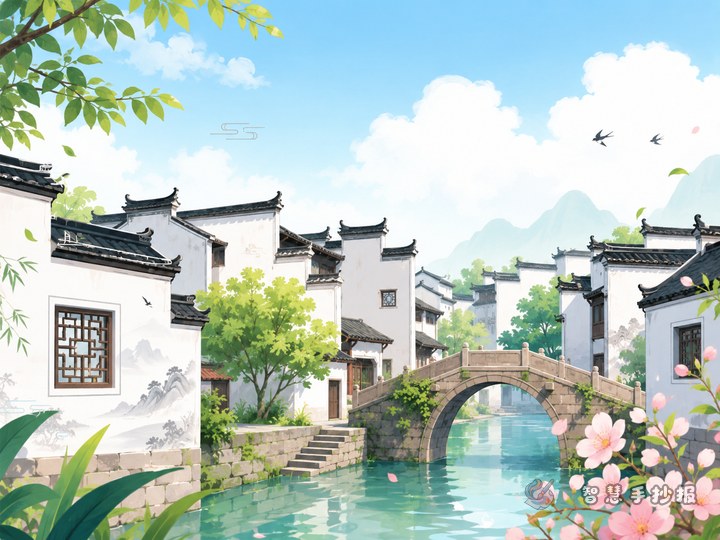
- What old-town buildings look like: write about roof tiles, horse-head walls, eaves, wooden beams, brick carving, and window patterns.
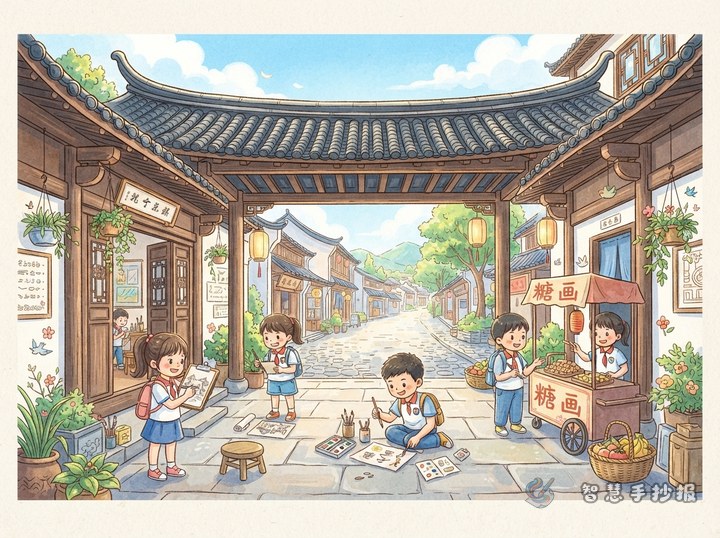
- Life in the old street: mention shops opening in the morning, lanterns during festivals, riverside scenes, and quiet alleys.
- Why traditional buildings should be protected: explain that they preserve local history, memories, and traditional skills.
- My favorite corner of the town: add a short personal reflection to make the work feel original.
If you have more space, you can also add a small vocabulary box to explain words like courtyard, eaves, stone bridge, gray brick, or skylight patio.
Ready-to-use writing materials
Short lines
- Gray roof tiles look like calm waves resting above the street.
- The stone road says nothing, but it remembers many footsteps.
- Old windows in the town seem to hold warm memories.
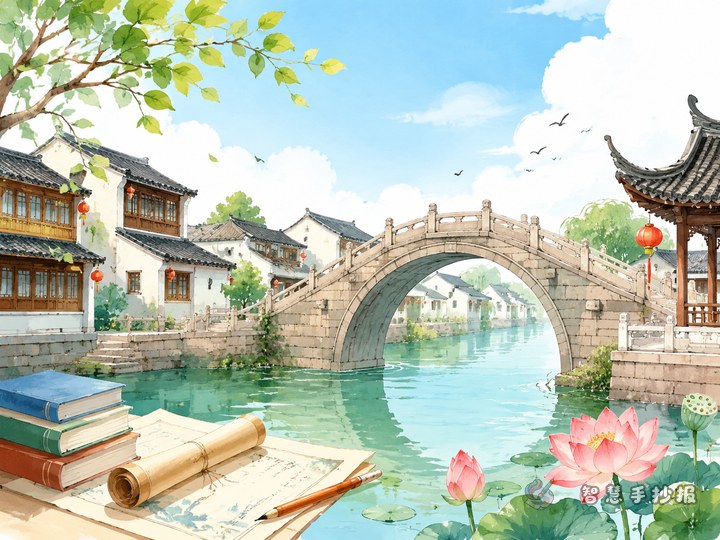
- A small bridge connects not only two banks, but also the past and the present.
- Traditional architecture is not just old houses; it is living culture.
Short paragraph material
Traditional architecture is often built according to local conditions. Some houses stand by the water, while others sit beside hills. In many ancient towns, buildings use wood, brick, and tile, balancing beauty with usefulness. Eaves help block rain and sun, inner patios improve light and airflow, and stone bridges make daily travel easier. These buildings show the wisdom of earlier people and preserve local customs.
A layout idea that feels like an ancient town
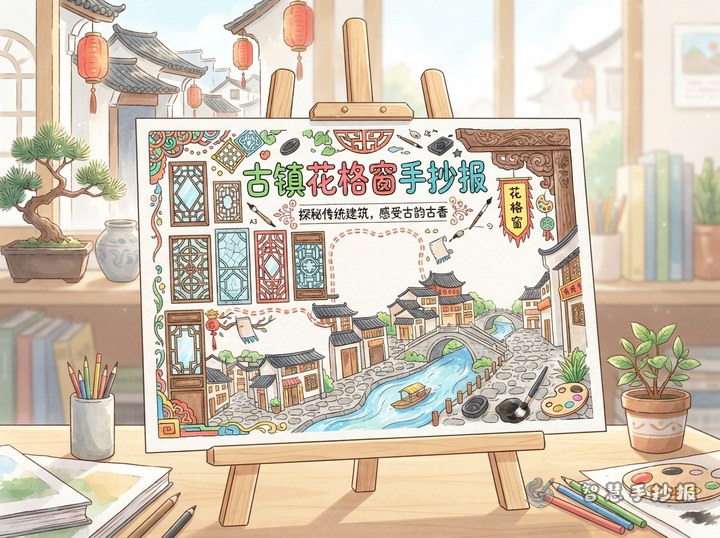
A horizontal layout works especially well. Place the title at the top with roof-tile decorations, then draw a winding street or stream through the middle to connect the content boxes on both sides. This gives the page movement and makes the theme easy to see.
- Top area: main title with roof, lantern, or window-frame decorations.
- Left side: building features and vocabulary notes.
- Center: a bridge, river, or old street as the visual focus.
- Right side: protection ideas and personal thoughts.
- Bottom: finish with stone-road lines, water patterns, or seal-style borders.
For colors, gray-blue, brick red, wood brown, and warm beige create a classic and gentle old-town feeling. Keep text boxes clean and use window or tile patterns for decoration.
How to make the poster more impressive
Many students turn this topic into a simple travel introduction, but a better method is to combine architectural features, daily life, and cultural protection. First describe what the buildings look like, then show how people lived around them, and finally explain why they matter today. This creates a stronger and more thoughtful handwritten newspaper.
If you want to keep working on the layout, replace titles, or expand the writing, you can continue in the Zhihui Shouchao Bao WeChat mini program and refine your ancient town culture poster step by step.