Use a Warm Apricot Grove as the Visual Thread
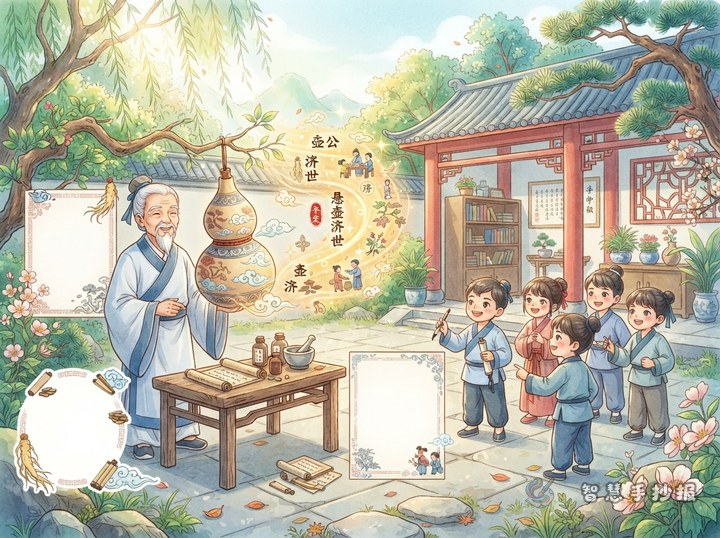
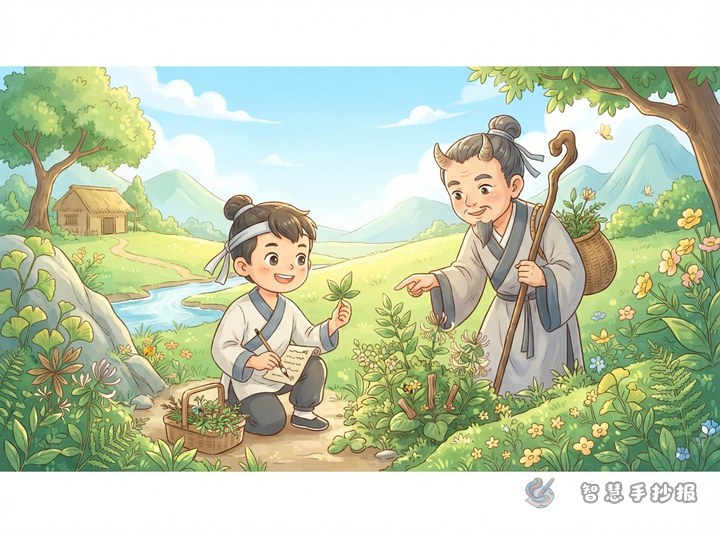
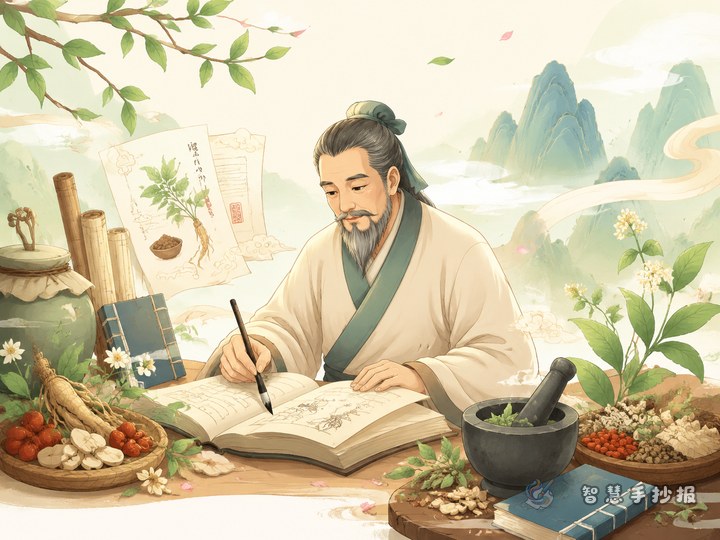
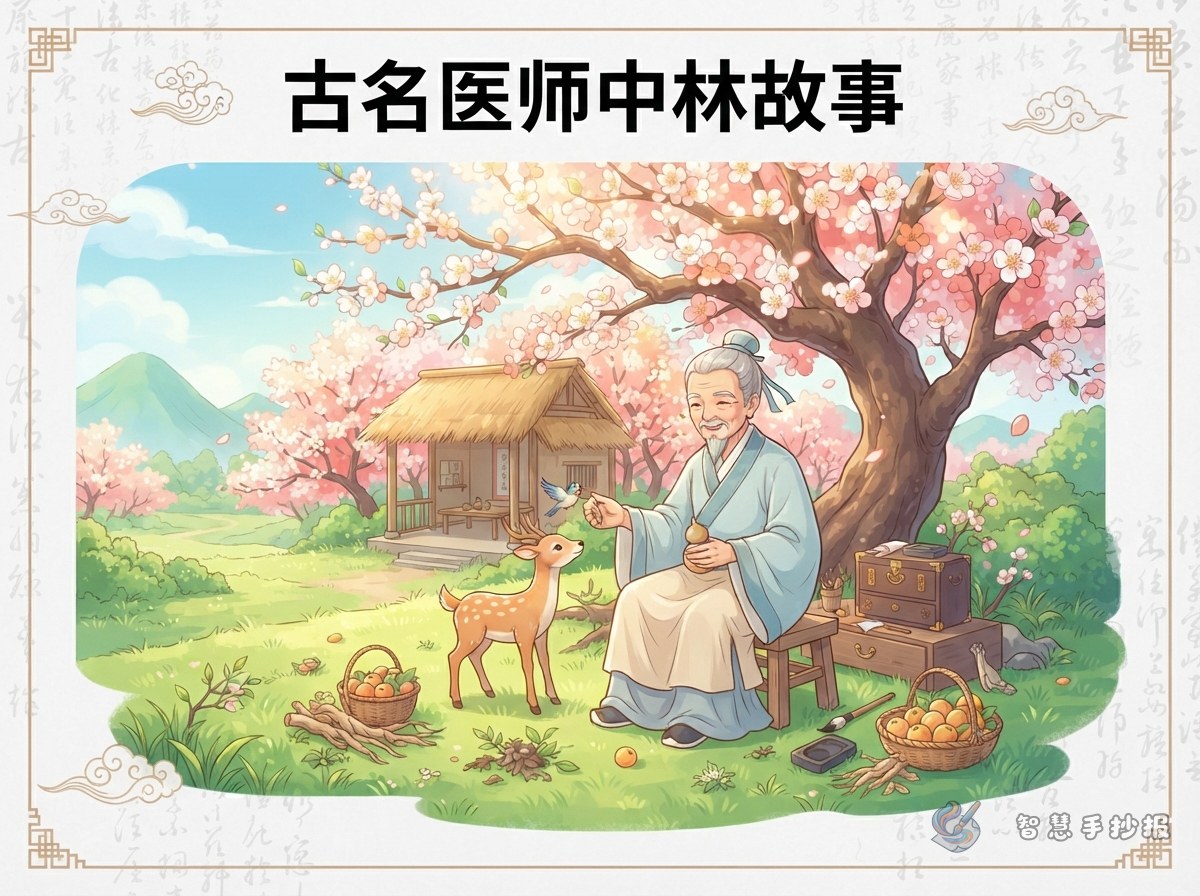
This poster can use a flourishing apricot grove to connect the physician, the legend, and the cultural meaning. Place the title at the top and add small drawings of apricot blossoms, a medicine chest, a gourd, and herb leaves. Rather than writing a long biography, focus on the well-known story that Dong Feng asked recovered patients to plant apricot trees instead of paying him.
Tell the Story Through Three Clear Sections
Meet Dong Feng
Introduce Dong Feng briefly as a physician of ancient China. He is traditionally named alongside Hua Tuo and Zhang Zhongjing as one of the three renowned physicians of the Jian'an era. A short identity card is enough for a school poster; complicated dates are unnecessary.
Apricot Trees Instead of Fees
According to legend, Dong Feng did not charge patients for treatment. He asked those who recovered to plant apricot trees, and over time the trees formed a grove. The story highlights generosity, modesty, and a physician's wish to help others. Use phrases such as “according to legend” so the traditional tale is not presented as fully verified history.
What the Apricot Grove Means
In later Chinese culture, “the apricot grove” became a poetic name for the field of traditional Chinese medicine. The phrase “spring warmth in the apricot grove” praises both medical skill and compassionate conduct. Put this explanation near the center so readers can connect the old story with its lasting meaning.
Short Text Ready for the Poster
- Theme line: One apricot tree carries one person's gratitude, while a whole grove remembers a caring heart.
- Story paragraph: According to legend, Dong Feng treated patients without taking payment and asked those who recovered to plant apricot trees. Year after year, the trees grew into a grove, giving Chinese medical culture one of its warmest symbols.
- Reflection: Medical knowledge can ease suffering, while kindness gives people hope. The legend invites students to think about responsibility, generosity, and respect for life.
- Word cards: Write “apricot grove,” “Chinese medicine,” and “medical ethics” in three leaf-shaped boxes.
Turn the Layout into a Story Path
On horizontal paper, arrange the story from left to right: Dong Feng with a medicine chest, a recovered patient planting a tree, and finally a full grove beside the cultural explanation. On vertical paper, draw one large tree in the center and place sections in the crown, along the trunk, and near the roots. Pale green, apricot yellow, and soft pink create a bright, gentle palette, while dark green works well for title outlines.
- Sketch the title, story, and reflection areas lightly in pencil.
- Keep each paragraph to three to five handwritten lines.
- Limit illustrations to about one-third of the page so the text remains easy to read.
- Add petals, leaves, and herb patterns only after the main sections are complete.
Check the Details Before Finishing
Make sure Dong Feng's name is correct, the meaning of the apricot grove is clear, and legendary details are introduced carefully. Check that the title stands out, the sections have enough space, and the lettering is readable. To explore more templates, color combinations, and section arrangements, continue creating in the 智慧手抄报 WeChat mini program.