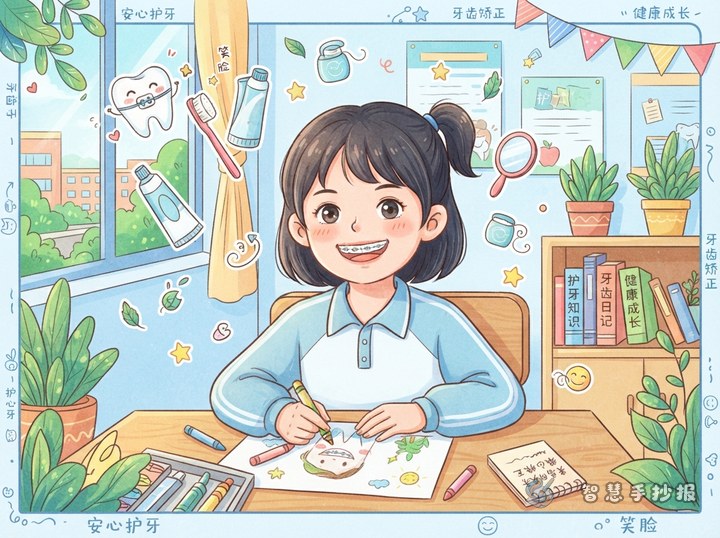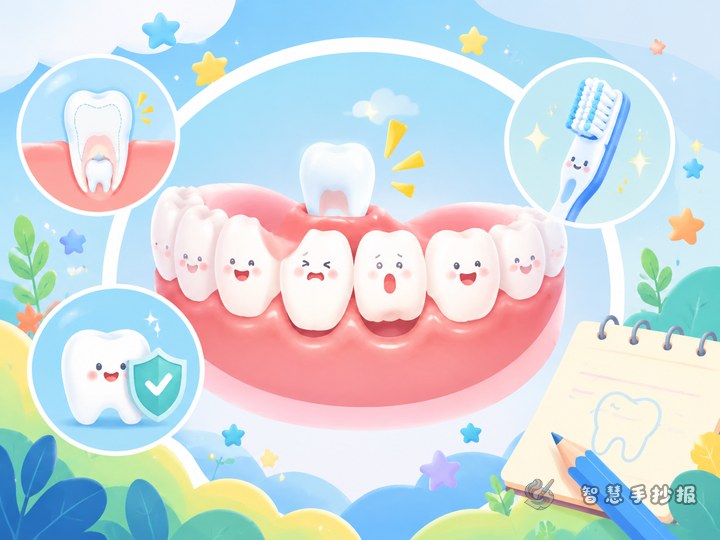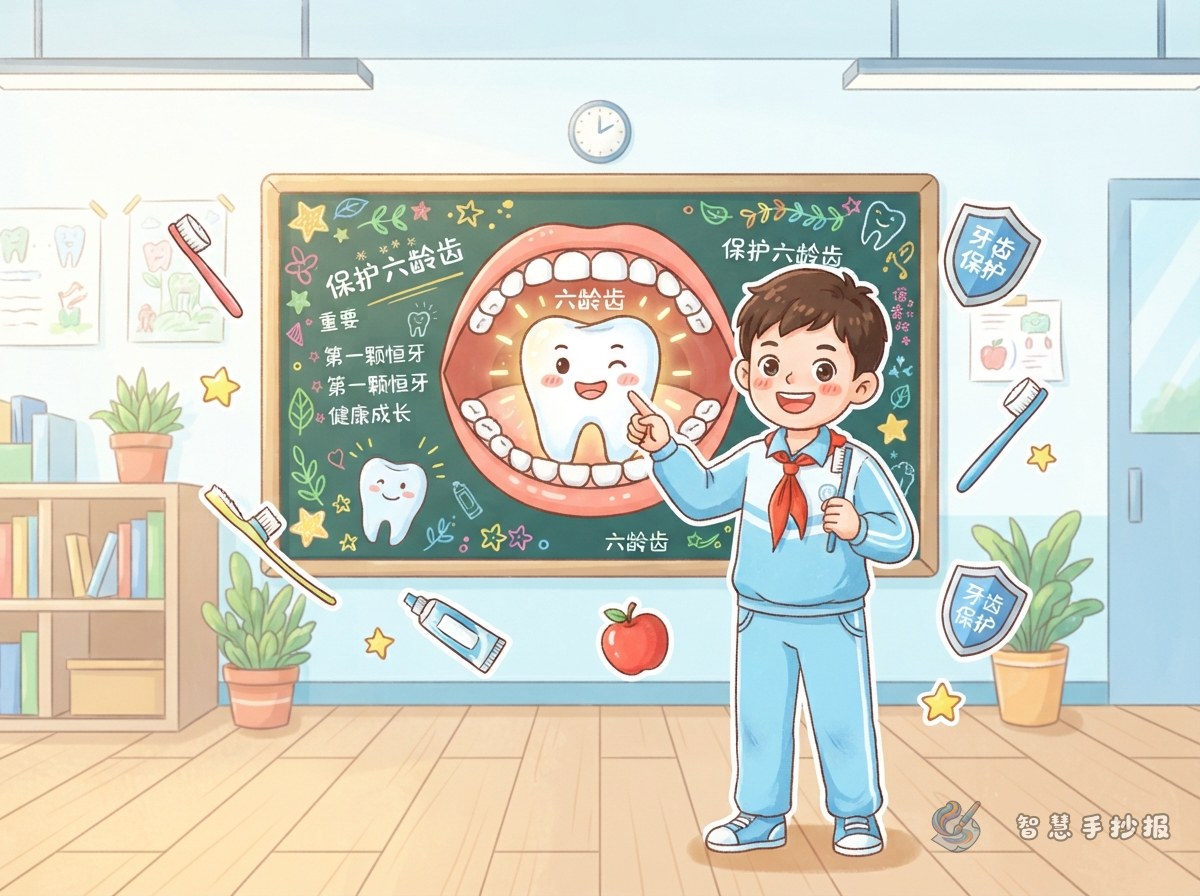
Put the First Permanent Molar in the Spotlight
The six-year molar usually means the first permanent molar that appears around the age of six. It grows behind the last baby tooth, so many children mistake it for a tooth that will later fall out. Make a large smiling molar the main character of the poster and explain that it needs careful cleaning because it is a permanent tooth.
Theme sentence: Learn about the six-year molar and protect an important first permanent tooth.
Turn Dental Care into Four Simple Missions
- Know it: The six-year molar is one of the early permanent teeth to appear and helps us chew food.
- Clean it: Brush carefully in the morning and at night. Cover the outside, inside, and chewing surfaces, especially the uneven surface of the back molars.
- Limit sticky sweets: Try not to eat sugary or sticky snacks and drink sweet beverages too often. Rinse with water after eating.
- Ask a dentist: Tell a parent if a tooth hurts, feels sensitive, is hard to clean, or looks unusual. A dentist should decide whether care such as a fissure sealant is appropriate.
A Short Fact Box to Copy
The name six-year molar does not mean that children have only six teeth. It is called that because it often appears around age six. Since it grows at the back of the mouth without replacing a baby tooth, children and parents should pay close attention to keeping it clean.
Use a Growing-Up Trail to Guide the Layout
Divide the poster into four stops: Discover, Clean, Protect, and Check. Place the title and a smiling tooth drawing at the top. In the middle, draw a curved path from the baby-tooth stage to the permanent-tooth stage. Put six-year molar facts on the left, brushing actions and a care checklist on the right, and a My Dental Care Tracker at the bottom. This gives the reader a clear path instead of scattering text evenly across the page.
White, mint green, light blue, and bright yellow create a fresh and cheerful color palette. Keep text boxes large enough to read, mark key words in dark blue or orange, and leave some open space around the drawings so the poster does not look crowded.
Invite Readers to Join the Care Tracker
- Did I brush in the morning and at night?
- Did I clean the back molars and their chewing surfaces?
- Did I have fewer sweet drinks and sticky candies today?
- Did I tell a parent if my tooth felt uncomfortable?
For the closing line, write: “Small molars need early care; clean teeth make bright smiles.” You can also draw seven tiny tooth icons and let students color one after completing a dental-care action each day.
Check These Four Details Before You Finish
- Does the title clearly include both the six-year molar and protection?
- Does the poster cover what it is, how to clean it, food habits, and when to seek advice?
- Are the sentences short and easy for children to understand?
- Do the tooth drawing, arrows, and borders make the information easier to follow rather than filling every space?
To organize the sections and decorative elements more quickly, use this structure as a guide and scan into the 智慧手抄报 WeChat mini program to continue making the poster. Then adjust the text and colors to fit your paper size.