Start With One Question: How Does a Manuscript Become a Book?
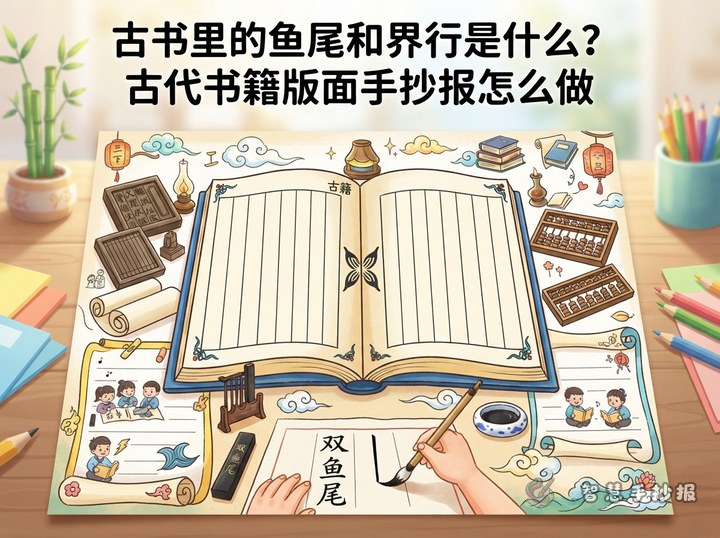
For an ancient printing process handwritten newspaper, you do not need to cover every detail of printing history. A clear focus works better: how did a written draft turn into a book people could hold? That question gives your layout a natural order.
Writing the draft and preparing the block
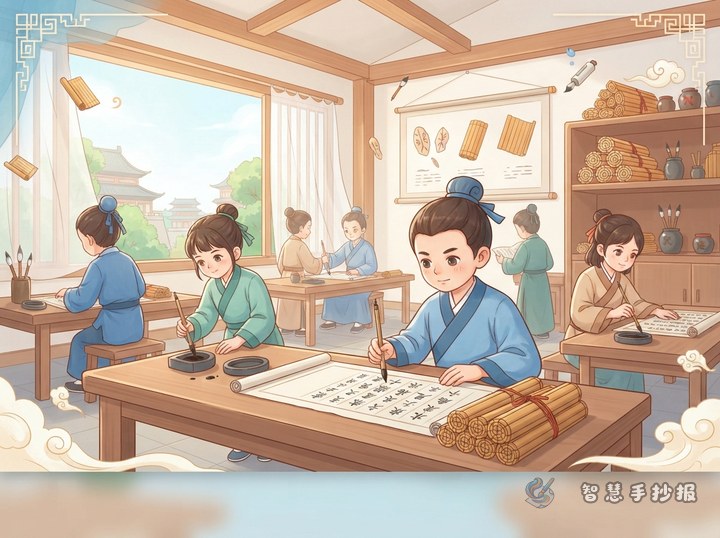
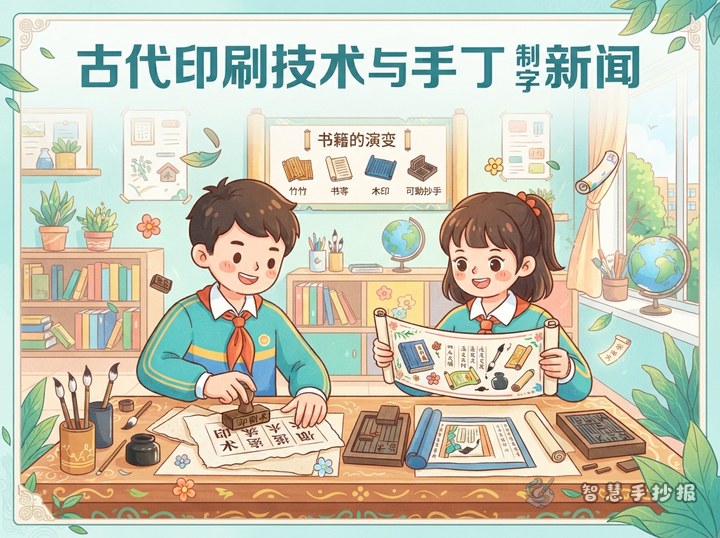
The text was written neatly on thin paper, then placed face down on a woodblock so the characters showed through. You can draw a small desk with a brush, paper draft, woodblock and a pressing tool.
Carving and printing
The carver cut the characters in reverse as raised shapes. To print, ink was brushed over the block, paper was laid on top and rubbed gently. When lifted, the page showed correct characters. A small before-and-after drawing can show reverse on the block and correct on the page.
Folding and binding
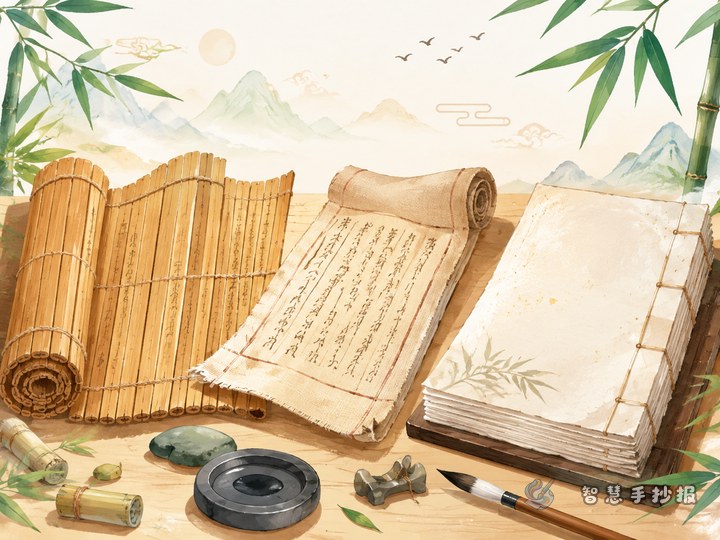
Printed sheets were folded, sorted, punched and stitched into a book. On your poster, this step can be shown as pages lining up, which is easy to draw and easy to explain.
Use a Process Path Instead of Plain Boxes
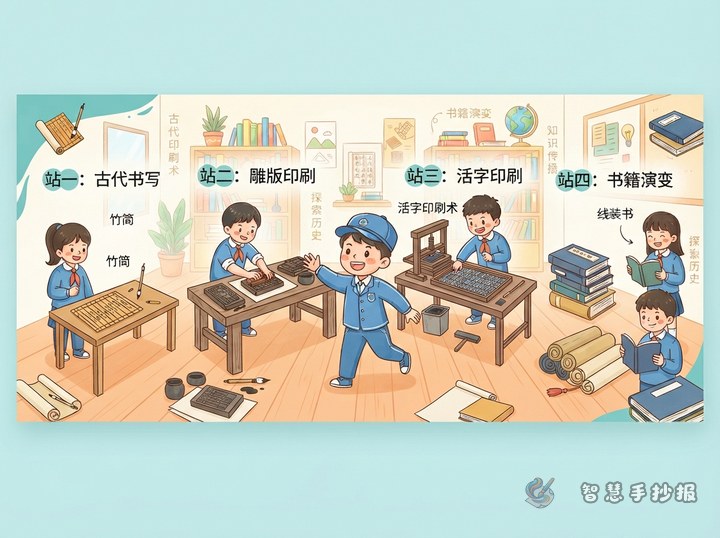
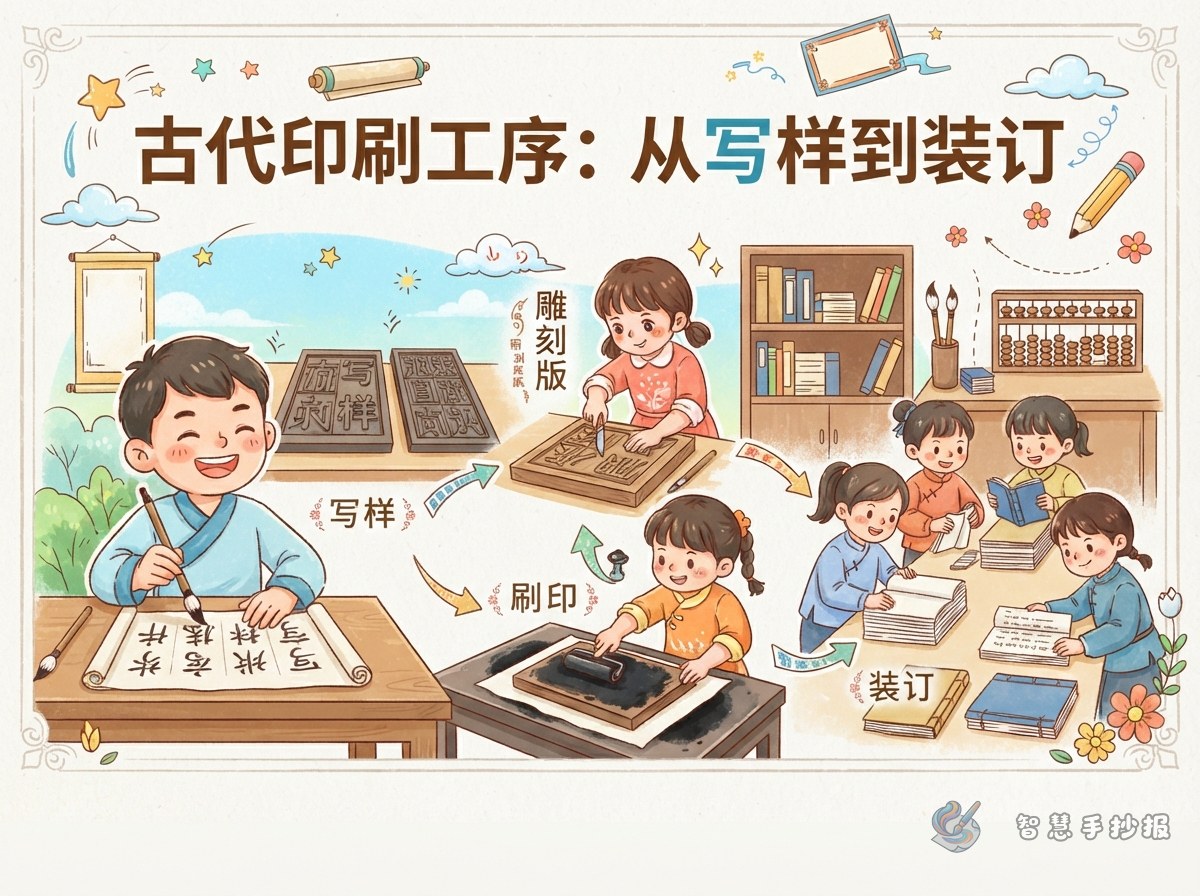
Many handwritten newspapers use several square boxes. For this topic, try a winding process path across the page, like a small river or an unrolled sheet of paper.
- Left end: writing the draft, with a brush and paper draft.
- Middle left: carving the block, with a woodblock and knife.
- Middle right: printing, with an ink tray, brush and fresh page.
- Right end: binding, with folded pages and a thread-bound book.
Add two small side panels above or below the path: one for tool files and one for what I noticed. This gives the page movement and keeps it from looking like a pile of notes.
Ready-to-Copy Notes About Each Step
- Writing the draft: a careful copy of the text was prepared before carving.
- Carving the block: characters were cut in reverse so they would print correctly.
- Printing: ink had to be even and the paper flat for a clear page.
- Binding: loose sheets became a book that was easier to keep and read.
- One-line summary: printing worked like a relay, and each step helped knowledge travel farther.
Drawing Tips for Tools and Workers
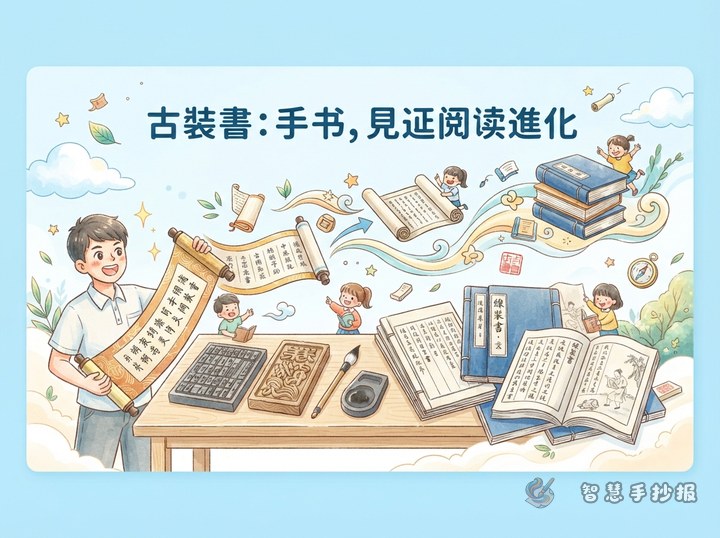
Keep tool drawings simple. A carving knife can look like a thin pen, a brush has short hairs, an ink tray is a shallow circle, and a thread-bound book shows stitching on the side. Draw people as simple side views or from behind, and focus on their hands.
Use wood brown, ink black and paper cream as your base colors, then add a little green or red for contrast. Do not fill every box with color. Leave space for writing so the poster stays clean and readable.
Title and Ending Ideas
Main title ideas include The Birth of a Book, From Draft to Thread-Bound Book and Four Stops in Ancient Printing. A subtitle can say: writing, carving, printing and binding, see how knowledge was pressed onto paper. End with one or two sentences explaining that printing made books easier to copy and helped more people read.
If you want a more complete layout, you can continue in the 智慧手抄报 WeChat mini program, choose a template about ancient printing and book evolution, replace the text, move the sections and add your own process drawings.