Why a Lunch Survey Panel Makes Your Poster Feel Real
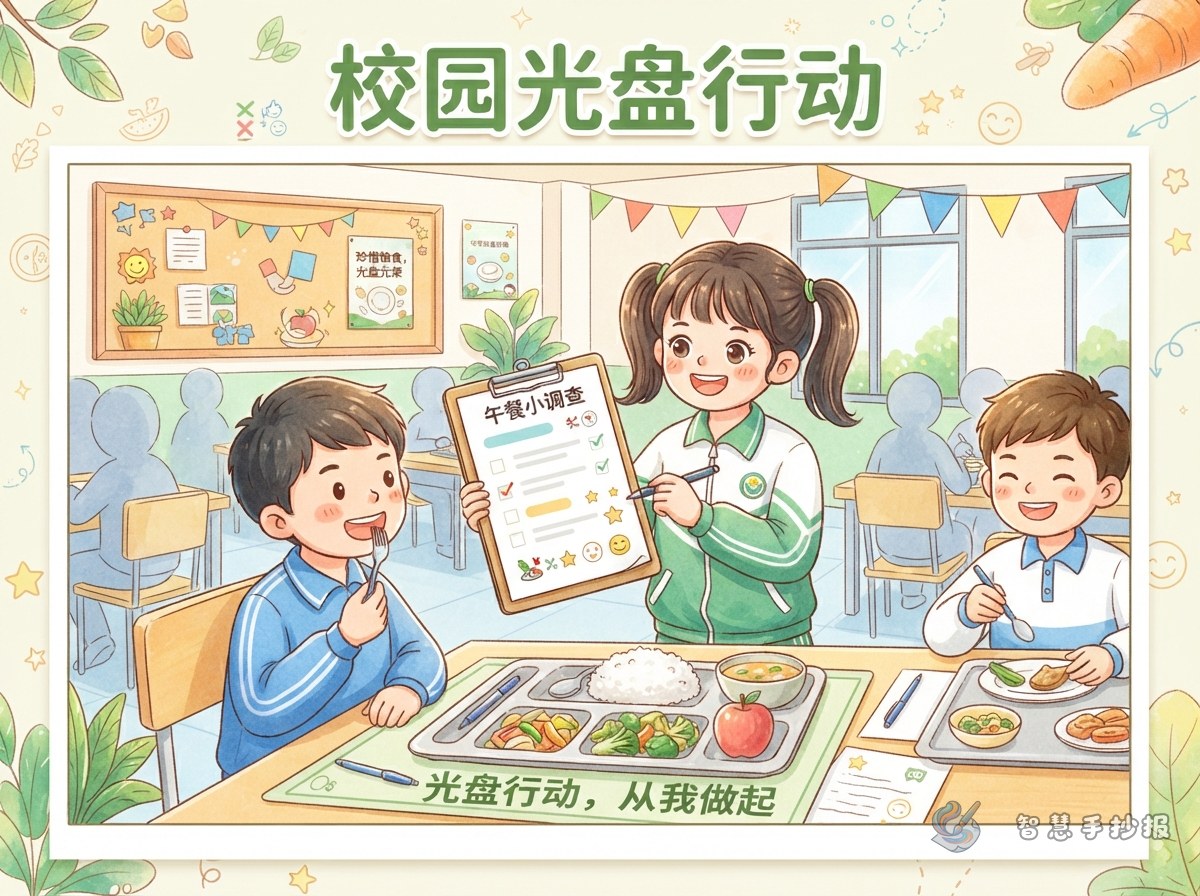
When students make a food-saving poster, the same quotes and slogans show up again and again. The page looks busy, but nothing sticks. What readers remember is something close to home: the school lunch tray. Who left rice behind? Which dish ends up in the bin most often? How many classmates really cleaned their plates today? Your class sees all of this every noon.
Give those observations a fixed panel on the page, and your poster stops being a wall of slogans and starts telling a story that is still happening.
What Goes Inside the Survey Panel
Three columns are enough
Keep it simple. Draw three columns and add one row after lunch each day:
- Date: the weekday is enough, so rows are easy to compare.
- Dish left over most: write the dish name only, never a classmate's name.
- Clean plate situation: you can write most of us cleaned our plates, or count and fill in a number.
Turn your notes into two or three sentences
Leave a small box under the table called What I Noticed. Sum things up in one or two lines, for example: the green vegetables were left over several days in a row, or someone took two buns and only ate one. These lines should come from your own real observation. When you are unsure, write I noticed instead of a precise count, and never invent a source.
From Notes to a Call to Action
The survey is only the material. A poster also needs one sentence that moves other people. Try this order:
- What I saw: pick the clearest point from your survey.
- Why it might happen: guess at the reason, such as worrying there will not be enough food, or simply not liking a vegetable.
- What I suggest: take only what you can eat, try a small portion of a dish you are unsure about, and gently remind the classmate beside you.
Put the three sentences together and you have a short, believable appeal that fits neatly beside the panel.
Where the Panel Belongs on the Page
Make it a small block
If your page is divided into four areas, place the survey in the bottom right or bottom left corner and outline it with a box and dashed line, so readers can tell it apart from ordinary articles at a glance.
Give it a friendly name
Avoid formal titles like Investigation Report. Try Lunch Tray Whispers, Did You Clean Your Plate Today, or Our Class Plate Diary. Short names written in larger letters work best.
Leave a little breathing room
Do not push the table against the edge of the paper. Keep some space above and below so you can add more later, and draw the table lines with a ruler for a tidier look.
Drawings and Headlines That Match the Panel
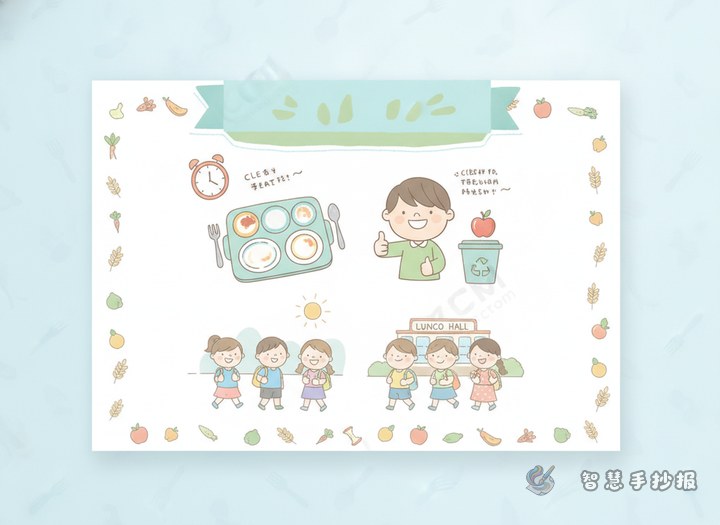
You do not need to fill the page with pictures. One plate is enough: a white plate, a pair of chopsticks and a few grains of rice, with a small smiling face or a check mark beside them. An empty plate with a check mark says clean plate instantly.
Your main headline can go two ways: a question, such as Is your plate empty today, or an action line, such as Take only what you eat. Use the subheadline to point at the panel, for example, small observations from our class lunch.
A Simple Order of Work and a Final Check
- Record your lunch situation for two or three days first, so you have material before you start drawing.
- Plan the layout on a sheet of paper: headline area, survey area, appeal area and drawing area.
- Write the text on scrap paper first and count the characters, so nothing overflows.
- Draw light pencil guides, go over the letters in black pen, then add colour.
- Check once more: no classmates' names, no invented numbers, and letters that sit reasonably straight.
If you want help with the layout, open the 智慧手抄报 mini program inside WeChat, look through food-saving and clean plate layout references, arrange your table, appeal and headline, then copy it onto paper.