Start with a clear theme: “No Leftovers at School”
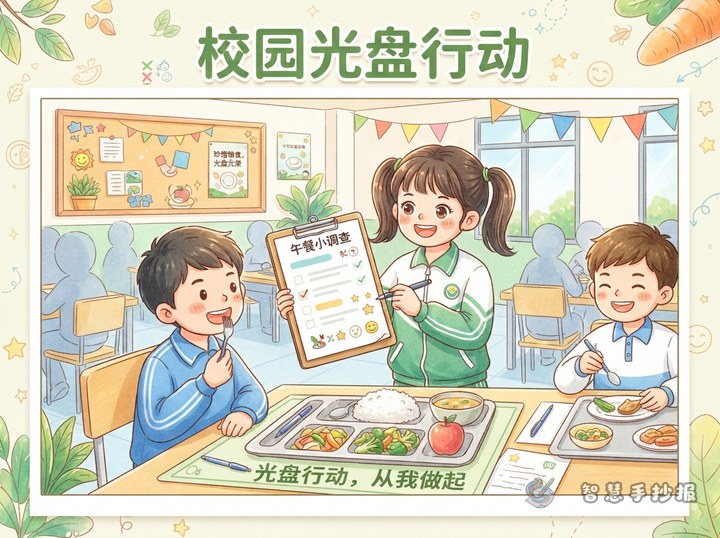
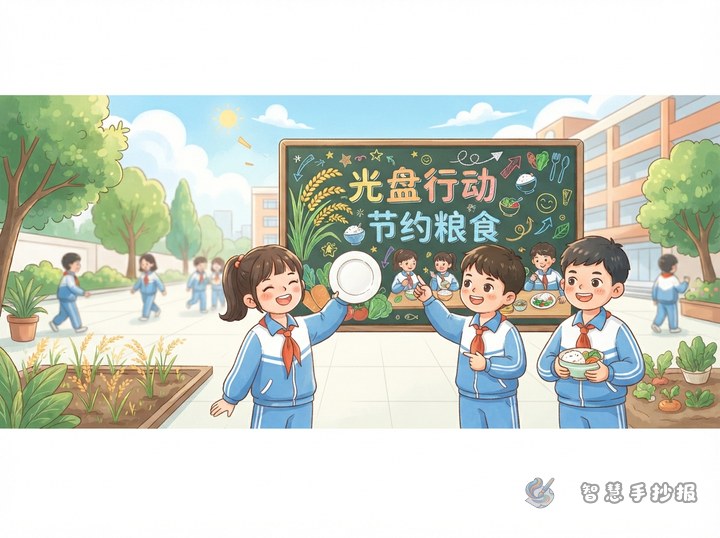
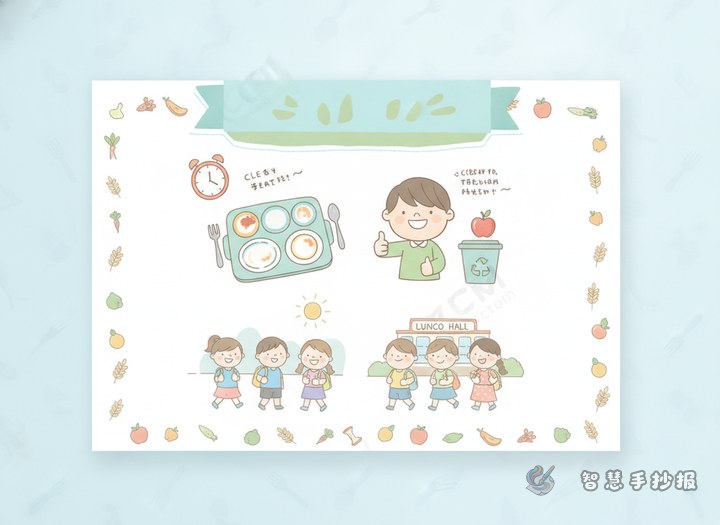
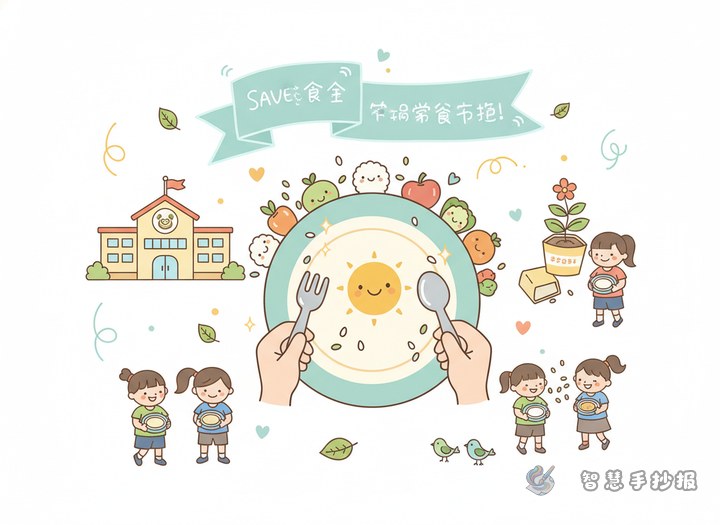
A good clean-plate handwritten newspaper should be easy to understand and visually connected to school life. You can use a main title such as Treasure Every Grain, Clean Plate Starts with Me, or No Leftovers in the Cafeteria. Around the title, add simple drawings like rice grains, wheat, trays, spoons, lunch plates, or students lining up for meals.
If you want the page to feel more realistic, use cafeteria scenes, lunch tables, or classroom reminders as decorative elements. This helps the topic look practical rather than abstract.
Helpful sections to include on the page
Section 1: Why saving food matters
Write a few short lines about how food comes from hard work. Farmers grow it, people transport it, cooks prepare it, and every meal takes time and effort. Even a short paragraph can make the message meaningful.
Section 2: Common food waste at school
- Taking too much food and leaving part of it uneaten
- Only eating favorite dishes and throwing away the rest
- Playing while eating and not finishing lunch on time
- Eating too many snacks and wasting regular meals
This section works well as a short list because it is easy to read and easy to copy onto a poster.
Section 3: What students can do
- Take only what you can finish
- Start with a small portion and get more if needed
- Try not to be picky with food
- Remind classmates to eat in a civilized and respectful way
This part is great for showing action and making the poster more practical.
Short text materials you can use directly
Short slogan ideas: Every grain is precious; Finish your meal, show your manners; Saving food begins with every lunch; Respect food, respect hard work.
Appeal text: In the school cafeteria, we should take food in proper amounts, eat calmly, avoid waste, and finish our meals. Let the clean-plate habit become part of campus life and make food saving a visible form of good manners.
Ending line: A small lunch plate carries a big responsibility. Let us begin with today’s meal and become students who truly value food.
A layout that looks neat and earns attention
For an A4 or larger page, try a big center title with side sections and a short appeal at the bottom. Put the title in the middle or top center. On one side, write about food waste and why saving food matters. On the other side, write action tips and slogans. At the bottom, add a short promise or conclusion.
Colors like green, yellow, and orange fit the food-saving theme well. Do not overcrowd the page with text. Leave some space so the important points stand out. Simple drawings of plates, wheat, rice grains, and students at lunch are enough.
Easy tips for younger students
- Lightly divide the page with pencil before writing.
- Use short paragraphs instead of one long block of text.
- Make the title bold and colorful.
- Highlight key words like “clean plate,” “save food,” and “good dining habits.”
- Check spelling and fill empty corners with small decorations.
If you want to finish the page more efficiently, you can also continue organizing your design ideas in the Zhihui Shouchaobao WeChat mini program and explore styles that match a school food-saving theme.