Begin with one idea: greetings bring the world closer
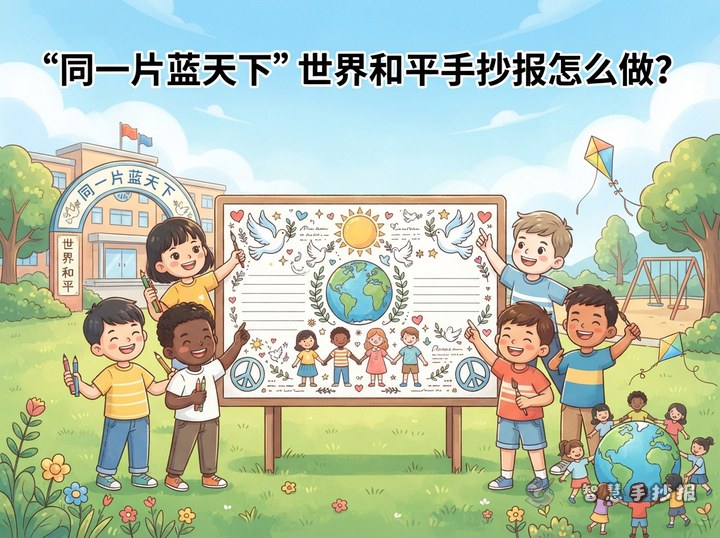
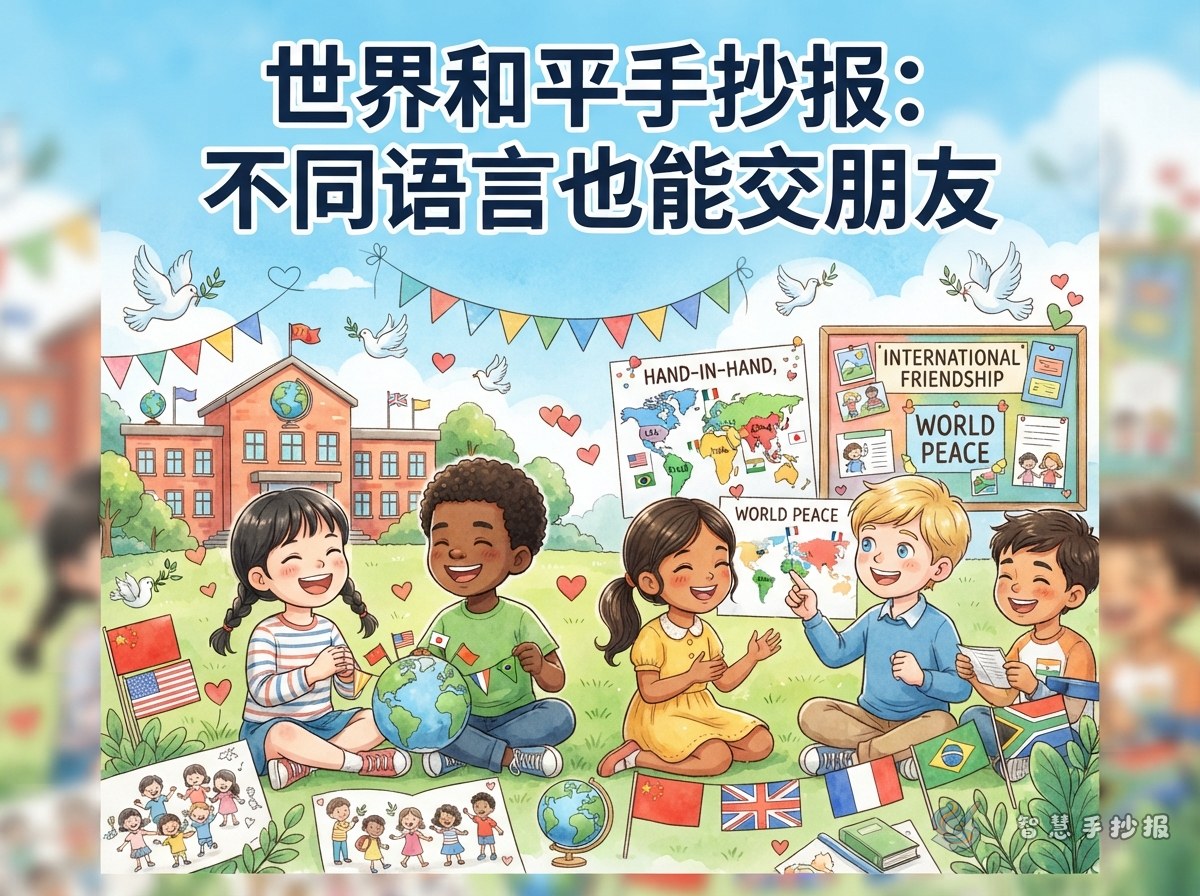
This poster does not need a long list of facts about different countries. Let the main idea be that people can become friends even when they speak different languages. Draw a bright globe in the center, with children from different places on both sides. Speech bubbles can show them greeting one another and sharing the same feeling of kindness.
A suitable title is “Hello, World! Friendship Brings Us Together”. Add the subtitle “Understanding shortens distance, and peace connects us.” These lines keep the whole poster focused on greetings, respect, communication, and cooperation.
Turn the page into a friendship map
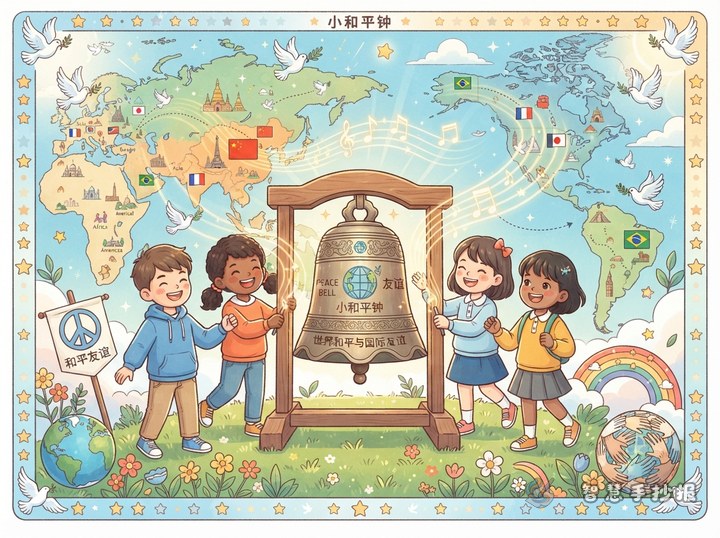
Try a circular layout. Place the globe and the children holding hands in the middle, then arrange several sections around them like routes on a map. Connect the sections with colorful dotted lines, stars, or small flags to show that friends can meet and communicate across the world.
- Greeting bubbles: Choose three or four simple greetings and label the language beside each one, such as Hello, Bonjour, Hola, and Namaste.
- The friendship bridge: Write suggestions such as respecting different customs, listening carefully, and talking calmly when people disagree.
- Peace wishes: Add short messages like “May every child learn happily” and “May the world have more understanding and fewer arguments.”
- Small actions: List things children can do, such as helping classmates, introducing their traditions kindly, and caring for shared spaces.
Short messages and picture ideas to add
A message for the center
Near the center, write a short note: “We may come from different places and speak different languages, but smiles, respect, and kindness can be a shared language.” Keep it brief, outline it with a thick pen, and place it below the globe so it is easy to read.
Small corner sections
Create small “friendship keyword” cards in the corners. Each card can contain one word, such as understanding, sharing, cooperation, inclusion, or peace. Add globes, olive branches, rainbows, paper airplanes, hands, and hearts. Keep the decorations connected to the message instead of covering the writing.
Use color to create an open and welcoming world
- Use light blue for the globe and sky to create a feeling of calm and openness.
- Use green for land or leaves to suggest life, cooperation, and growing together.
- Use orange and yellow for speech bubbles, stars, and smiling faces to give the page a cheerful children’s-poster feeling.
- Finish with dark blue or black outlines, and leave enough space between sections so the page does not look crowded.
Children who are less confident at drawing can begin with a large circle for the globe and a few curved lines for the routes. Neat headings, readable sections, and warm messages matter more than complicated pictures. The main point is to show that the world is connected and friends can stand together.
A simple order that makes the poster easier to finish
Lightly divide the paper into a title area, a main illustration area, and writing areas with a pencil. Decide how much text belongs in each section before decorating. Write the draft first, then check the spacing before outlining and coloring. Finally, check the spelling of the greetings, make sure the title stands out, and confirm that every section supports international friendship and world peace.
To arrange the sketch and section order more quickly, you can continue in the 智慧手抄报 WeChat Mini Program and adapt the idea to the size of your paper.