Pick an Angle: Turn “No Woodpeckers” into a Forest Report
This topic works well as an observation-style handwritten newspaper. Instead of simply introducing woodpeckers, you ask what would change if they disappeared. A title like “The Forest Doctor Takes a Day Off” or “If Woodpeckers Were Gone” makes the theme clear at a glance.
Open with two questions in a corner of the page: Do woodpeckers tap on trunks only to find insects? Who moves into the holes they leave behind? These questions invite readers to keep looking.
Three Roles Woodpeckers Play in the Food Web
1. Pest Hunters Inside Tree Trunks
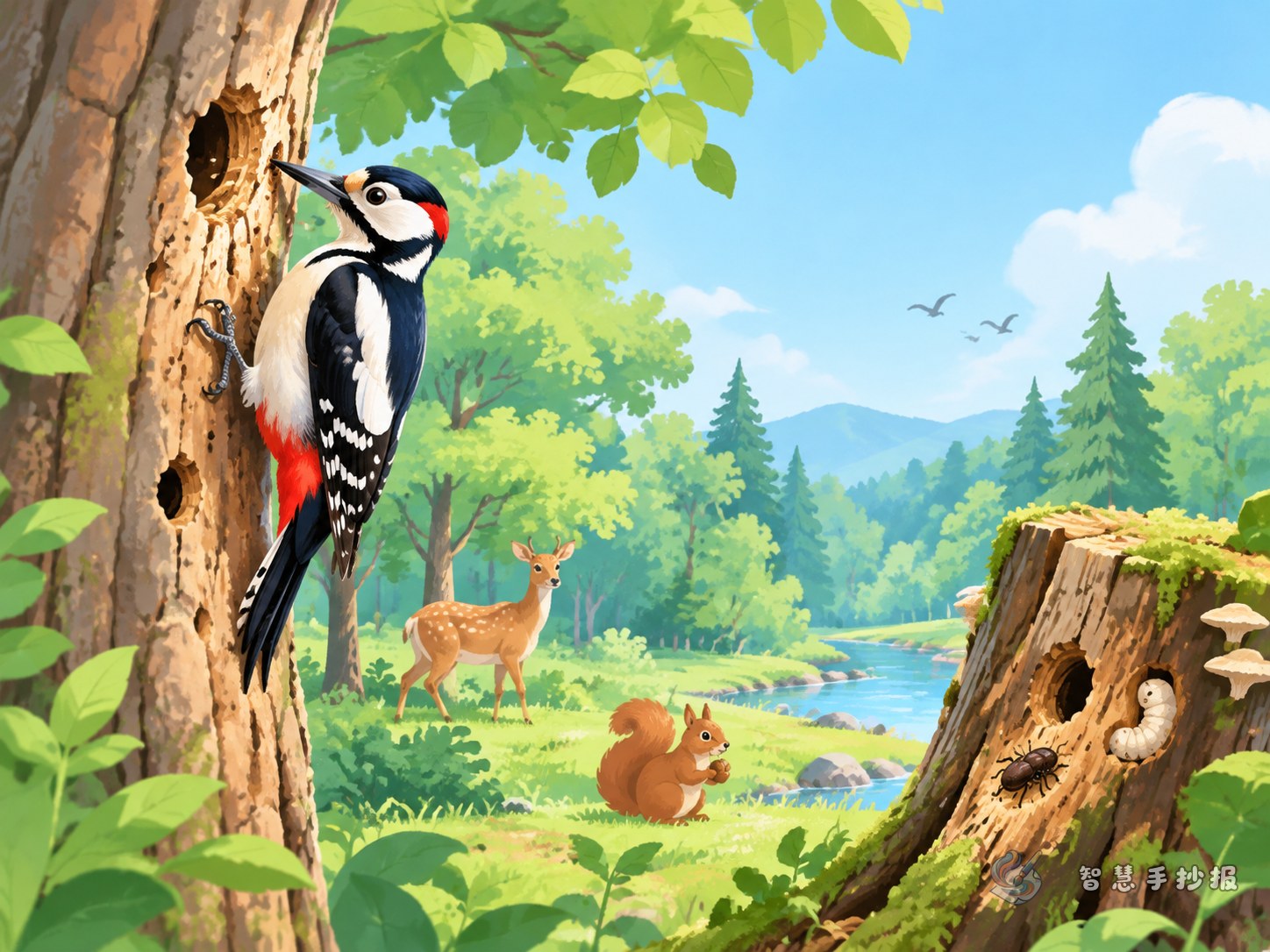
Woodpeckers have strong beaks and long tongues that can reach insects such as beetle larvae and termites. They do not damage trees on purpose; they are searching for pests hidden inside. Draw a tree with small insects in the trunk and write: “When woodpeckers visit, pests have fewer places to hide.”
2. Tree Hole Builders
Many woodpeckers carve new holes for their nests. Later, owls, chickadees, squirrels, and bats may use those old holes. Woodpeckers do not only build homes for themselves; they also create shelters for other forest animals.
3. A Link in the Food Chain
Woodpeckers eat insects and may be eaten by hawks or snakes. They connect trees, insects, and larger predators. When one link becomes weak, the whole chain can shake.
What Could Change If Woodpeckers Disappeared
- More tree pests: Without a natural predator, boring insects may damage more trunks and branches.
- Fewer tree holes: Birds, squirrels, and bats that nest in holes may struggle to find safe homes.
- Simpler forest structure: Fewer old trees, dead wood, and tree holes can mean fewer small animal species.
- A weaker food web: When one animal declines, many other living things can be affected through food relationships.
Use a “before, now, later” structure to show the changes step by step instead of only writing a conclusion.
Column Ideas for Your Handwritten Newspaper
Column 1: Forest Detective
Write short questions and answers: What do woodpeckers eat? Where do they live? Why can they peck without getting hurt? Add small drawings beside each answer.
Column 2: What If They Were Gone?
Draw a simple food chain: tree → boring insect → woodpecker → hawk. Mark the woodpecker and write “What if this link breaks?” Use arrows pointing to weak trees and empty holes. This column can go in the center of the page.
Column 3: Action Cards
List things students can do: do not take bird nests, do not disturb woodpeckers, tell an adult about injured birds, and keep old trees as observation spots. Put each action in a small box like a task card.
Column 4: One-Sentence Message
Write in large letters at the bottom: Protecting woodpeckers means protecting tree holes, insects, and homes for many forest animals.
Layout Tips: Keep the Science Clear and Neat
Divide the page into left, center, and right sections. Put “Forest Detective” on the left, a large tree and food chain in the center, and “What If They Were Gone?” plus “Action Cards” on the right. Draw the trunk in brown, the leaves in green, and add red and black details on the woodpecker. Limiting the colors will make the page look cleaner.
For extra depth, draw a magnifying glass near the trunk labeled “Insect Hole Watch,” and a small arrow near a tree hole labeled “Who Lives Here?” These details make the poster feel like a real nature observation sheet.
Quick Check Before You Finish
- Make sure the title includes both “woodpecker” and “forest,” not just “animal protection.”
- Include at least one clear food chain, such as “insect — woodpecker — hawk.”
- End with an action message about protecting birds and forest habitats.
If you are short on time, you can open the 智慧手抄报 WeChat mini program, choose an animal protection template, replace the column text with your own ideas, and adjust the borders and title before printing and coloring.