Start with the main message of the poster
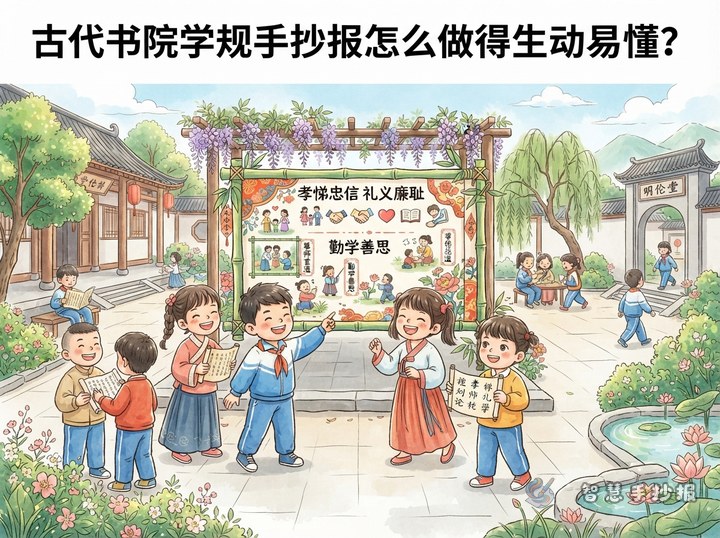
An ancient Chinese academy culture handwritten newspaper should show more than names and dates. The goal is to help readers understand how people studied, why academies mattered, and what values they passed down. For younger students, it is best to focus on three clear ideas: learning, self-discipline, and respect for knowledge.
The main title can simply be “Ancient Chinese Academy Culture,” or you can choose a more vivid subtitle such as “Inside the World of Ancient Learning” or “The Sound of Reading in Old Academies.”
Useful sections you can place on the page
Section 1: What was an academy?
You can write that academies were important places for learning and discussion in ancient China. Students went there to read, study, ask questions, and develop both knowledge and character.
Section 2: What did students learn?
Students often read classical texts, practiced calligraphy, listened to teachers, and learned manners and moral values. This helps show that academy education focused on both study and personal growth.
Section 3: Daily life in an academy
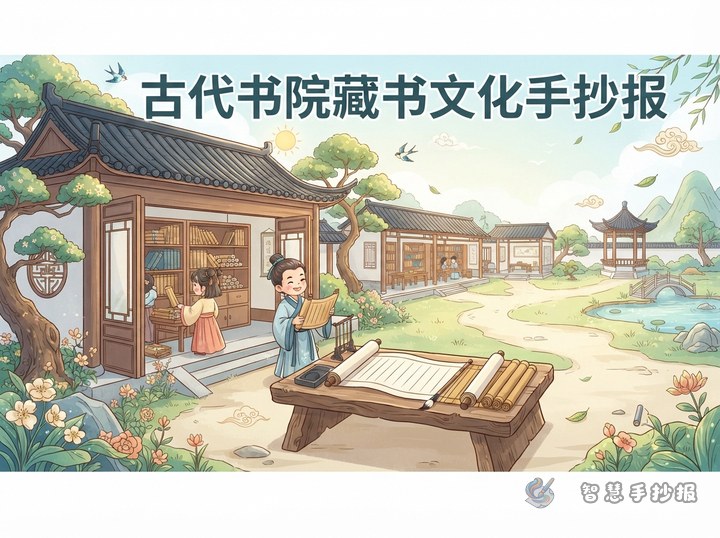
This part can describe morning reading, quiet writing practice, organizing books, and asking teachers for guidance. These details are easy to pair with small illustrations.
Section 4: The spirit of the academy
Use short key words such as diligence, respect, reflection, discipline, and the love of learning. A brief explanation after each word makes the section neat and meaningful.
Section 5: My reflection
You can end by saying that even though students today do not study in ancient academies, the spirit of serious learning and respect for teachers is still worth carrying forward.
Short writing materials for the poster
- Simple introduction: Ancient academies were important places for education and cultural learning.
- Learning atmosphere: In academies filled with the scent of books, reading often began with the morning light.
- Value statement: Academy culture emphasized both thoughtful study and personal character.
- Inheritance idea: What ancient academies left behind was not only architecture, but also a lasting respect for learning.
- Closing line: Learning about academy culture helps us better understand the meaning of study.
If the page is small, use one sentence for each point. If the page is larger, expand each part into two or three sentences.
How to make the layout feel traditional and elegant
This topic looks best with a calm, classical style. Good color choices include light beige, soft brown, pale green, and ink-like gray. Decorative borders can be inspired by scrolls, window frames, bamboo leaves, or cloud patterns.
- Place a large title at the top.
- Use the center area for the most important section, such as the meaning of academies or their values.
- Put smaller sections on the left and right sides.
- Add a reflection or learning message at the bottom.
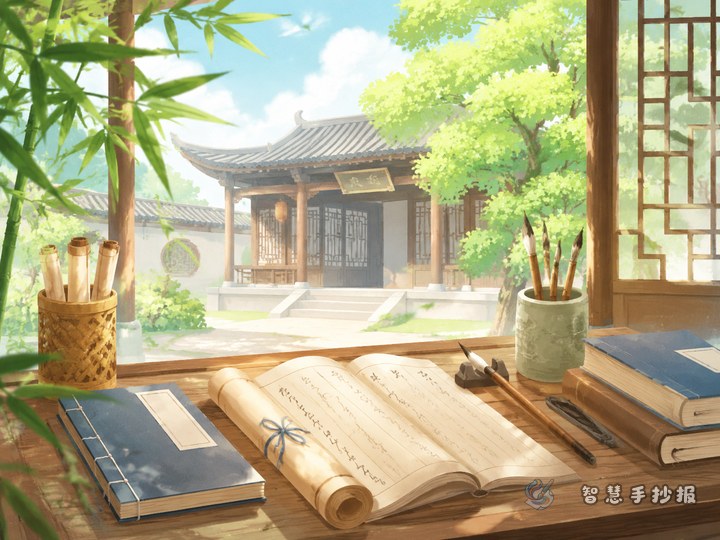
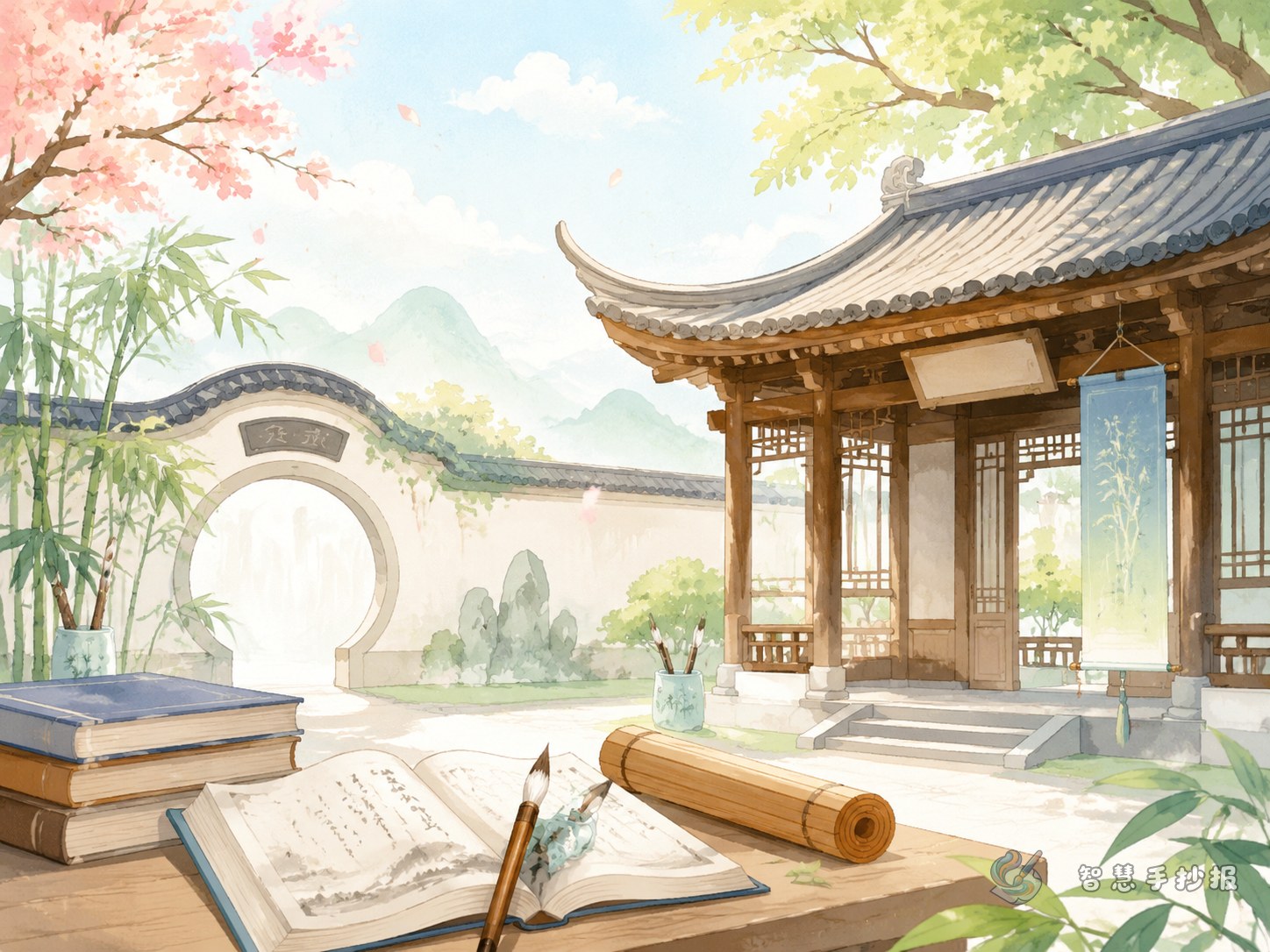
If the page feels empty, add small drawings such as brushes, inkstones, books, pavilions, or bamboo. Keep them light so they support the text instead of crowding it.
Visual elements that instantly suggest academy culture
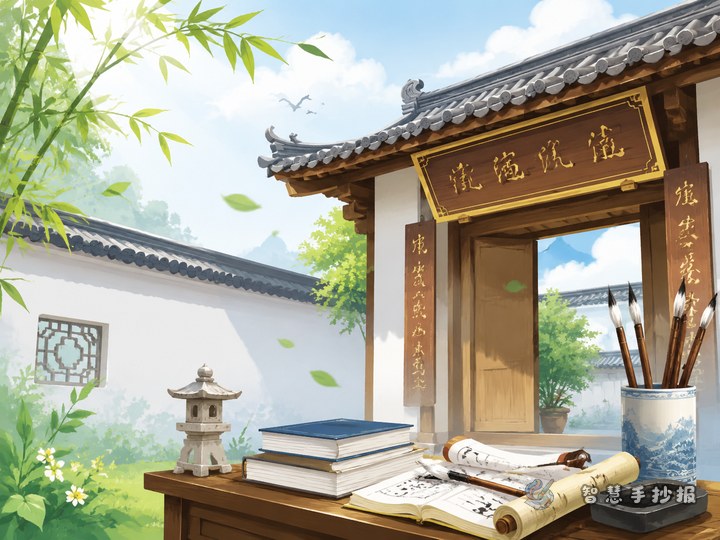
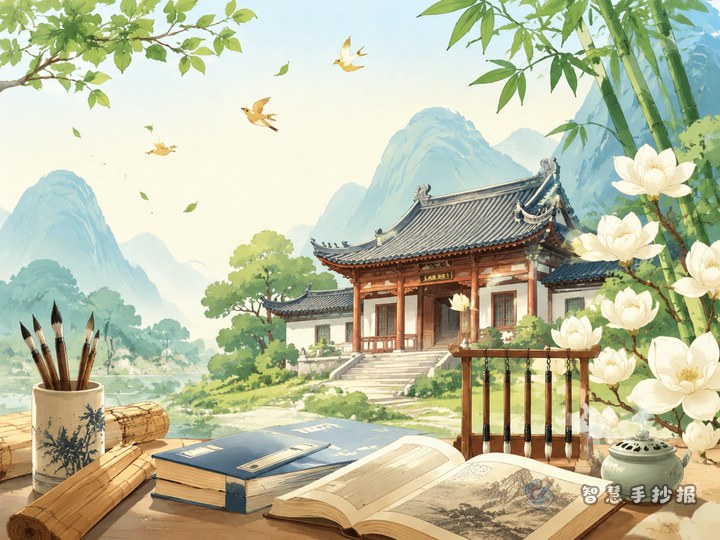
- Scrolls, stitched books, brushes, and inkstones
- Wooden desks, bookshelves, and traditional window patterns
- Bamboo, mountains, pavilions, and stone steps
- Simple scenes of students reading or a teacher giving a lecture
These elements do not need to be complicated. What matters most in a handwritten newspaper is neatness, balance, and a strong connection to the theme.
Final checklist before finishing
Before you complete the page, check whether the title is clear, the sections are easy to follow, the writing is short enough to copy neatly, and the colors feel consistent. If you want to improve the final result further, you can continue arranging and polishing the design in the WeChat mini program.