Build the Poster Around One Clear Story
Rules in traditional Chinese academies were not limited to study routines. They also encouraged students to set goals, develop good character, respect teachers, learn with friends, and put knowledge into practice. A clear storyline is why rules were needed, what they taught, and what students can learn from them today.
An opening paragraph might explain that an academy was both a place of learning and a place of character education. Its rules helped learners develop purpose, self-discipline, careful thinking, and responsible behavior.
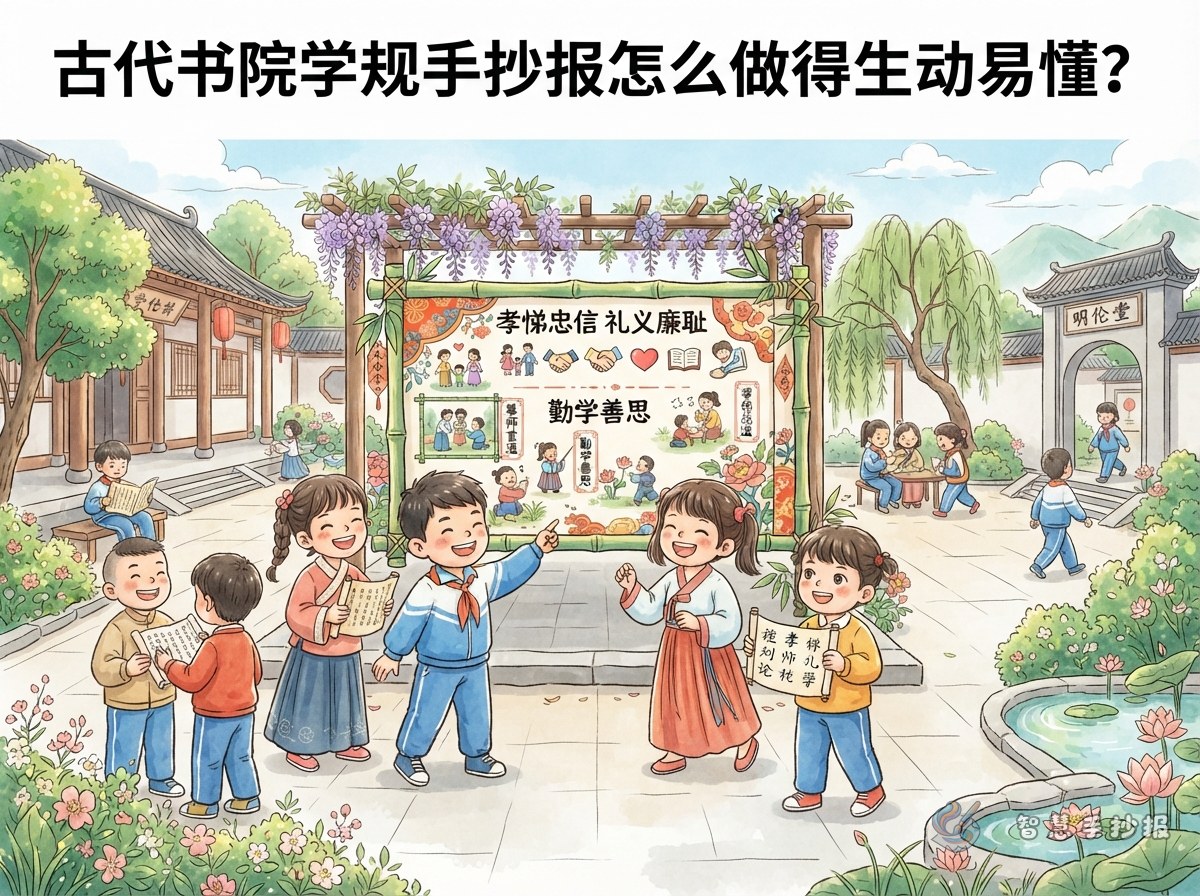
Turn the Rules into Four Learning Cards
Set Goals and Build Character
Learning began with a sense of purpose and attention to everyday conduct. Plum blossoms, bamboo, or a reading lamp can represent perseverance, integrity, and self-reflection.
Study Diligently and Ask Questions
Students were expected to read carefully, think independently, and seek guidance when confused. A scroll and a small question mark can make this section easy for children to understand.
Respect Teachers and Support Classmates
Academies valued respect between teachers and students while encouraging classmates to exchange ideas and improve together. A small drawing of two learners discussing a book fits this section well.
Connect Knowledge with Action
Academy education emphasized more than memorization. Learners were encouraged to apply moral understanding in daily conduct. Three connected seals labeled “read,” “reflect,” and “act” can show this process.
Short Text Ready for the Handwritten Poster
- Theme line:Learn with discipline, act with principle, and grow through reading.
- Fact line:Academy rules guided study habits, daily conduct, and character development in traditional Chinese education.
- Explanation:Rules were not meant simply to restrict learners; they helped students study with purpose and self-discipline.
- Modern connection:Students today can still learn to value time, think carefully, respect teachers, and match words with actions.
If you include a classical saying, choose a short and understandable line and explain it in your own words. Avoid filling the page with difficult classical Chinese. When mentioning rules from a particular academy, check reliable learning materials and do not combine customs from unrelated periods or institutions.
Arrange the Page as an Unrolled Scroll
Use a wide scroll as the main layout. Place the title in the center, explain the purpose of academy rules on the left, and arrange the four learning cards on the right. A “Then and Now” strip can run across the bottom. Roof tiles, lattice windows, bamboo leaves, inkstones, and books make suitable decorations.
- Sketch the title, writing, and illustration areas lightly in pencil.
- Use warm cream, light brown, and ink green for a calm scholarly mood.
- Keep each section short and highlight key terms with dark lettering or seal-shaped boxes.
- Check spacing at the end and leave enough blank space around the text.
Add a Class Rules Corner
Reserve a small area where the student can write three modern study agreements inspired by academy culture, such as completing work on time, thinking before asking for help, and supporting classmates. This adds personal expression without losing the historical theme.
After selecting the sections, students and parents can continue in the Smart Handwritten Poster WeChat Mini Program to organize the text, choose a layout, and turn the scroll idea into a finished handwritten poster.